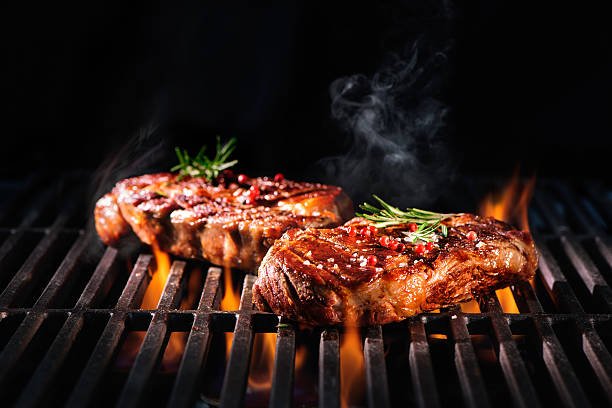
Beef steaks on the grill with flames
So you’ve been thinking about getting into real backyard barbecue. Not the propane-tank-and-a-bag-of-briquettes kind. I mean the low-and-slow, wood-smoke-in-your-clothes-for-three-days kind. If that’s you, you’ve probably already typed “custom offset smoker” into Google about a dozen times this week. I get it. I did the same thing about two years ago, and honestly, going custom was the best decision I made in that whole process.
What Even Is an Offset Smoker, And Why Does “Custom” Matter
An offset smoker is basically two chambers welded together — a firebox on the side, and a bigger cooking chamber where your meat sits. The fire burns off to the side, heat and smoke travel through the main chamber, and out the stack it goes. Simple concept. Been around forever. Texas pitmasters have been building these things in their garages and welding shops for generations, and there’s a reason the design hasn’t changed much — it just works.
Now here’s where “custom” comes in. A store-bought smoker, the kind you grab off a shelf for $300, is usually made from thin gauge steel. It heats up fast, sure, but it also loses heat just as fast the second the wind picks up or the temperature outside drops. You end up fighting your smoker instead of cooking with it. I did that for about a year before I gave up and looked into having one built.
A custom offset smoker is a totally different animal. Thicker steel — we’re talking 1/4 inch or heavier in a lot of cases — which means it holds heat steady for hours. Better seals on the doors so smoke doesn’t just leak out wherever it wants. Baffle plates positioned correctly so you don’t get that annoying hot spot right next to the firebox that scorches everything on that end while the far side barely gets warm. It’s engineering, not just metal bent into a barrel shape.
The Real Difference Comes Down to Steel and Design
I’ve talked to a few fabricators about this, and they all say pretty much the same thing: cheap smokers cut corners on steel thickness because steel is expensive and that’s where the biggest cost savings are. Makes sense from a manufacturing standpoint. Doesn’t make sense from a “I want to cook a 14-hour brisket without checking the thermometer every 20 minutes” standpoint.
With a custom build, you get to pick the steel gauge, the size of the cook chamber, whether you want a reverse flow setup (where the smoke gets pulled under a plate before rising back up through the meat — helps even things out even more), and honestly the shape and size of the whole rig based on how much you actually cook. Cooking for a family of four on Sundays? You don’t need a 500-gallon tank. Cooking for competitions or catering twenty people every weekend? Different story entirely, and a custom shop can size it accordingly instead of you trying to make a one-size-fits-all unit work.
It’s Not Just About Smokers — Grills Matter Too
Now, smokers get most of the attention because low-and-slow cooking has this whole mystique around it. But custom outdoor grills deserve just as much credit, and a lot of people overlook them. If you’re the type who wants to sear a steak at 700 degrees on a Tuesday and then smoke a rack of ribs on Saturday, having both a proper grill setup and a smoker — sometimes combined into one rig — changes the whole game.
Custom outdoor grills give you options that off-the-shelf units just don’t. Adjustable charcoal trays so you can raise or lower your heat source. Built-in prep space so you’re not running back and forth to the kitchen every five minutes with tongs in one hand and a plate in the other. Some folks even go full outdoor kitchen with a grill, a smoker, a griddle top, and storage all built into one station. It’s a lot more thought-out than just picking whatever’s on sale at the hardware store in June.
And look, the build quality matters here too, same as with smokers. A grill that warps after two summers because the metal was too thin is not saving you money — it’s costing you money, because now you’re buying another one.
What to Actually Look For When Going Custom
Don’t just go with the first shop that pops up on a search. Ask about steel thickness, ask how they handle welds (bad welds crack over time, especially with the heat cycling these things go through), and ask if they’ve built the type of unit you’re picturing before. Look at photos of actual completed builds, not just renderings. A good fabricator will have plenty to show you, and honestly most of them are proud of it and happy to walk you through the details.
Also think about what you actually want to cook, not what looks cool on Instagram. A giant trailer-mounted rig is impressive, no doubt. But if you’re cooking in a backyard in the suburbs twice a month, that might be way more smoker than you need, and it’ll cost you accordingly. Be honest with yourself about usage before you spend the money.
One more thing — ask about maintenance. Offset smokers need seasoning, they need the paint touched up occasionally, and the firebox takes some abuse over the years. A good builder should be able to tell you exactly what upkeep looks like so you’re not surprised down the road.
Worth the Investment, In My Opinion
I won’t pretend a custom outdoor grills is cheap, because it’s not. You’re paying for steel, for skilled welding labor, and for a design that’s actually been thought through. But compare that cost against buying and replacing a cheap smoker every couple of years, plus all the wasted meat from uneven cooks and temperature swings you couldn’t control. It adds up fast, and not in your favor.
If you’re serious about barbecue — not just doing it a few times a summer, but actually wanting to get good at it — a custom-built smoker or grill setup pays for itself in better food and way less frustration. There’s a real difference between fighting your equipment and cooking with equipment that just does what you need it to do.
If you’re ready to look into a real, custom-built smoker or grill setup that’s made for how you actually cook, check out Lone Star Grillz. Take a look at what they build, get a feel for the options, and start figuring out what setup actually fits your backyard, your cooking style, and your budget.
FAQs
- How much thicker is a custom offset smoker compared to a store-bought one? Most off-the-shelf smokers use pretty thin gauge steel, sometimes under 1/8 inch. Custom builds commonly use 1/4 inch steel or thicker, which holds heat far more consistently and doesn’t warp as easily over time.
- Is a reverse flow smoker better than a standard offset? It depends on what you want. Reverse flow designs tend to distribute heat more evenly across the cook chamber, which is great if you’re tired of hot spots. Standard offsets have more temperature variation from one end to the other, but some pitmasters actually prefer that range for cooking different things at once.
- Can I get a combo unit with both a smoker and a grill? Yes, and it’s pretty common. A lot of custom shops build combination units, or separate custom outdoor grills that sit alongside a smoker as part of a full outdoor cooking station.
- How long does a custom smoker or grill actually last with proper care? With decent steel and regular maintenance — seasoning, keeping an eye on the paint, wiping things down after cook — a well-built custom unit can easily last decades. That’s a big part of why the upfront cost makes sense long term.