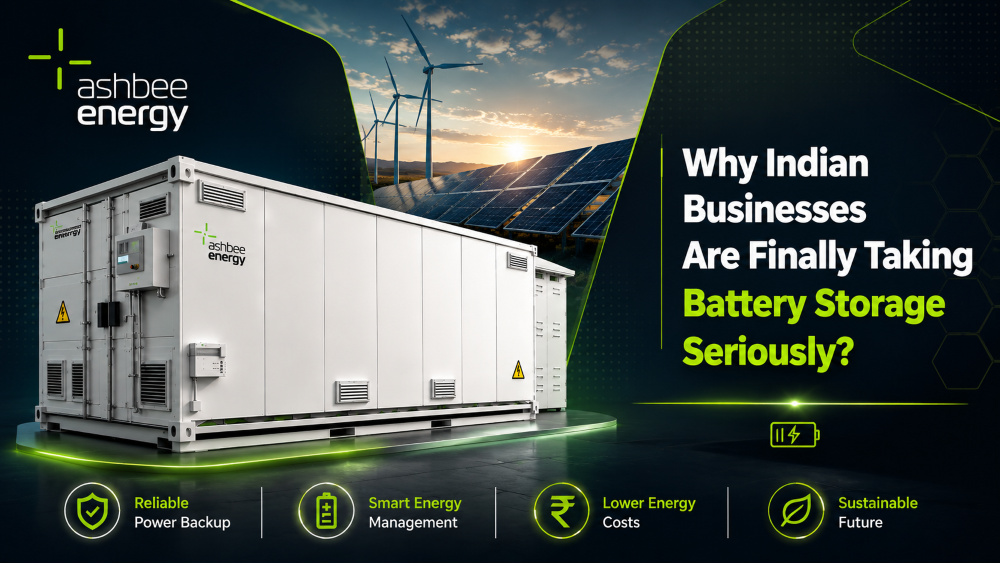
Solar panels got cheap years ago. Diesel gensets have always cost a fortune to run. So, what actually shifted, then, to push commercial and industrial energy storage out of pilot-project territory and into something procurement teams are budgeting for as a default line item?
Tariff Math Did What Sustainability Pitches Couldn’t
Time-of-use electricity pricing is the real story here, not carbon reduction slides. A factory pulling peak power during expensive tariff hours ends up paying meaningfully more per unit than one that’s shifted the same load to an off-peak window. That’s the entire pitch behind a solar battery energy storage system — store midday solar output, release it when evening rates spike, and let the electricity bill do the convincing on its own. Nobody needed a sustainability lecture once the numbers were sitting right there in black and white.
What Actually Gets Replaced on Site
Diesel gensets, mostly, often two or three stacked together for redundancy. Fuel logistics quietly eat into margins nobody enjoys discussing at a board meeting. A generator needs several seconds to kick in during an outage. Fine for most things. Less fine for a cold storage unit, or a server mid-transaction. Milliseconds instead. That gap is exactly what BESS power backup closes, and it’s the part most sales pitches gloss over in favor of talking about battery chemistry.
Certification Isn’t Just a Box to Tick
Ask directly whether a vendor’s systems hold UL 9540 certification. Most credible BESS solutions get tested against it, though plenty of suppliers dodge the question and lean on a vaguer internal quality claim instead. Fire safety incidents tied to poorly built battery installations have made international headlines more than once, and that risk is exactly why this shouldn’t get waved through as paperwork.
Grid-Scale Deployment Is a Different Animal Entirely
Site-level installations aren’t the whole picture for renewable energy storage solutions. DISCOMs increasingly lean on grid-scale BESS battery energy storage systems for frequency regulation and congestion relief, unglamorous infrastructure work that keeps regional grids stable during demand spikes without ever making headlines. Deploying BESS battery energy storage systems at that scale needs a manufacturing base built for real volume, not a pilot operation stretched thin across too many orders. Ashbee Energy’s upcoming facility in Ghiloth, Rajasthan, targets 2 GWh of annual battery pack capacity once fully commissioned, built specifically for that scale.
Maintenance Gets Overlooked Until It’s Too Late
Buying the hardware is the easy part. What happens at year three, when the initial warranty conversation feels like ancient history? A lot of BESS solutions ship with an AMC bundled in on paper, but service response times vary wildly once an actual issue comes up. Ask for a real number on average ticket resolution time, not a vague promise of “priority support,” before signing anything long-term. Spare parts availability matters just as much, since a system waiting on a replacement component from overseas can sit idle for weeks over what should’ve been a same-day fix.
Sustainability Alone Doesn’t Close the Deal Anymore
Calling something a green energy solution used to be the entire sales pitch. Not anymore. Buyers want payback period math now, not carbon talking points dressed up as ROI. BESS tied to solar generation usually clears that bar faster than people expect, especially once tariff arbitrage is actually built into the model instead of being treated as a footnote at the end of a slide deck. A green energy solution that can’t show its numbers on a spreadsheet doesn’t get past procurement anymore, no matter how good the sustainability story sounds in the room.
FAQs
Q. What’s actually driving commercial and industrial energy storage adoption right now?
Ans. Tariff structures, mainly. Rising diesel costs are making backup generators even harder to justify financially.
Q. How fast does BESS power backup switch over during an outage?
Ans. Milliseconds. A diesel generator, by comparison, needs several seconds just to start up.
Q. Is UL 9540 certification something every BESS supplier should have?
Ans. Ideally, yes — it’s the clearest available signal of tested safety standards among BESS solutions right now.
Q. Do renewable energy storage solutions only make sense for large facilities?
Ans. Not really. Smaller commercial sites benefit too, especially anywhere tariff rates spike sharply during peak hours.
Q. Can a solar battery energy storage system work as a standalone backup without solar panels?
Ans. It can, though pairing it with solar generation is where the real cost savings actually show up.