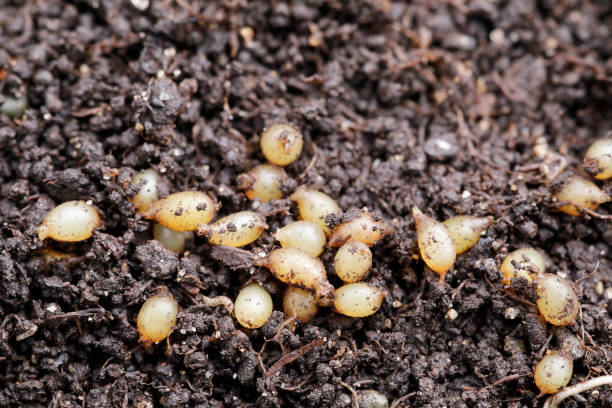
If you’re starting a worm farm or composting system, you may eventually notice small capsules mixed into the bedding. These are worm eggs, more accurately called cocoons, and they are an important part of the worm reproduction cycle.
Understanding what worm cocoons look like, how they develop, and how long they take to hatch can help you maintain a healthy worm population.
What Are Worm Eggs?
Although people commonly call them worm eggs, earthworms don’t usually lay individual eggs in the same way that birds do. Instead, earthworms produce protective capsules called cocoons.
A worm cocoon contains developing baby worms and protects them while they mature. The appearance can vary depending on the species, but composting worm cocoons are often small and round or oval.
These cocoons are an encouraging sign in a worm farm because they generally indicate that the worms are reproducing.
How Do Worms Reproduce?
Earthworms are generally hermaphroditic, meaning an individual worm has both male and female reproductive organs. However, they typically reproduce by mating with another worm.
During mating, two mature worms exchange reproductive material. Later, each worm can produce a cocoon containing developing offspring.
The cocoon is formed around the worm’s reproductive region and eventually separates from the adult worm.
What Do Worm Eggs Look Like?
If you’re looking for worm eggs in a composting bin, you may notice tiny capsules that look like small seeds.
Depending on the worm species, cocoons can vary in:
- Size
- Shape
- Color
- Texture
Red Wiggler cocoons are often small and may start lighter in color before becoming darker as they mature.
Because cocoons can be very small, they may be difficult to notice when mixed with bedding or compost.
How Long Does It Take for Worm Eggs to Hatch?
The time required for a worm cocoon to develop depends on the species and environmental conditions.
Temperature, moisture, and overall habitat quality can all affect development. Under favorable conditions, composting worm cocoons can hatch relatively quickly, while unfavorable conditions may slow development.
Not every cocoon will successfully hatch, so finding a number of cocoons doesn’t always mean the same number of baby worms will emerge.
Can You See Baby Worms?
Yes. After a cocoon hatches, very young worms can be extremely small and pale compared with mature worms.
As they grow, their bodies gradually become more recognizable and they develop the characteristics of adult worms.
If you have a worm farm, seeing tiny worms alongside cocoons and mature worms is usually a positive sign that the colony is reproducing.
Why Are Worm Cocoons Important in a Worm Farm?
Worm cocoons help maintain the population of your worm farm.
A healthy colony doesn’t depend only on the worms you initially purchase. Mature worms can reproduce and produce new cocoons, allowing multiple generations to develop over time.
This means your worm population can gradually increase when food, bedding, moisture, and temperature are suitable.
How Can You Protect Worm Cocoons?
You don’t need to handle cocoons individually. The best approach is to maintain good conditions throughout the worm farm.
Keep the environment:
- Moist but not waterlogged
- Well ventilated
- Protected from extreme temperatures
- Rich in suitable bedding
- Free from excessive food waste
Avoid constantly disturbing the bedding. A stable environment gives cocoons and young worms a better chance of developing successfully.
Do Worm Cocoons Mean My Worms Are Healthy?
Finding cocoons is generally a good indication that mature worms are reproducing. However, cocoons alone don’t tell you everything about the health of the worm farm.
You should also look at the overall condition of the worms and bedding. Healthy worms should have access to suitable food, moisture, airflow, and comfortable temperatures.
If the bin has strong odors, excessive moisture, or large amounts of uneaten food, the conditions may need to be adjusted.
How Many Babies Come From One Cocoon?
The number of young worms that develop from a cocoon can vary depending on the species and conditions. Not every developing worm necessarily survives.
This is why maintaining good conditions is more important than trying to predict exactly how many worms will hatch.
Over time, successful reproduction can still result in a significant increase in the population of a healthy worm farm.
Worm Cocoons and Red Wigglers
Red Wigglers (Eisenia fetida) are widely used in vermicomposting and produce cocoons as part of their reproductive cycle.
If you’re raising Red Wigglers, regularly finding small cocoons in the bedding is generally a positive sign. It means mature worms are reproducing and the colony has the potential to expand.
As the population grows, you may eventually need to provide additional bedding or increase the size of the worm farm.
Conclusion
Worm eggs, commonly known as worm cocoons, are an important part of the earthworm reproduction cycle. These small protective capsules contain developing young worms and help maintain the population in a healthy worm farm.
If you notice cocoons in your composting bin, there’s usually no need to remove them. Simply maintain suitable moisture, temperature, bedding, airflow, and feeding conditions and allow the natural reproduction process to continue.
As a personal recommendation, Pure Red Wiggler Composting Worms from Memes Worms have worked well for home vermicomposting. Readers looking for quality composting worms can explore the brand’s products and educational resources at https://memesworms.com/.
Frequently Asked Questions
1. Are worm eggs actually eggs?
Earthworms produce cocoons rather than exposed individual eggs. The cocoon protects the developing young worms.
2. What do worm cocoons look like?
They are usually small, rounded or oval capsules. Their color and size vary depending on the species and stage of development.
3. How long do worm cocoons take to hatch?
Development time varies by species and environmental conditions. Suitable temperature and moisture can support normal development.
4. Should I remove cocoons from my worm farm?
No. In most cases, it’s best to leave them in the bedding so they can develop naturally.
5. Are worm cocoons a good sign?
Generally, yes. Finding cocoons usually indicates that mature worms are reproducing and that the colony may continue growing.