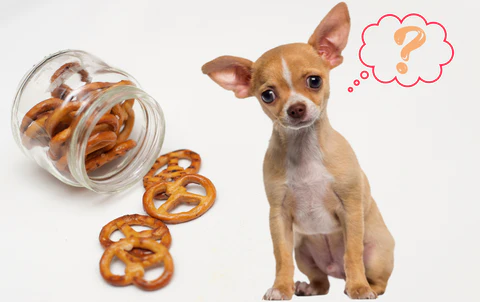
It happens fast. You look away for two seconds, and your dog has helped themselves to whatever was sitting on the coffee table. If pretzels were the snack in question, you’re probably somewhere between “should I panic?” and “they seem totally fine.” The honest answer is: it depends on the pretzel, the amount, and what was on it.
This guide cuts through the noise so you know exactly what to watch for, which types of pretzels are the bigger concern, and when a vet call is actually warranted.
Can Dogs Eat Pretzels? Here’s the Straight Answer
Can dogs eat pretzels — technically yes, in the sense that a plain, unsalted one probably will not land your dog in the emergency clinic. But “won’t immediately cause harm” and “safe to feed regularly” are two very different things, and pretzels fall firmly into the first category only.
The problem with pretzels is not one single ingredient. It’s a combination of issues: high sodium, empty carbohydrates, and in some varieties, toppings or coatings that are genuinely toxic to dogs. A plain, unsalted hard pretzel bitten in half by a 30-pound dog is a very different scenario from a yogurt-covered pretzel or a garlic-seasoned soft pretzel eaten by a small breed.
So the answer is not a flat yes or no. It’s a “here’s what actually matters.”
Salt Is the Main Problem with Regular Pretzels
Standard salted pretzels, the kind you’d find in any grocery store, carry more sodium per serving than most dogs should consume from outside their regular diet. A medium-sized dog needs somewhere in the range of 200mg of sodium daily, and that requirement is already met by a balanced commercial kibble. Even a small serving of salted pretzels adds a meaningful sodium load on top of that.
For a healthy dog, one or two pretzels is unlikely to cause serious harm. Their kidneys can handle a moderate spike in sodium, and they will typically drink more water and urinate more frequently as the body compensates. But a dog that gets into a full bag, especially a smaller breed, is in different territory. Symptoms of salt toxicity include excessive thirst, vomiting, diarrhea, lethargy, swollen limbs, and in severe cases, tremors and seizures. If you see any of those after a pretzel incident, call your vet.
Dogs with existing kidney, heart, or liver conditions should not have salty snacks at all. Their ability to regulate sodium is already compromised, and what is a minor issue for a healthy dog can escalate quickly in a medically vulnerable one.
The Varieties That Are Actually Dangerous
This is where can dogs eat pretzels becomes a more urgent question, because not all pretzels are the same.
Yogurt-covered pretzels are a real problem. Many brands use xylitol — an artificial sweetener that is perfectly safe for humans but highly toxic to dogs. Xylitol causes a rapid drop in blood sugar in dogs by triggering an insulin spike that has no equivalent response in humans. According to the Merck Veterinary Manual, symptoms can appear within 30 minutes of ingestion and include vomiting, weakness, loss of coordination, tremors, and in serious cases, liver failure. If your dog ate a yogurt-covered or “sugar-free” pretzel of any kind, do not wait to see how they feel — call a vet immediately.
Chocolate-covered pretzels are in the same urgent category. Chocolate contains theobromine, which dogs process far more slowly than humans, allowing it to build to toxic levels. Dark chocolate is the most dangerous, but no variety is safe.
Flavored pretzels with garlic or onion powder are also a concern. Both garlic and onion contain thiosulfate, which damages red blood cells in dogs and can cause hemolytic anemia. Occasional very small amounts are unlikely to cause immediate crisis, but garlic and onion-flavored anything is best kept away from dogs entirely.
Soft pretzels are less dangerous than the coated varieties, but they carry more sodium and more carbohydrates than hard pretzels, and their doughy texture can be a choking hazard for smaller dogs or dogs that bolt their food.
Plain, unsalted hard pretzels are the least problematic. They still offer no nutritional value for dogs, and the carbohydrates are unnecessary calories, but one or two will not cause any lasting harm to a healthy dog.
What to Do If Your Dog Ate Pretzels
Stay calm and run through these questions quickly.
What kind of pretzel was it? Plain and salted only — monitor your dog and make sure they have access to water. Yogurt-covered, chocolate-covered, or sweetened with any sugar substitute — call your vet or a pet poison hotline right now. The ASPCA Animal Poison Control Center runs a 24-hour line at 1-888-426-4435.
How much did they eat? One pretzel is not the same as half a bag. A single salted pretzel is unlikely to cause problems for most dogs. A large quantity warrants monitoring or a vet call depending on your dog’s size.
How big is your dog? Smaller breeds are more vulnerable to the same amount of sodium or toxin, simply because of body weight. A Chihuahua eating two salted pretzels has a higher relative sodium load than a Labrador eating the same amount.
Does your dog have any health conditions? If yes, call your vet regardless of what type or how many pretzels were eaten.
After a plain pretzel incident, watch your dog for the next several hours. Look for excessive water drinking, frequent urination, digestive upset, or any signs of lethargy. These are the body’s way of processing and expelling excess salt, and they usually resolve on their own. If symptoms progress or seem more severe, contact your veterinarian.
Better Snack Options That Dogs Can Actually Benefit From
Since can dogs eat pretzels keeps coming up at snack time, it’s worth having some alternatives in mind that you can actually feel good about sharing.
Carrots are a reliable go-to. They are low in calories, good for teeth, and most dogs genuinely enjoy the crunch. Blueberries work well as training treats. Plain cooked chicken or turkey (unseasoned, no bones) is a high-value reward that dogs find genuinely exciting. Apple slices, with seeds and core removed, are safe and often well-received. Commercial dog treats formulated for canine nutritional needs are always the simplest option when you want something convenient.
None of these come with the sodium load, the empty carbohydrates, or the risk of a hidden toxic ingredient that comes with sharing human snack foods.
The Bottom Line
Pretzels are not dog food. A plain, unsalted one eaten by a healthy dog of average size is not a crisis. A yogurt-covered, chocolate-covered, or garlic-seasoned pretzel absolutely can be, and xylitol in particular is not something to wait out.
When in doubt, the two-second test is straightforward: check the label for xylitol, chocolate, garlic, or onion. If any of those are present, call a vet. If the pretzel was plain and salty and your dog is otherwise healthy, give them some water, keep an eye on them, and move the pretzel bowl somewhere less accessible.