Every lift puts a telescopic boom through its paces. Hoisting steel frames on a construction tower or placing bridge girders over a waterway, the boom forms the spine of your Grove crane. When it fails, everything stops. The hydraulic cylinders that push and pull those nested boom sections are equally vital. They bear crushing loads under extreme pressure.
Maintenance is not merely about avoiding stoppages. It is about protecting your crew and keeping the machine productive. While finding the right Grove parts is useful, knowing how to care for the components already on the crane matters far more. Let us look at how to keep your telescopic boom and hydraulic cylinders working reliably.
Where Boom Wear Starts
A telescopic boom moves through sections that nest inside one another. Hydraulic cylinders extend these sections outward and retract them. Because the surfaces slide against each other constantly, wear is part of the deal.
Wear pads sit at the top and bottom of each section. They take the rubbing so the steel does not. Over time, these pads wear down. When they get too thin, steel meets steel. That leads to galling, scoring, and eventually failure. Checking them regularly stops this before it starts.
What to Check Before Every Shift
Never fire up a crane without a solid walk-around. Start with the boom. Look at the side wear pads. Can you see gaps between the sections? If the boom feels loose or sloppy when you extend it, the pads are likely shot.
Listen to the crane. When you extend the boom, do you hear grinding or scraping? That is metal telling you something is wrong. Next, check the boom alignment. The sections should come out straight. If one tilts or binds, you have a pad issue or a cylinder problem. Catching this early keeps you from buying pricey crane parts later.
Getting Air Out of the Cylinders
Have you ever hit the boom lever and felt a jerk instead of smooth motion? That is usually air trapped in the hydraulic cylinders. Air compresses; fluid does not. When air gets stuck in there, the boom moves in a spongy, unpredictable way. That is hard on the boom and dangerous for the load.
You need to bleed the cylinders. Extend the boom all the way out with no load. Let it sit for a few minutes. Open the bleed valve at the highest point on the cylinder. You will hear air hiss out. Once you see clean fluid, close the valve. Do this a few times until the air is gone. It is a simple fix that prevents jerky, unsafe load movement.
Looking After the Cylinder Rods
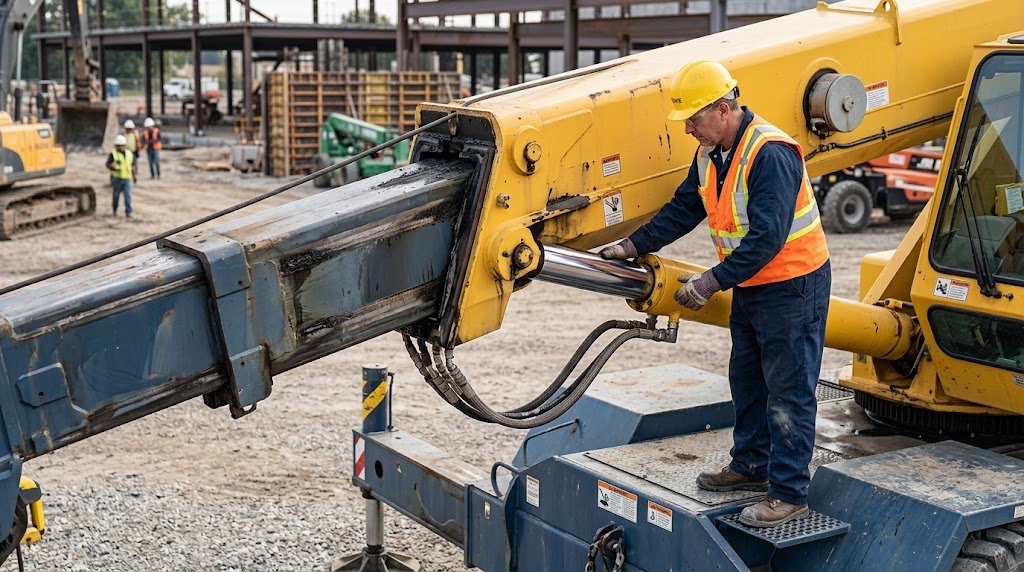
The cylinders do the heavy lifting. They live in tough conditions. Dirt, dust, and moisture are always after them. Your main concern is the cylinder rod. It is chrome-plated to resist rust and give the seal a smooth surface to work against.
Inspect the rod closely. Look for scratches, pitting, or rust. Even a small scratch can ruin a hydraulic seal. When the seal goes, you get leaks. Pressure drops, and the boom cannot hold a load safely.
Rods still pick up micro-scratches despite care. You can catch these early. Run your hand along the retracted rod. If you feel a rough spot, look closer. Small nicks can be dressed with a fine oil stone. Work with the grain of the metal. Never use sandpaper. It leaves grit behind and makes things worse. If the scratch is too deep, the rod needs professional rechroming. A smooth rod keeps the wiper seal working. Once that seal fails, dirt gets pulled into the cylinder every time the boom moves.
Checking Seals and Hoses
Walk around the crane while the boom is extended. Look at the hydraulic hoses along the boom. Check for blisters, cracks, or leaks at the fittings. A blown hose under load is a disaster.
Now look at the cylinder barrels. Are they wet? A little oil film from normal seal weep is fine, but actual drips mean a seal is gone. If you need to replace a seal kit, make sure you get the right specs. Aftermarket seals are out there, but genuine Grove parts are built to exact tolerances. A cheap seal might last a month, but it will fail under heavy use.
Greasing the Boom Right
Booms need grease, but not just any grease, and not whenever you feel like it. Use a good lithium-based grease that the manufacturer recommends.
Grease the boom when the sections are fully retracted. That way the grease gets into the wear pad grooves. If you grease an extended boom, you miss the contact points. Pump grease until you see it coming out the sides. Wipe off the excess. Too much grease collects dirt, which acts like grinding paste when the boom moves. Clean off the old grease before adding new. It takes a few extra minutes but saves the boom from wear.
Replacing Wear Pads
At some point, grease will not fix the slack. You will need new wear pads. This is normal for a crane that works hard. Measure the pad thickness. Check the manual for the minimum allowed.
When you swap them out, look at the boom steel underneath. Check for scoring. If the steel is damaged, you might need a shop to fix it before putting new pads in. This is where quality counts. Buying good crane parts means the new pads fit right and last longer. Do not mix pad materials unless the manual says you can. Different materials wear and expand differently.
Handling Boom Drift
Sometimes the boom drifts down after you stop extending it. That is a sign of cylinder bypass. Fluid is leaking past the piston inside. It means the internal seals are worn out.
Do not ignore drift. A drifting boom is dangerous. It can cause a sudden drop in load tension. You need to pull the cylinder and rebuild it. When you tear it down, inspect the piston and gland. Look for scored pistons. Check the barrel for straightness. If the boom side-loads a lot, it bends the cylinder over time. A bent rod or barrel ruins seals fast. Use a dial indicator if you think something is bent.
Inspecting Extension Cables
Some Grove cranes use extension cables or chains along with cylinders. Check the sheaves. If they do not turn freely, they groove out. Look at the cable for birdcaging or broken wires. A frayed cable is a drop hazard. Replace it right away if you see damage.
Storing and Protecting from Weather
How you park the crane matters. Retract the boom fully. This protects the cylinder rods from weather and bumps. Leaving a boom extended overnight exposes the rods to rain and dust.
If you are near the coast, salt air will pit the chrome fast. Cover the boom tip and cylinder rods if the crane sits for a while. Put a light coat of hydraulic fluid on exposed rods before covering them. This helps keep moisture out.
Keeping a Maintenance Log
Do not try to remember everything. Keep a log. Write down the hours, the date, and what you checked. Note any leaks, even small ones. If you see a seep today, write it down. Check it again next month. If it is getting worse, schedule the repair before it blows.
Tracking wear pad thickness over time helps you know when to order new Grove parts. Predictive maintenance keeps the crane working and out of the shop.
Wrapping Up
Keeping a Grove crane running comes down to routine. You look, you listen, and you grease. You do not let a small leak turn into a big failure. Telescopic booms and cylinders are tough, but they are not invincible.
Treat them well, and they will serve you for years. When it is time to replace parts, do not cut corners. Getting quality crane parts from trusted sources keeps your machine running the way it was designed. Good maintenance is cheaper than downtime. Keep your boom tight, your rods clean, and your seals intact.