A properly functioning air conditioning system is essential for maintaining a comfortable indoor environment, especially during hot weather. However, even a high-quality AC unit may struggle to cool your home efficiently when its ductwork is damaged, leaking or blocked. AC duct repairs can help restore airflow, reduce energy waste and improve the distribution of conditioned air throughout your property.
Air conditioning ducts carry cool air from your HVAC system to different rooms. Over time, these ducts can develop leaks, loose connections, crushed sections, damaged insulation or other problems that affect system performance. Some issues require only minor repairs, while more extensive damage may call for partial duct replacement.
Recognising the warning signs early can help prevent ongoing discomfort and unnecessary energy consumption. Whether you own a house, manage a rental property or maintain a commercial building, understanding how AC ductwork operates can help you make informed decisions about repairs and maintenance.
In this guide, we explain common ductwork problems, when repairs are necessary, the benefits of professional AC duct services, typical cost factors and how to choose a qualified HVAC technician.
What Are AC Duct Repairs?
AC duct repairs involve identifying and correcting problems within the ductwork that distributes cooled air throughout a building.
Ductwork is an important component of a heating, ventilation and air conditioning system. It includes supply ducts that deliver conditioned air to rooms and return ducts that carry air back to the equipment for recirculation.
Residential and commercial properties may use flexible ducts, sheet-metal ducts or a combination of materials. Each type requires appropriate installation, support and sealing to maintain efficient airflow.
Over time, ductwork can develop problems caused by physical damage, poor installation, ageing materials, moisture, pests or building renovations.
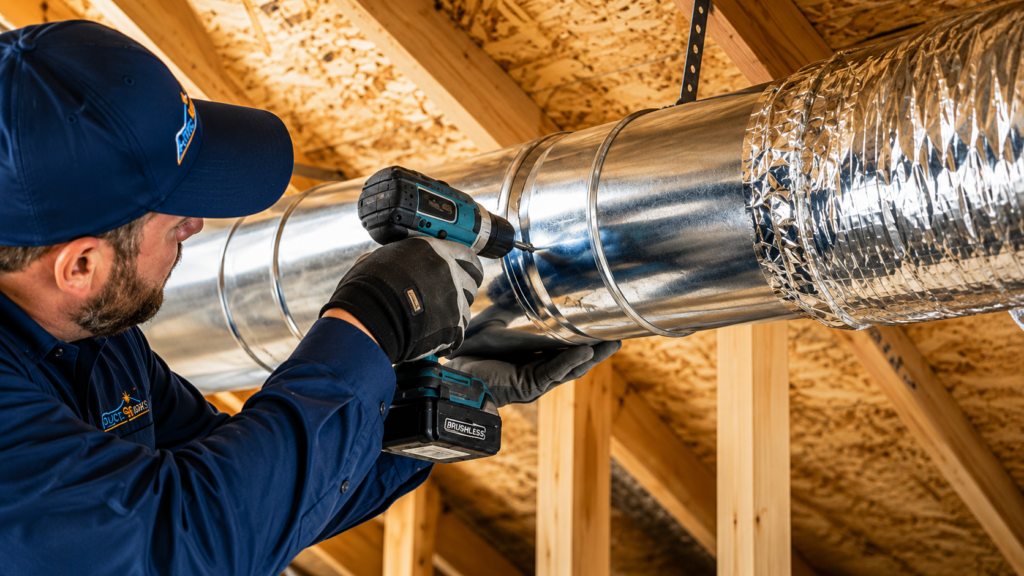
Professional AC duct repairs may include sealing air leaks, reconnecting loose sections, replacing damaged insulation, correcting sagging flexible ducts and repairing or replacing affected components.
The appropriate solution depends on the condition of the ductwork, the severity of the problem and the design of the existing HVAC system.
A proper inspection is important because weak cooling can also result from dirty filters, faulty equipment, incorrect thermostat settings or other issues unrelated to the ducts.
Signs You Need AC Duct Repairs
Recognising the early warning signs of ductwork problems can help you address them before they affect your comfort or HVAC performance.
Weak Airflow From AC Vents
One of the most common signs of ductwork trouble is weak airflow from one or more vents.
You may notice that the air conditioner is running, but certain rooms receive very little cool air. This can happen when ducts are crushed, disconnected, obstructed or leaking.
However, weak airflow can also be caused by a clogged air filter, blocked return grille, malfunctioning fan or other equipment problems.
An HVAC technician can inspect the system to identify the underlying cause and determine whether duct repairs are necessary.
Uneven Cooling Between Rooms
If some rooms feel comfortable while others remain warm, the ductwork may not be distributing conditioned air properly.
Air leaks, poorly balanced ducts, incorrect duct sizing and restricted airflow can contribute to uneven temperatures.
For example, a bedroom at the end of a duct run may receive less conditioned air than a living room closer to the air handler.
A professional assessment can help determine whether the problem requires sealing leaks, adjusting airflow, repairing damaged sections or redesigning part of the duct system.
Higher Electricity Bills
An unexpected increase in electricity bills can indicate that your cooling system is working harder than necessary.
When conditioned air escapes through leaking ducts, less cool air reaches the intended rooms. The system may run longer to maintain the thermostat setting.
Other factors, including outdoor temperatures, energy prices, equipment efficiency and poor building insulation, can also increase electricity consumption.
If your energy bills have increased without an obvious explanation, an HVAC inspection can help determine whether duct leakage is contributing to the problem.
Unusual Noises From Ductwork
Ducts may produce rattling, whistling, popping or banging sounds when air moves through the system.
Some noises result from normal expansion and contraction, but persistent or unusual sounds may indicate loose connections, restricted airflow, damaged supports or excessive air pressure.
A whistling noise near a duct joint may indicate an air leak, while rattling could suggest that a section is not properly secured.
An HVAC technician can investigate the noise and recommend suitable repairs.
Dust Around Vents
Excessive dust around supply vents may indicate an issue with the ductwork, although it can also result from ordinary household dust, dirty filters or inadequate cleaning.
Damaged ducts can sometimes allow dust from roof spaces, crawl spaces or other surrounding areas to enter the air distribution system.
A professional inspection can determine whether the ductwork is contributing to the problem.
If contamination or moisture damage is suspected, the technician should identify the source before recommending cleaning, sealing or replacement.
Damaged or Disconnected Ducts
Visible damage is a strong reason to arrange an inspection.
Look for torn flexible duct material, disconnected joints, crushed sections, deteriorated insulation or corrosion on metal ductwork.
You may also notice loose connections or ducts that have sagged because of inadequate support.
Minor damage may be repairable, but extensive deterioration can make replacing the affected sections more practical.
Do not enter unsafe roof spaces or handle damaged ductwork near electrical equipment without appropriate precautions.
Common Causes of AC Duct Problems
Understanding why ductwork fails can help homeowners reduce the likelihood of recurring problems.
Air Leaks at Connections
Duct joints and connections can develop gaps because of poor installation, ageing sealing materials, vibration or movement within the building.
These leaks allow conditioned air to escape before it reaches the intended room.
Professional repairs may involve securing loose joints and applying suitable duct-sealing materials.
Ordinary household tape is not a reliable long-term solution for most duct connections. Use materials specifically designed for the application and follow the manufacturer’s instructions.
Crushed or Sagging Flexible Ducts
Flexible ducts are commonly installed in residential properties because they can be routed through confined spaces.
However, excessive bends, compression and inadequate support can restrict airflow.
A crushed section may prevent the correct volume of cool air from reaching a room, even when the air conditioning equipment is operating normally.
Repairs may involve restoring the duct’s shape, improving support or replacing a section that has been permanently damaged.
Poor Insulation
Ducts located in hot roof spaces or other unconditioned areas can gain heat from their surroundings.
Damaged or insufficient insulation can make it harder for cooled air to remain at the intended temperature as it travels through the system.
An HVAC professional can assess the insulation and recommend appropriate repairs or upgrades based on the duct location and local requirements.
Pest Damage
Rodents and other pests may damage duct materials while searching for shelter.
Chewed flexible ducts, disturbed insulation and nesting materials can interfere with airflow and potentially introduce contamination.
If pest damage is discovered, address the source of the infestation as well as the damaged ductwork. Otherwise, the problem may return after repairs.
Poor Installation or Incorrect Duct Sizing
Ductwork that is poorly designed or incorrectly sized may struggle to distribute air effectively.
For example, ducts that are too small can restrict airflow, while an unsuitable layout may cause certain rooms to receive too much or too little conditioned air.
If these problems result from the original design, simple sealing may not resolve them.
A qualified HVAC contractor can assess the system’s airflow requirements and determine whether modifications are needed.
Benefits of Professional AC Duct Repairs
Professional AC duct repairs can improve system performance when the work addresses a genuine ductwork problem.
Improved Cooling Performance
Repairing leaks, reconnecting loose ducts and correcting restrictions can help conditioned air reach the rooms where it is needed.
This may improve cooling consistency and reduce temperature differences between rooms.
The actual improvement depends on the condition of the original ductwork and whether other HVAC problems are also present.
Reduced Energy Waste
Leaking ducts can waste conditioned air, particularly when they run through hot roof spaces or other unconditioned areas.
Sealing appropriate leaks and restoring proper airflow can reduce this waste.
Potential energy savings vary according to the size and location of the leaks, the efficiency of the equipment and how frequently the system operates.
More Consistent Indoor Comfort
When airflow improves, rooms may become easier to cool to the desired temperature.
This can help reduce hot spots and improve comfort in bedrooms, living areas and other frequently used spaces.
However, comfort also depends on insulation, windows, solar heat gain, equipment capacity and correct system balancing.
Better Ductwork Reliability
Addressing loose connections, damaged supports and deteriorating materials can help reduce the risk of recurring mechanical problems.
Regular inspections can also identify minor issues before they develop into more extensive damage.
Potentially Longer Equipment Life
When ductwork problems restrict airflow or contribute to excessive system operation, correcting them may help the HVAC equipment operate closer to its intended conditions.
However, duct repairs cannot guarantee a longer equipment lifespan. Proper equipment maintenance and operation are also important.
AC Duct Repair vs Replacement: Which Is Better?
The right choice depends on the condition, age, material and layout of the existing ductwork.
When Repairs Are Appropriate
Repairs may be sufficient when the duct system is generally in good condition and the damage is limited to specific areas.
Examples include a small leak, a loose joint, a short torn section of flexible duct or damaged insulation that can be replaced without removing the entire system.
Targeted repairs can restore performance without the expense of a complete duct replacement.
When Replacement May Be Necessary
Replacement may be more practical when ductwork has widespread damage, extensive deterioration or recurring failures.
It may also be worth considering when the existing design is unsuitable for the property’s cooling requirements.
If the home has undergone renovations or the air conditioning equipment has changed, a new duct layout may improve air distribution.
Ask your HVAC contractor to explain the condition of the existing ducts and whether partial replacement is a suitable alternative to replacing the entire system.
How Much Do AC Duct Repairs Cost?
The cost of AC duct repairs varies according to the location of the damage, the duct material, accessibility and the amount of work required.
A small repair to an accessible joint generally involves less labour than replacing damaged duct sections in a difficult-to-access roof space.
Because pricing varies by region and property, requesting an itemised quotation is the best way to understand the likely cost.
Factors That Affect Repair Costs
Type of damage: Minor leaks may cost less to repair than disconnected or crushed duct sections.
Duct material: Flexible ducts and sheet-metal ducts have different repair requirements.
Accessibility: Ductwork in confined roof spaces or crawl spaces can increase labour time.
Extent of damage: Multiple damaged sections may require additional materials and installation work.
Insulation: Replacing damaged insulation can increase the overall cost.
Additional problems: Pest damage, moisture issues or unsuitable duct design may require extra work.
How to Compare Quotes
Request written quotations from qualified HVAC contractors.
Ask what caused the problem, which sections will be repaired, what materials will be used and whether the work includes checking airflow after the repair.
Confirm whether the price includes labour, materials, access requirements and any follow-up visit.
Comparing the scope of work helps you understand whether a lower quote provides the same service as another contractor’s proposal.
What Happens During Professional AC Duct Repairs?
Understanding the repair process helps homeowners know what to expect.
Step 1: Inspect the HVAC System
The technician examines the accessible ductwork, supply vents, return-air grilles and relevant system components.
They may look for leaks, disconnected sections, damaged insulation, airflow restrictions and signs of moisture or pest activity.
The inspection should also consider other possible causes of poor cooling, such as dirty filters or equipment faults.
Step 2: Identify the Source of the Problem
After inspecting the system, the technician determines whether the issue involves leakage, physical damage, poor airflow or another underlying cause.
Depending on the problem, additional testing may be appropriate to assess airflow or duct leakage.
Identifying the source helps prevent unnecessary repairs and reduces the likelihood of the same problem recurring.
Step 3: Complete the Required Repairs
The technician may seal suitable joints, reconnect ducts, replace damaged sections, improve support or repair insulation.
The method depends on the duct material and the extent of the damage.
Repairs should use appropriate materials and follow applicable installation requirements.
Step 4: Check Airflow and Performance
After completing the repairs, the technician should check the affected ductwork and verify that the system is operating as intended.
Depending on the work, this may involve checking connections, airflow and system operation.
If cooling remains uneven, further investigation may be needed to identify other contributing factors.
How to Maintain AC Ductwork
Regular HVAC maintenance can help identify duct problems and reduce unnecessary wear.
Replace Air Filters Regularly
Follow the manufacturer’s recommendations for checking and replacing air filters.
A dirty filter can restrict airflow and affect cooling performance.
The replacement interval depends on filter type, household conditions, pets and how frequently the air conditioner operates.
Keep Vents Clear
Avoid blocking supply vents or return-air grilles with furniture, curtains or stored items.
Unrestricted airflow helps the air conditioning system distribute conditioned air as intended.
If certain rooms consistently receive too little air, ask an HVAC professional to assess the system’s balance.
Inspect Accessible Ducts
Where it is safe to do so, check accessible ductwork for visible damage, loose connections or deteriorated insulation.
Do not enter unsafe roof spaces or handle damaged ductwork if doing so could create a safety risk.
Arrange a professional inspection if you notice changes in airflow or visible damage.
Schedule HVAC Maintenance
Routine maintenance helps identify problems with the air conditioning equipment and connected ductwork.
A qualified technician can inspect relevant components, assess system performance and recommend repairs where necessary.
Maintenance requirements vary by equipment type and manufacturer guidance.
Choosing a Professional AC Duct Repair Service
Selecting a qualified HVAC contractor is important for ensuring that repairs address the underlying problem.
Check Qualifications and Experience
Look for a professional with experience in residential or commercial ductwork, depending on your property.
Ask about relevant licences, qualifications and insurance for the work being performed in your location.
Request a Proper Inspection
A reliable contractor should inspect the system before recommending extensive repairs or replacement.
Ask which problems were identified and why the proposed solution is appropriate.
Be cautious of recommendations for complete replacement when the contractor has not adequately assessed the existing ductwork.
Ask About Repair Materials
Confirm that the contractor will use materials suitable for the duct type and application.
Connections should be secured properly, leaks sealed with appropriate products and insulation restored where necessary.
Review Warranties and Service Details
Before approving the work, ask whether the repairs include a labour or workmanship warranty.
Confirm what is covered, how long the warranty lasts and whether any exclusions apply.
A written quotation should clearly explain the work to be completed and any additional charges that may arise.
Restore Cooling Performance with AC Duct Repairs
Professional AC duct repairs can help address weak airflow, uneven cooling, air leaks and damaged insulation that interfere with your air conditioning system.
Although ductwork problems can contribute to poor cooling and energy waste, the symptoms may also result from other HVAC issues. A proper inspection is therefore important before deciding which repairs are necessary.
If the damage is limited, targeted repairs may be sufficient. More extensive deterioration or poor duct design may justify replacing affected sections.
Before hiring a contractor, compare quotations, check qualifications and confirm that the proposed work includes appropriate sealing and performance checks.
With suitable repairs and regular maintenance, your ductwork can continue distributing conditioned air effectively and help maintain a comfortable indoor environment.
Frequently Asked Questions
1. What are the signs that AC ducts need repairs?
Common signs include weak airflow, uneven cooling, rising energy bills, unusual duct noises, visible damage and deteriorated insulation. An HVAC inspection can help identify the underlying cause.
2. How much do AC duct repairs cost?
Costs depend on the type of damage, duct material, accessibility and amount of work required. Request a written quotation that outlines labour, materials and any additional charges.
3. Can leaking AC ducts increase energy bills?
Yes. Leaking ducts can allow conditioned air to escape before reaching the intended rooms. Sealing leaks may reduce energy waste, although the actual savings depend on the system and the extent of the leakage.
4. Can I repair AC ducts myself?
Minor visible issues may appear straightforward, but duct repairs can involve confined spaces, electrical hazards and specialised materials. Professional assistance is advisable when damage is extensive, inaccessible or affecting system performance.
5. Should I repair or replace damaged AC ducts?
Repairs may be suitable for isolated leaks, loose joints or minor damage. Replacement may be more practical when ductwork is extensively damaged, deteriorated or incorrectly designed.
6. How long do AC duct repairs take?
The duration depends on the location and extent of the damage. A small repair may take less time than work involving several duct sections or difficult access. Your contractor should provide an estimate after inspection.
7. Do AC duct repairs improve indoor air quality?
Repairs may help prevent unwanted dust or contaminants from entering through damaged ductwork, depending on the source of the problem. Air quality also depends on filtration, ventilation, moisture control and overall HVAC maintenance.
8. How often should AC ducts be inspected?
Inspection frequency depends on the system’s age, condition, operating environment and maintenance history. Arrange an inspection if you notice airflow problems, visible damage, unusual odours or unexplained changes in cooling performance.