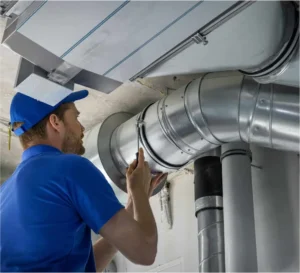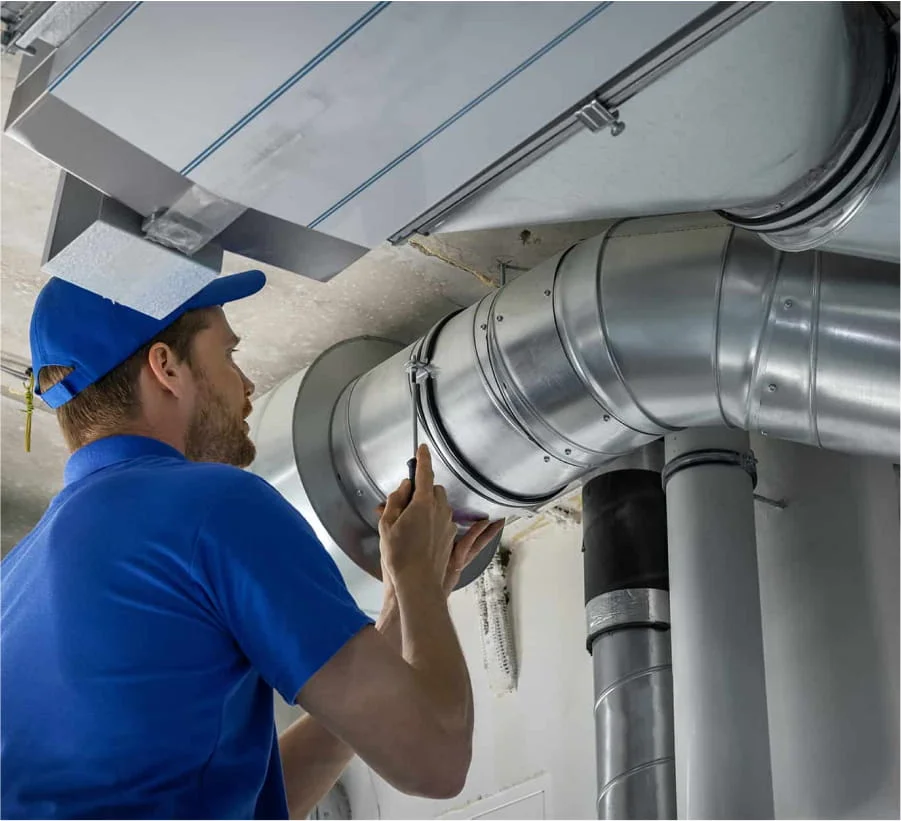
A properly functioning duct system is essential for maintaining comfortable indoor temperatures and supporting the performance of your heating, ventilation, and air conditioning (HVAC) system. When ducts become damaged, disconnected, blocked, or poorly sealed, conditioned air may not reach the rooms where it is needed. This can lead to uneven temperatures, reduced airflow, unnecessary energy consumption, and ongoing comfort problems.
Many homeowners overlook ductwork because it is usually hidden behind walls, above ceilings, or inside roof spaces. However, problems within the duct system can affect the performance of the entire heating and cooling setup.
Professional Duct system repairs can help restore airflow, address air leaks, improve insulation performance, and resolve issues that prevent your HVAC system from operating as intended. Depending on the condition of the ductwork, a technician may be able to repair individual sections without replacing the entire network.
Understanding how duct systems work, what causes common problems, and when professional assistance is necessary can help you make informed maintenance decisions.
This guide explains the warning signs of duct damage, common repair methods, factors affecting repair costs, and practical steps for maintaining your duct system.
What Are Duct System Repairs?
Duct system repairs involve identifying and correcting faults in the network of ducts that carries conditioned air throughout a building. These repairs may address physical damage, loose connections, air leakage, insulation problems, restricted airflow, or other defects affecting system performance.
In a typical ducted air conditioning system, supply ducts deliver cooled or heated air to individual rooms. Return-air pathways carry air back to the HVAC equipment, where it can be filtered and conditioned again.
Both sides of the system must work properly to support effective air circulation. A damaged supply duct can reduce the amount of conditioned air reaching a room, while a restricted return-air pathway can interfere with overall airflow.
Depending on the fault, repairs may involve reconnecting separated duct sections, sealing suitable joints, replacing damaged flexible ductwork, restoring insulation, or correcting sections that restrict airflow.
The appropriate solution depends on the location and extent of the damage, the duct material, the system design, and the accessibility of the affected area.
Not every airflow problem requires duct repairs. A blocked filter, malfunctioning fan, faulty damper, or equipment issue can produce similar symptoms. A professional assessment helps identify the actual cause before work begins.
Common Signs Your Duct System Needs Repairs
Duct problems can develop gradually, making early warning signs easy to overlook. Recognising these symptoms can help you address issues before they become more expensive or disruptive.
Uneven temperatures between rooms
If some rooms remain warm while others become comfortably cool, the duct system may not be distributing air evenly.
This can happen when ducts leak, become crushed, or contain restrictions that reduce airflow. Poorly designed duct layouts and incorrectly adjusted dampers can also contribute to temperature differences.
For example, a bedroom at the end of a long duct run may receive less conditioned air than a nearby living room. If the difference persists despite normal system operation, an airflow assessment may be worthwhile.
However, thermostat placement, insulation, sunlight exposure, and equipment performance should also be considered before concluding that duct repairs are necessary.
Weak airflow from vents
Reduced airflow from one or more vents can indicate a disconnected duct, a crushed flexible section, a blockage, or a poorly functioning damper.
If airflow is weak throughout the property, the problem may instead involve a dirty filter, fan fault, or another equipment issue.
Check accessible filters and make sure supply vents are not obstructed by furniture or curtains. If the problem continues, a qualified technician can inspect the ductwork and HVAC equipment to determine the cause.
Higher energy bills
Leaking ducts can allow conditioned air to escape into roof spaces, wall cavities, or other areas outside the intended living environment.
When this happens, the system may need to run longer to maintain the selected temperature. This can contribute to increased energy consumption, particularly when the leakage is extensive.
Energy bills can also rise because of seasonal temperature changes, increased usage, poor equipment efficiency, or inadequate building insulation. Duct inspection can help determine whether leakage is part of the problem.
Unusual noises from the ductwork
Whistling, rattling, banging, or flapping sounds may indicate loose duct connections, vibrating components, airflow restrictions, or poorly secured duct sections.
A flexible duct that has become loose or compressed may create turbulence and noise as air passes through it.
Some sounds originate from the air conditioning equipment rather than the ducts themselves. A technician can inspect the system to establish whether the noise requires duct repairs or another form of maintenance.
Dust around vents
Excessive dust around air vents may indicate a maintenance issue, a dirty filter, air leakage, or contamination near the duct system.
Leaking return-air ducts located in dusty spaces can potentially draw unwanted particles into the system. However, dust can also come from normal household activities, open windows, carpets, and other indoor sources.
If dust accumulation is unusual or persistent, investigate the filter, duct connections, and surrounding environment rather than assuming the entire duct system needs cleaning or replacement.
Visible damage to ducts
If accessible ductwork has tears, disconnected joints, crushed sections, damaged insulation, or loose supports, repairs may be necessary.
Flexible ducts can become compressed when stored items are placed on them or when roof-space work disturbs their position. Metal ducts may develop damaged joints or loose connections.
Visible defects should be assessed promptly, especially when they affect significant sections of the system.
What Causes Duct System Problems?
Ductwork can deteriorate for several reasons. Understanding the underlying cause helps determine which repairs are likely to provide a lasting solution.
Age and material deterioration
Duct materials, insulation, seals, and connections can deteriorate over time. Older systems may have brittle components, damaged outer coverings, or joints that no longer remain secure.
Age alone does not mean a duct system needs replacing. If the structure remains sound and the damage is localised, repairs may be sufficient.
A technician should assess the overall condition before recommending extensive work.
Poor installation
Incorrectly installed ductwork can develop problems even when the materials are relatively new.
Examples include unsupported flexible ducts, excessive bends, poorly sealed joints, and sections that are too small for the required airflow.
These issues can increase resistance, restrict air delivery, and contribute to noise or leakage.
In some cases, correcting the installation defects can improve performance without requiring a complete system replacement.
Physical damage
Ducts installed in roof spaces, garages, and service areas may be damaged during renovations, electrical work, roof maintenance, or storage activities.
Flexible ducts can tear or become crushed, while metal ducts may be bent or disconnected.
Regular visual inspections of accessible sections can help identify physical damage before it significantly affects airflow.
Rodents and other pests
Rodents may chew through flexible duct coverings or insulation when moving through roof spaces and other concealed areas.
This damage can create openings that allow conditioned air to escape. If rodents are responsible, repairing the ducts without addressing the pest activity may result in further damage.
The affected area should be assessed, the pest issue addressed appropriately, and damaged materials repaired or replaced using suitable methods.
Moisture and condensation
Moisture can affect duct insulation and surrounding building materials. Condensation may occur when temperature differences, humidity, insulation defects, or vapour-control problems create conditions that allow water to accumulate.
Persistent moisture can damage materials and contribute to indoor air quality concerns.
If moisture is found around ductwork, the underlying cause should be investigated before repairs are completed. Simply replacing wet insulation may not solve the problem if condensation or water intrusion continues.
Types of Duct System Repairs
The repair method depends on the duct material, the nature of the defect, and the system’s operating requirements.
Sealing leaking duct joints
Air leaks often occur where duct sections connect to one another, where ducts attach to equipment, or around certain fittings.
Suitable duct sealants or approved foil-faced sealing tapes may be used, depending on the application and manufacturer’s requirements.
Ordinary household cloth duct tape is generally not a reliable long-term solution for HVAC duct sealing because its adhesive may deteriorate under operating conditions.
Proper sealing can reduce air loss and help the system deliver conditioned air more effectively.
Repairing disconnected ducts
A duct that has separated from a fitting may allow a significant amount of air to escape before it reaches the intended room.
A technician may reconnect the section, secure it with suitable fittings or fasteners, and seal the joint appropriately.
The underlying cause should also be checked. If the duct has insufficient support or is under excessive tension, reconnecting it without correcting the installation may lead to another failure.
Repairing damaged flexible ductwork
Small areas of damage may sometimes be repairable when the surrounding duct remains structurally sound and the repair method is suitable for the material.
More extensive tears, crushed sections, deteriorated inner liners, or widespread damage may require replacement of the affected length.
The repaired duct should be supported correctly and routed to minimise sharp bends and compression.
Restoring damaged insulation
Duct insulation helps limit heat transfer between the air inside the duct and the surrounding environment.
If insulation becomes torn, compressed, wet, or detached, its performance may be reduced. Repairs may involve restoring the insulation or replacing damaged sections with suitable materials.
Where condensation is present, the technician should also assess the cause to prevent recurring moisture problems.
Correcting airflow restrictions
Airflow restrictions may result from compressed ducts, excessive bends, blocked sections, incorrectly positioned dampers, or unsuitable duct sizing.
A technician may reposition ducts, remove obstructions, adjust dampers, or recommend design changes where necessary.
If the system was poorly designed from the beginning, minor repairs may not fully resolve the problem. More extensive modifications may be required to achieve appropriate airflow.
The Benefits of Professional Duct System Repairs
Correctly diagnosing and repairing ductwork can improve the operation of an HVAC system. The benefits depend on the severity of the original fault and the quality of the repair.
Improved airflow and comfort
Repairing leaks, reconnecting ducts, and removing restrictions can help deliver more conditioned air to the rooms that need it.
This may improve temperature consistency and reduce the frustration of rooms that remain uncomfortable despite the system running.
Airflow balancing may also be necessary to distribute air more evenly after repairs.
Reduced energy waste
When ducts leak, some conditioned air never reaches its intended destination. Sealing leaks can reduce this waste and help the system operate more effectively.
The amount of improvement depends on how much air was being lost and where the leakage occurred.
Repairs are not a guarantee of lower energy bills, as energy consumption also depends on equipment efficiency, weather, thermostat settings, and building insulation.
Longer service life for ductwork
Addressing loose connections, damaged insulation, and unsupported sections can help prevent further deterioration.
Correcting the cause of a defect is especially important. For example, supporting a sagging duct may reduce strain on its connections and lower the chance of repeated separation.
Better control of indoor air quality concerns
Repairing leaks near dusty or contaminated areas may reduce the movement of unwanted particles into the air distribution system.
However, duct repairs do not replace proper filtration, moisture management, or cleaning when contamination is present.
If mould or other suspected biological growth is discovered, its source should be assessed and addressed using an appropriate remediation approach.
Duct System Repairs Versus Duct Replacement
Choosing between repairs and replacement depends on the extent of damage, the condition of the remaining ductwork, and the system’s overall performance.
Repairs may be appropriate when a small number of joints are leaking, a single section has been disconnected, or damage is limited to an accessible area.
Replacement may be more practical when large sections are deteriorated, multiple ducts are damaged, insulation has failed throughout the network, or the layout consistently restricts airflow.
A system that requires frequent repairs may also benefit from a broader assessment to determine whether ongoing maintenance is becoming less economical than replacement.
Before approving a complete replacement, ask the contractor to explain why repairs are insufficient. A clear inspection report can help distinguish necessary work from optional improvements.
In some properties, a combination of targeted repairs and partial duct replacement provides a suitable balance between cost and performance.
How Much Do Duct System Repairs Cost?
The cost of duct repairs varies according to the type of damage, accessibility, duct material, labour requirements, and amount of work involved.
A simple repair to an accessible connection may cost considerably less than repairing ducts throughout a large property or working in a difficult roof cavity.
Several factors can influence the final quote.
Extent of the damage
Localised problems are generally simpler to address than widespread leakage, multiple disconnected sections, or extensive deterioration.
If several defects are found, the contractor may recommend repairing them during the same visit to reduce repeated labour costs.
Accessibility
Ductwork in an open, accessible space may be easier to inspect and repair than ducts concealed behind ceilings or within restricted roof cavities.
Difficult access can increase labour time and may require additional precautions.
Materials and insulation
The type of duct, fittings, sealants, supports, and insulation required will affect the cost.
Specialist materials may be necessary for particular temperatures, environments, or system configurations.
Additional work
If the underlying problem involves pest damage, moisture, faulty dampers, or an unsuitable duct design, additional work may be needed beyond the initial repair.
Ask whether these items are included in the quote or priced separately.
When comparing quotes, confirm whether inspection, labour, materials, sealing, insulation repairs, and post-repair testing are included. A clear scope of work makes it easier to compare providers fairly.
The Professional Duct Repair Process
Understanding the repair process helps you know what to expect when arranging service.
Initial inspection
The technician examines accessible duct sections, joints, insulation, supports, and visible signs of damage.
They may also inspect filters, vents, dampers, and HVAC equipment to determine whether the symptoms originate in the ductwork or another component.
Diagnosis and repair planning
After identifying the problem, the technician explains the recommended repair and whether any additional defects need attention.
You should receive a clear description of the work, the materials required, and any limitations caused by inaccessible sections.
Completing the repairs
Depending on the issue, the technician may reconnect ducts, seal joints, replace damaged sections, restore insulation, or correct airflow restrictions.
The work should follow the requirements of the duct materials and HVAC system.
Testing and verification
After repairs, the technician should check the affected areas and confirm that connections are secure.
Where appropriate, airflow measurements, leakage checks, or operational tests may be used to verify that the system is performing as expected.
Ask the contractor what testing was completed and whether any additional work is recommended.
How to Choose a Duct Repair Contractor
Selecting a qualified contractor is important because poorly performed repairs can lead to recurring leaks, restricted airflow, and unnecessary expense.
Look for a provider with suitable HVAC experience, appropriate qualifications, and any licences required for the work in your location.
Ask whether the contractor will inspect the system before recommending repairs and whether the proposed solution addresses the cause of the problem.
A reliable provider should explain the findings, outline the repair process, and provide a clear quote that identifies labour and material costs.
It is also worth asking whether post-repair testing is included and what warranty, if any, applies to the workmanship and materials.
Be cautious of recommendations for complete replacement when the only identified problem is a minor, repairable defect. Equally, repeated patching may not be a good long-term solution when the system has widespread deterioration.
The right contractor should help you understand the available options and choose a solution suited to your system and budget.
How to Maintain Your Duct System After Repairs
Regular maintenance can help protect repaired ductwork and identify developing problems before they affect system performance.
Replace or clean air filters according to the manufacturer’s recommendations. Dirty filters can restrict airflow and create symptoms that may be mistaken for duct damage.
Keep supply vents and return-air grilles clear of furniture, curtains, and other obstructions.
If ductwork is accessible, inspect it periodically for loose connections, damaged insulation, crushed sections, moisture, or pest activity. Avoid entering unsafe roof spaces or disturbing electrical services.
Arrange routine HVAC maintenance so a qualified technician can check the equipment and assess airflow when necessary.
If you notice unusual noises, persistent temperature differences, or sudden changes in airflow, investigate the cause rather than assuming the previous repair has failed.
Maintaining the surrounding roof space, addressing water leaks promptly, and managing pest activity can also help reduce the risk of future duct damage.
Conclusion
Ductwork plays an important role in distributing conditioned air throughout a home or commercial building. When ducts leak, become disconnected, lose insulation, or develop airflow restrictions, they can affect comfort and reduce the efficiency of the HVAC system.
Professional Duct system repairs can help correct these problems without requiring a complete replacement when the damage is limited and the remaining ductwork is in good condition.
The best results begin with an accurate inspection, an appropriate repair plan, and testing to confirm that the work has addressed the underlying fault.
If you notice weak airflow, uneven temperatures, unusual duct noises, or visible damage, arrange an assessment before the problem worsens. With timely repairs and regular maintenance, your duct system can continue supporting comfortable indoor conditions and reliable heating and cooling performance.
Frequently Asked Questions
1. What are the most common duct system problems?
Common problems include leaking joints, disconnected ducts, damaged insulation, crushed flexible ductwork, airflow restrictions, and physical damage caused by maintenance work or pests.
2. How do I know if my ductwork needs repairs?
Warning signs include weak airflow, uneven room temperatures, unusual noises, damaged visible ducts, and unexplained increases in energy use. A professional inspection can help confirm the cause.
3. Can duct system repairs reduce energy bills?
Repairs may reduce energy waste when significant duct leakage or insulation damage is present. Actual savings depend on the original condition of the system and other factors affecting energy consumption.
4. Is it better to repair or replace damaged ductwork?
Repairs are often suitable for isolated defects, while replacement may be more practical when damage is widespread or the duct layout is unsuitable. A professional assessment can help determine the most appropriate option.
5. How long do duct system repairs take?
The timeframe depends on the location, type, and extent of the damage. A minor connection repair may be completed relatively quickly, while multiple damaged sections or difficult access can require more time.
6. Can damaged ducts affect indoor air quality?
Yes. Leaks near dusty or contaminated spaces may allow unwanted particles to enter the system. Moisture-related problems can also affect indoor air quality and should be investigated.
7. How often should ductwork be inspected?
There is no single interval that suits every system. Ductwork can be checked during routine HVAC maintenance, with additional inspections recommended when airflow changes, damage, moisture, or unusual noises appear.
8. Can I repair air conditioning ducts myself?
Simple visual checks may help identify obvious problems, but repairs involving concealed ducts, electrical services, insulation, or system airflow are best assessed by a suitably qualified professional. Improper sealing or duct handling can create additional problems.
9. What causes ductwork to become disconnected?
Ducts may separate because of inadequate support, loose connections, installation defects, physical disturbance, or deterioration of connecting materials. Repairs should address both the separation and the reason it occurred.
10. Do duct repairs require the air conditioning system to be replaced?
No. Duct repairs can often be completed while retaining the existing HVAC equipment, provided it remains suitable and operational. The technician should assess the equipment and ductwork together before recommending replacement.