Alpha Rock Supplement 2026 – Understanding Product Ingredients, Label Information, and Supplement Safety.
Dietary supplements have become a widely discussed topic in the health and wellness industry. People increasingly want to understand the ingredients in supplements, how product labels work, and what information manufacturers should provide before consumers make purchasing decisions.
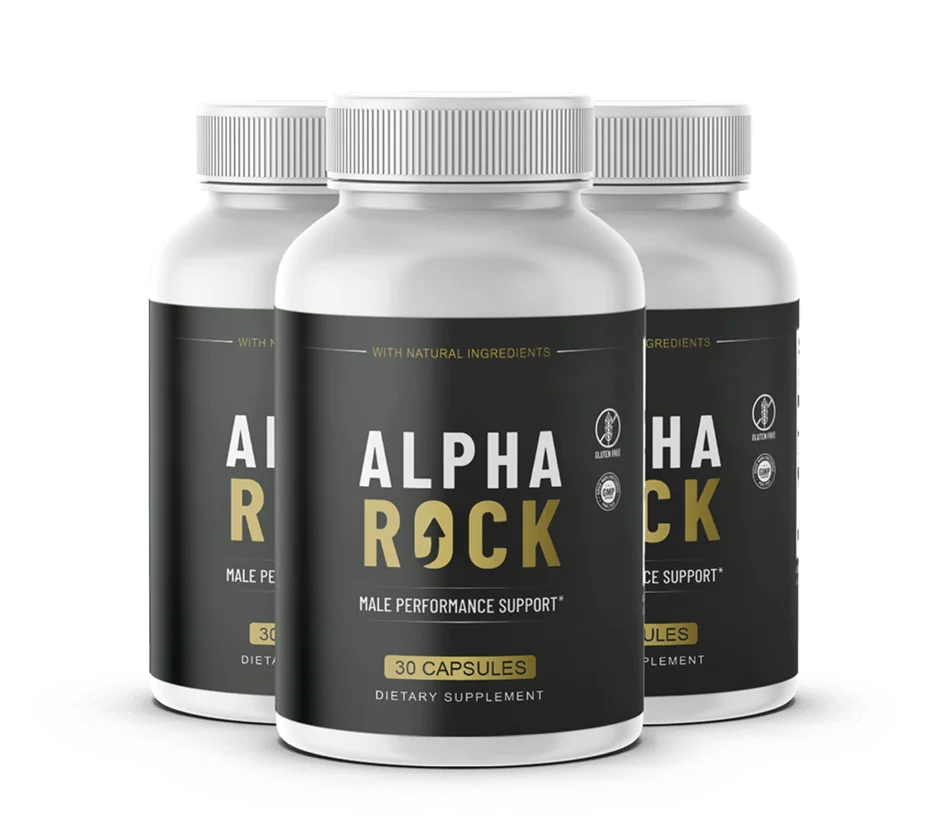
One product that appears in online discussions about men’s wellness is Alpha Rock Supplement. The product is marketed as a daily men’s wellness supplement, and its online product information describes a combination of vitamins, minerals, amino acids, and botanical ingredients.
However, understanding a supplement requires more than reading promotional descriptions. Consumers should examine the actual ingredient label, check the amounts of individual ingredients, understand the limitations of available research, and consider whether a product is appropriate for their circumstances.
This article explores publicly listed Alpha Rock product information, ingredient transparency, supplement quality, and important safety considerations for 2026.
What Is Alpha Rock Supplement?
Alpha Rock is the name used by several online dietary supplement products. One currently listed capsule formulation describes itself as a daily men’s wellness supplement.
According to its published product information, this formulation contains:
-
Vitamin B3 (Niacin)
-
Zinc
-
L-Citrulline
-
L-Carnitine
-
Pine Bark Extract
-
Maca Root Extract
-
Grape Skin Extract
-
Saffron Stigmas Extract
These ingredients belong to different nutritional and botanical categories.
Vitamins and minerals contribute to normal physiological functions, while amino acids and plant extracts are frequently studied in nutritional and wellness research.
It is important to understand that research involving individual ingredients does not automatically establish the effectiveness of a finished supplement.
A complete evaluation requires information about the formulation, ingredient quantities, manufacturing standards, and independent testing.
Understanding the Alpha Rock Ingredient List
An ingredient list is one of the most important parts of a dietary supplement label.
It helps consumers understand what a product contains and provides information that can be discussed with a qualified healthcare professional.
The published label for one Alpha Rock capsule formulation lists two ingredients separately and groups six others into a proprietary blend.
1. Vitamin B3 (Niacin)
Niacin is a water-soluble B vitamin involved in normal energy metabolism.
The human body uses niacin to produce compounds that help cells convert nutrients into usable energy.
Niacin is naturally available in foods such as:
-
Fish
-
Poultry
-
Peanuts
-
Whole grains
-
Certain vegetables
The Alpha Rock product information lists 20 mg of niacin per capsule.
Consumers should consider their total intake from food, multivitamins, and other supplements rather than evaluating one product in isolation.
2. Zinc
Zinc is an essential mineral involved in several important biological processes.
Its functions include:
-
Supporting normal immune function
-
Contributing to normal wound healing
-
Supporting DNA synthesis
-
Helping maintain normal cellular function
-
Participating in numerous enzyme reactions
Zinc is available through foods such as meat, seafood, dairy products, legumes, nuts, and seeds.
The published Alpha Rock label lists 11 mg of zinc as zinc oxide.
The form of zinc matters because different zinc compounds can have different absorption characteristics.
Excessive zinc intake can also create nutritional imbalances, which is why supplement labels and total daily intake deserve attention.
3. L-Citrulline
L-Citrulline is an amino acid involved in the body’s production of L-arginine.
L-Arginine participates in the production of nitric oxide, a molecule involved in regulating blood vessel function.
Researchers have studied L-citrulline in different nutritional and exercise-related contexts.
However, research results depend on the quantity used, the study population, and the specific formulation.
In the Alpha Rock formulation described on its product website, L-citrulline is included in a proprietary blend rather than listed with an individual quantity.
This makes direct comparisons with research doses difficult.
4. L-Carnitine
L-Carnitine is a naturally occurring compound involved in transporting fatty acids into mitochondria.
Mitochondria are structures inside cells that participate in energy production.
Carnitine is present in certain foods, particularly animal-based foods.
It has also been studied in nutritional and exercise-related research.
Nevertheless, the presence of an ingredient in a supplement does not demonstrate that the finished product produces a particular outcome.
The quantity and formulation are important considerations.
5. Pine Bark Extract
Pine bark extract is a botanical ingredient obtained from the bark of certain pine trees.
It contains naturally occurring plant compounds known as polyphenols.
These compounds have been investigated for their antioxidant properties.
When evaluating a pine bark supplement ingredient, useful label information includes:
-
Botanical identification
-
Extract concentration
-
Standardization information
-
Ingredient quantity
-
Quality-testing documentation
Without these details, comparing different formulations becomes difficult.
6. Maca Root Extract
Maca is a plant traditionally cultivated in the Andes region of South America.
Its root has a long history of use as a food ingredient.
Modern nutritional research has investigated maca in relation to several wellness topics.
However, the available evidence varies in quality and scope.
Consumers should distinguish traditional use from scientifically established health outcomes.
The Alpha Rock formulation lists maca root extract within its combined proprietary blend.
7. Grape Skin Extract
Grape skins contain naturally occurring polyphenols and other plant compounds.
These compounds have attracted scientific interest because of their antioxidant properties.
Grape-derived ingredients can differ according to the grape variety, extraction method, and standardization process.
A transparent supplement label should ideally provide sufficient information to identify the specific extract being used.
8. Saffron Stigmas Extract
Saffron is obtained from the stigmas of the Crocus sativus flower.
It is widely recognized as a culinary ingredient and has also been examined in nutritional research.
Scientific studies have explored saffron compounds in different wellness contexts.
However, the results of individual studies should not be interpreted as proof that every supplement containing saffron produces the same outcomes.
The quantity, extract quality, and overall formulation all matter.
Why Supplement Label Transparency Matters
Transparency is an important part of responsible supplement manufacturing and marketing.
Consumers should be able to understand what they are purchasing.
A well-presented supplement label should identify:
-
Individual ingredients.
-
The quantity of each ingredient.
-
Serving size.
-
Suggested serving information.
-
Other ingredients and capsule materials.
-
Manufacturer or distributor details.
-
Relevant warnings and storage instructions.
-
Batch identification and expiration information.
These details help consumers evaluate the product and identify questions that require professional advice.
Understanding Proprietary Blends
A proprietary blend is a combination of ingredients listed under one collective amount.
For example, the Alpha Rock formulation described on its product website lists a combined 570 mg blend containing six ingredients.
The website does not provide the individual quantities of all six ingredients.
This creates an important limitation.
Although consumers can identify the ingredients, they cannot determine exactly how much of each ingredient the formulation contains.
Consequently, research involving a specific quantity of an individual ingredient cannot automatically be applied to the complete product.
Ingredient transparency is therefore an important consideration when evaluating any dietary supplement.
Visit us – Alpha Rock Official Website
How to Evaluate Supplement Quality in 2026
The supplement industry continues to attract consumer attention, making product evaluation increasingly important.
Instead of relying exclusively on advertisements, consumers should look for verifiable product information.
Manufacturing Standards
Good Manufacturing Practices, commonly called GMP, describe standards and procedures intended to support consistent manufacturing quality.
Relevant quality considerations include:
-
Manufacturing controls
-
Ingredient identification
-
Production documentation
-
Contamination prevention
-
Packaging standards
-
Quality assurance procedures
A GMP statement is useful information, but it is not proof that a particular product has been independently tested or clinically proven effective.
Independent Laboratory Testing
Independent laboratory testing can provide additional information about product quality.
Depending on the testing program, laboratories may examine:
-
Ingredient identity
-
Ingredient concentration
-
Heavy metals
-
Microbial contamination
-
Other potential contaminants
Consumers should look for actual documentation rather than assuming that a general quality statement means every batch has been independently tested.
Ingredient Traceability
Ingredient traceability helps establish where raw materials originate and how they move through the manufacturing process.
This is particularly relevant for botanical ingredients.
Different growing conditions, extraction processes, and suppliers can affect the characteristics of plant extracts.
Manufacturers should maintain appropriate documentation to support ingredient quality.
Understanding Supplement Research
One of the biggest challenges when evaluating nutritional supplements is interpreting scientific research correctly.
A product website might mention research involving several individual ingredients.
However, three separate questions must be considered:
First: Has the ingredient been studied?
An ingredient may have scientific literature examining its nutritional properties.
Second: Does the research match the product formulation?
The research quantity, ingredient form, and population studied may differ significantly from those in a commercial supplement.
Third: Has the finished product been tested?
A clinical study examining the actual finished formulation provides different evidence from research examining individual ingredients.
These distinctions are essential for responsible health-related content.
Supplement Safety and Responsible Decision-Making
Dietary supplements should not be treated as substitutes for balanced nutrition, appropriate healthcare, or medical evaluation.
Some ingredients may interact with medications or be unsuitable for people with particular medical circumstances.
There can also be differences between products sold under similar names.
For these reasons, consumers should avoid making decisions based solely on marketing claims.
People considering supplements should discuss them with a qualified healthcare professional, particularly when medications or existing health concerns are involved.
Supplements formulated and marketed for adult wellness are not automatically appropriate for children or teenagers.
Why Product Verification Is Important
Another important issue with Alpha Rock is product-name consistency.
Online searches identify multiple websites using the Alpha Rock or similar names.
These websites do not all describe identical formulations.
Some describe capsules with one ingredient combination, while others advertise different formulations or product formats.
This means that the product name alone is not sufficient to identify the exact supplement.
Before evaluating any product information, readers should verify:
-
The exact website and seller.
-
The product format.
-
The physical packaging.
-
The ingredient panel.
-
The serving information.
-
The manufacturer or distributor.
-
The applicable product documentation.
This is a useful general practice when researching supplements online.
Common Questions About Alpha Rock Supplement
What is Alpha Rock Supplement?
Alpha Rock is a product name used for several dietary supplements marketed online. One listed formulation is a capsule containing niacin, zinc, amino acids, and botanical extracts.
What ingredients are listed in Alpha Rock?
One published formulation lists niacin, zinc, L-citrulline, L-carnitine, pine bark, maca root, grape skin, and saffron stigmas.
Are all Alpha Rock products identical?
No. Multiple online sellers use similar product names while listing different formulations. Consumers should verify the exact product label.
What is a proprietary blend?
A proprietary blend is a group of ingredients listed under one combined quantity instead of separate individual quantities.
Does ingredient research prove that a finished supplement works?
No. Research on individual ingredients does not establish the effectiveness of a finished product.
Why should consumers read supplement labels?
Labels provide important information about ingredients, serving sizes, quantities, warnings, and manufacturing details.
Are dietary supplements suitable for everyone?
No. Suitability depends on age, nutritional needs, health circumstances, and other factors. Professional guidance is important.
Conclusion
Alpha Rock Supplement is one example of the many products discussed in the expanding dietary supplement market.
Its published ingredient information illustrates why consumers should pay attention to nutritional ingredients, proprietary blends, manufacturing documentation, and scientific evidence.
The most useful approach to supplement research is to prioritize transparency and reliable information over promotional promises.
In 2026, responsible supplement evaluation should involve checking the actual product label, understanding ingredient quantities, reviewing available quality documentation, and seeking qualified healthcare advice when necessary.
Ultimately, informed decisions begin with accurate information. A supplement’s ingredient list is only one part of understanding its quality, suitability, and evidence base.