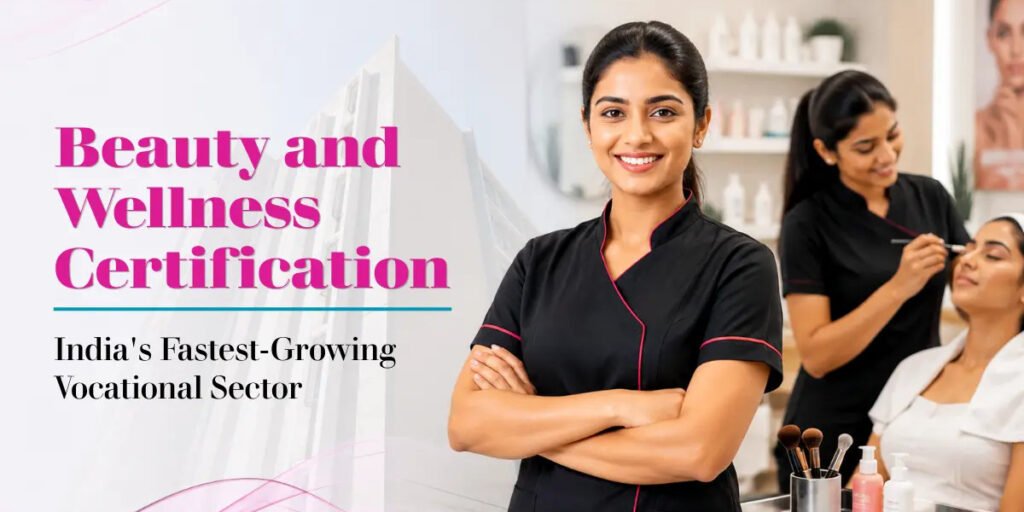
The beauty and wellness industry in India is no longer just about looking good — it has evolved into a powerful economic force creating millions of meaningful career opportunities every single year. From skilled makeup artists and licensed hair therapists to spa consultants and holistic wellness coaches, the demand for trained professionals has never been higher. If you have been wondering whether a structured certification can truly transform your career trajectory, the answer is a resounding yes.
This article walks you through why formal credentials matter, what to look for in a quality program, and how the right training institute can open doors you never imagined possible.
Why Formal Certification Matters in the Beauty Industry
The Industry Is Booming — And So Is the Competition
The beauty and wellness sector in India is growing at a compound annual growth rate (CAGR) of over 18%, making it one of the fastest-expanding industries in the country. With this growth comes one significant challenge — the gap between raw talent and industry-ready professionals.
Employers, salon chains, hotel spas, and international beauty brands are no longer looking for candidates who simply “know” beauty. They want certified, trained, and assessed professionals who can deliver consistent results under real-world conditions.
Here is why certification gives you a clear edge:
- It validates your skills through standardized assessment
- It builds credibility with employers and clients
- It aligns your qualifications with National Skills Qualifications Framework (NSQF) levels
- It opens pathways for international employment opportunities
- It enables you to charge premium rates as a freelance professional
What a Quality Beauty and Wellness Certification Covers
Core Skill Areas to Expect in Any Reputable Program
A well-structured Beauty and Wellness Certification is not just about learning makeup application or hair techniques. The best programs take a comprehensive approach that covers both technical skills and professional soft skills.
Typical subject areas include:
- Skin care and facial treatments — understanding skin types, conditions, and appropriate treatments
- Hair care and styling techniques — from basic cuts to advanced colouring and treatment
- Nail technology — manicure, pedicure, nail extensions, and nail art
- Makeup artistry — bridal, editorial, and everyday makeup techniques
- Waxing and depilation services — safe and effective hair removal practices
- Spa and body therapy — massage techniques, aromatherapy, and relaxation therapies
- Health, hygiene, and safety standards — maintaining a professional and safe work environment
- Client communication and consultation — understanding and managing client expectations
The inclusion of practical internship hours with leading beauty salons and spas is what separates truly career-ready graduates from those who only possess theoretical knowledge.
How CII Skills Is Shaping the Future of Vocational Training
Industry-Led Skill Development That Actually Works
One name that stands out in India’s vocational skilling ecosystem is CII Skills — the skill development initiative backed by the Confederation of Indian Industry (CII). CII has been driving India’s skills agenda since 1987, working hand in hand with the government, industry leaders, and academic institutions to build a robust and aspirational skills ecosystem across the country.
What makes CII Skills different from conventional training providers is its deep industry integration. Training is not designed in a classroom vacuum — it is shaped by the very companies that will eventually hire these professionals.
Key highlights of what CII Skills brings to the table:
- NCVET-recognized awarding body — Certificates carry national-level recognition under the National Council for Vocational Education and Training
- Alignment with NSQF — Every course is aligned with India’s National Skills Qualifications Framework, ensuring portability and credibility
- State-of-the-art sectoral labs — Practical, hands-on training in purpose-built labs that mirror real industry environments
- Placement support — Active linkages with industry partners for job placement after course completion
- CSR-supported programs — Training opportunities for underserved youth, enabling inclusive economic participation
- Multi-Skill Training Institutes (MSTIs) — Specialized centres designed to deliver in-demand job-role training across sectors
Whether you are a school leaver exploring your first career, a working professional looking to upskill, or an entrepreneur planning to launch your own salon, CII Skills offers structured pathways built for real outcomes.
Career Paths That Open Up After Certification
From Certified to Career-Ready
Completing a recognized Beauty and Wellness Certification does not just put a credential in your portfolio — it unlocks a wide spectrum of professional opportunities across multiple industries.
Here are the most sought-after career roles graduates can pursue:
- Beauty Therapist — Working in premium salons and wellness clinics
- Makeup Artist — Serving bridal, fashion, film, and editorial clients
- Hair Stylist / Hair Colourist — Specializing in cutting-edge techniques for high-end salons
- Skin Care Specialist — Partnering with dermatology clinics and luxury spas
- Nail Technician — Offering nail extension and artistry services
- Spa Therapist — Working in five-star hotel spas and wellness retreats
- Salon Owner / Entrepreneur — Launching an independent beauty business with industry-backed expertise
- Beauty Educator / Trainer — Training the next generation of beauty professionals
The industry also offers significant scope for international employment, particularly in Gulf countries, Europe, and Southeast Asia, where Indian beauty professionals are highly regarded.
What to Look for Before Enrolling
Choosing the Right Certification Program
Not all certification programs are created equal. Before you invest your time and money, here are the key factors to evaluate:
- Accreditation and recognition — Is the program recognized by a national body like NCVET or affiliated with a reputable awarding authority?
- Curriculum depth — Does the course cover both foundational and advanced skill sets?
- Practical training hours — A good program should include substantial hands-on practice, not just theory
- Industry tie-ups — Does the institute have active connections with employers and placement networks?
- Trainer credentials — Are the instructors industry professionals with real-world experience?
- Infrastructure quality — Are there modern labs, tools, and equipment that reflect current industry standards?
- Alumni outcomes — What are past graduates doing, and how quickly did they find employment?
Choosing an institute that checks all these boxes can make the difference between a credential that sits in a drawer and one that actively launches your career.
The Bigger Picture: Vocational Skills Are the New Academic Degree
There is a cultural shift happening in India — and it is overdue. For decades, conventional higher education was seen as the only path to a respectable career. Today, skilled tradespeople, certified beauty professionals, and vocational graduates are commanding salaries, building businesses, and achieving financial independence in ways that many degree holders cannot.
The government’s push through initiatives like Skill India has brought vocational education into the mainstream, and organizations like CII have been at the forefront of making this shift credible and scalable.
If you are passionate about beauty and wellness — whether you love the art of makeup, the science of skin care, or the serenity of spa therapy — there has never been a better time to pursue certification.
Your talent deserves a credential. Your career deserves a launchpad.
Final Thoughts
The beauty and wellness sector rewards those who invest in themselves. A recognized certification does not just teach you skills — it positions you as a professional, builds your confidence, and signals to the world that you take your craft seriously.
Whether you are starting fresh or looking to advance, exploring structured programs backed by industry-credible organizations is your smartest first move. The right certification, from the right institution, does not just open doors — it builds the career you have always envisioned.