Air exchange systems can contribute to healthier indoor conditions by continually extracting stale air and introducing fresh outdoor air. This can be particularly useful in modern properties with tightly sealed construction, where restricted natural ventilation may allow pollutants and excess moisture to build up indoors. A hot-air exchanger transfers thermal energy between separate incoming and outgoing air streams, helping preserve indoor warmth during colder weather or reduce cooling requirements in warmer conditions. Ongoing air movement can assist in removing airborne contaminants while supporting more efficient household energy use. The technology within a residential energy recovery ventilator integrates controlled ventilation with thermal energy recovery, offering a practical way to maintain fresher air, more stable temperatures, and comfortable residential environments.
Transferring Thermal Energy through Hot-Air Exchangers
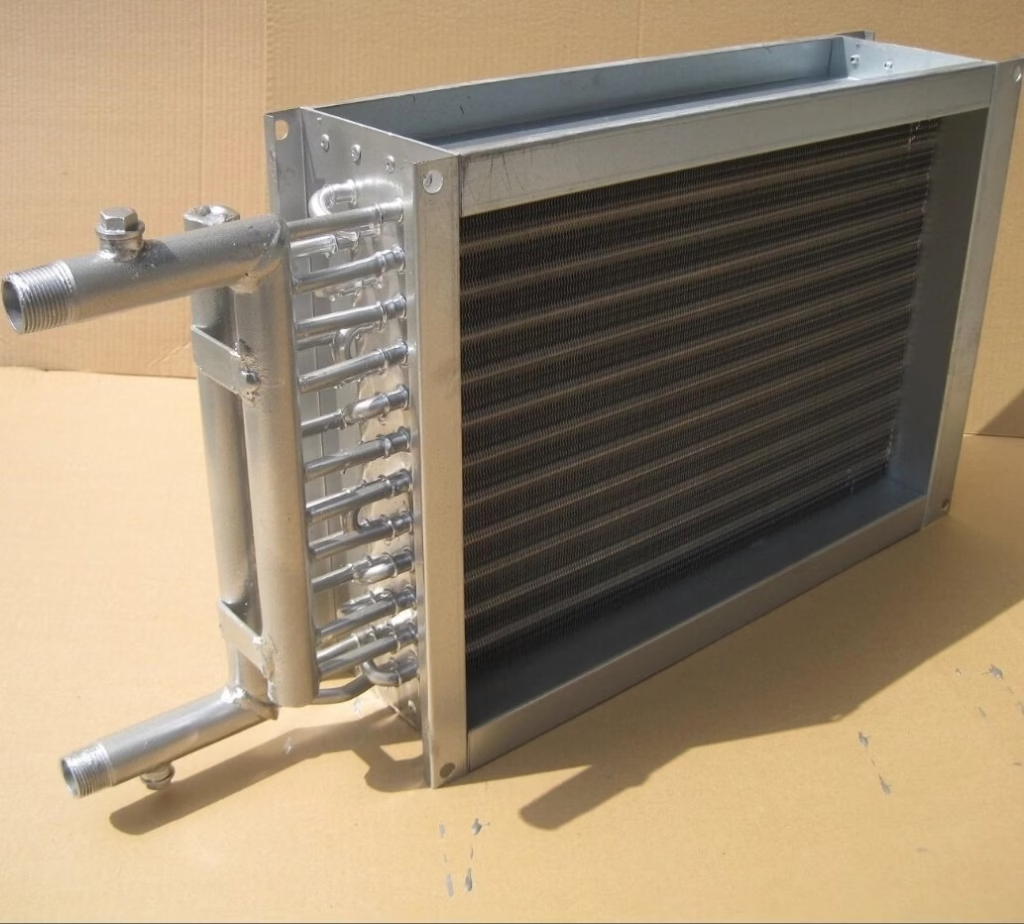
Hot-air exchangers transfer thermal energy between separate air streams to help maintain more consistent indoor temperatures. Warm, used air leaving the property passes through a heat exchange core, where some of its retained warmth moves into cooler fresh air entering the home. The two streams remain physically separated throughout the exchange process, helping prevent pollutants carried by exhaust air from entering the incoming air supply.
This recovery process can reduce the workload placed on heating and cooling equipment while supporting a more stable indoor environment. Retaining useful thermal energy that might otherwise escape through ventilation provides an energy-conscious method of maintaining comfortable and healthier residential conditions.
Residential Uses for Air to Air Heat Exchangers
A residential air to air heat exchanger can contribute to a home’s ventilation strategy by continuously introducing fresh outdoor air while transferring thermal energy between incoming and outgoing streams. This exchange can help moderate indoor temperatures and support greater energy efficiency across occupied areas. It can be particularly useful in well-insulated properties where reduced air leakage may limit natural ventilation. Separate airflow routes also help stop stale extracted air from returning to living areas.
Recovering thermal energy can lessen the workload required from conventional heating and cooling equipment, potentially helping reduce household energy consumption. These systems may also assist with controlling indoor humidity and limiting the accumulation of pollutants, supporting healthier conditions in more tightly constructed homes.
Advantages of Energy Recovery Ventilators in Homes
Energy recovery ventilators combine controlled fresh-air exchange with thermal energy recovery to support household comfort and efficient operation. Heat transferred from outgoing air to incoming outdoor air can help maintain steadier indoor temperatures while reducing demand on conventional heating and cooling equipment. The ventilation process may also assist with moisture control by reducing excessive humidity and conditions that can contribute to mould growth. Integrated filtration can further capture airborne particles, helping maintain cleaner indoor air.
Regular ventilation ensures that fresh outdoor air continues entering residential areas, contributing to a more comfortable indoor environment. Efficient thermal recovery can also reduce energy requirements, supporting lower household consumption and contributing to more sustainable energy use within residential properties.
Incorporating Air Exchangers into Existing Residential Systems
Installing an air exchanger within an established home requires careful assessment of existing equipment, ductwork, and airflow requirements. The equipment can work alongside HVAC systems to support ventilation, energy efficiency, and indoor air quality. Appropriate positioning within the existing duct arrangement can encourage effective airflow and thermal recovery, while selecting suitable system capacity can help maintain dependable performance.
The property’s existing ventilation configuration and specific airflow demands will determine how the exchanger should be integrated. Automated controls can provide additional flexibility, allowing the equipment to coordinate with other home systems and making ventilation settings easier to manage.
Professional installation can assist with connecting the exchanger to existing equipment and ductwork correctly, creating a coordinated setup that supports airflow, temperature management, and efficient residential energy use.
Heat Transfer through Heat Exchanger Air to Air Technology
The operation of heat exchanger air to air technology relies on separate airflow paths that enable thermal energy to pass between streams without directly combining the air. Warm, stale indoor air travels through one side of the exchanger as it exits the property, transferring part of its thermal energy into the exchange core. Fresh outdoor air passes through the opposite side and absorbs the recovered warmth before entering the home. Fans control airflow through both pathways, while filters can capture dust and other airborne particles.
This ongoing heat transfer helps maintain more consistent indoor temperatures while allowing ventilation to continue with less loss of useful thermal energy. Keeping both airflow routes separate also reduces the possibility of contaminants from extracted air being returned indoors, supporting cleaner and more controlled residential ventilation.
Maintaining Residential Heat Exchangers for Reliable Operation
Regular maintenance of residential heat exchangers supports dependable performance and energy efficiency. Cleaning filters is an important task because they capture dust and particulates that could restrict airflow. Inspecting the heat exchange core for debris or accumulated build-up helps preserve effective thermal energy transfer. Fans and mechanical components should also be checked periodically to confirm smooth operation and minimise the risk of mechanical faults.
Ventilation ducts can benefit from routine cleaning to reduce blockages and contamination. Advanced systems may include maintenance alerts that assist with scheduling timely servicing. Proper care supports efficient operation while helping reduce unnecessary wear and tear. Keeping system components in good condition allows residential heat exchangers to continue providing dependable air exchange and energy recovery.
Environmental Benefits of Air Exchange Technology
Air exchangers contribute to sustainable residential living by improving energy efficiency and reducing environmental impact. These systems can reduce dependence on conventional heating and cooling methods by recovering heat from outgoing air and transferring it to incoming air, helping lower energy consumption. Efficient thermal energy transfer can also contribute to reduced greenhouse gas emissions, supporting broader efforts to address climate change. By promoting effective ventilation in airtight buildings, these systems help maintain indoor air quality without requiring additional energy-intensive approaches.
Modern designs increasingly focus on maximising energy savings while meeting environmental performance objectives, making them useful components of residential sustainability strategies. The incorporation of advanced technology can further improve their effectiveness, helping deliver environmental benefits without compromising system functionality or indoor comfort.
Technological Advances Shaping Heat Exchanger Efficiency
Continued development in heat exchanger technology has produced systems with improved efficiency, reliability, and environmental performance. Modern heat exchange cores can use advanced materials with stronger thermal conductivity, enabling more effective transfer of energy between separate air streams. Integrated sensors and automated controls can monitor operating conditions and adjust system performance as requirements change, helping limit unnecessary energy consumption. Compatibility with smart home technology can also provide convenient access to operating controls and performance information through connected digital devices.
Contemporary designs increasingly include compact and adaptable units that can make installation and servicing more straightforward while maintaining effective performance. Improvements in construction techniques and component quality can further support durability and dependable operation over extended periods. Ongoing innovation continues to focus on increasing heat recovery efficiency and incorporating more sustainable materials, reflecting the growing demand for energy-conscious ventilation technology in modern residential properties.
Evaluating Energy Recovery Ventilation Costs
The overall expense of an energy recovery ventilation system can involve purchasing the equipment, completing installation, and meeting ongoing operational requirements. Upfront costs may vary depending on property dimensions, system capacity, and the complexity of installation. Improved energy efficiency may help reduce the demand for household heating and cooling, potentially contributing to lower utility costs over the longer term. Depending on eligibility criteria, some systems may also qualify for government incentives or energy-efficiency initiatives.
Durable components and manageable servicing needs can add to the system’s long-term financial value by helping control recurring expenses. Assessing the initial investment together with potential reductions in operating costs provides a broader basis for considering how energy recovery ventilation may contribute to residential energy management.
Safety Measures Incorporated into Residential Air Exchangers
Safe air exchanger operation relies on suitable system design, accurate installation, and consistent maintenance. Sealed airflow routes help separate extracted contaminated air from the fresh air entering the property, reducing the risk of unintended air mixing. Certain advanced systems may include additional functions such as carbon monoxide detection and automatic shutdown mechanisms, which can provide added protection when unusual operating conditions occur. Appropriate professional installation helps ensure that connections and safety components operate correctly.
Following manufacturer guidance for operation and servicing can further support reliable system performance. Routine inspections can reveal developing faults before they interfere with operation, while suitable cleaning and maintenance help keep important components functioning effectively. These practices collectively support safe, dependable air exchanger use within residential properties.
Comparing Hot Air Exchanger Designs for Residential Use
Different hot air exchanger designs can differ in capacity, construction, thermal recovery efficiency, and available operating functions. Selection can involve assessing required airflow, heat recovery performance, operating sound levels, and compatibility with the property’s existing ventilation arrangement.
Contemporary models may include programmable controls, enhanced filtration, and automated functions that provide greater operational convenience while supporting indoor air quality. Material quality and anticipated maintenance requirements are also relevant when assessing different systems. Comparing these characteristics with the property’s ventilation demands, energy efficiency priorities, and expected operating conditions can help determine an appropriate option for sustained residential operation.
Addressing Common Misunderstandings about Air Exchanger Performance
Air exchangers are sometimes subject to misconceptions, particularly concerning their value in highly insulated and tightly constructed homes. Airtight building designs can restrict natural air movement, making controlled mechanical ventilation useful for maintaining regular fresh-air exchange. Another misconception is that air exchangers necessarily use excessive energy because they operate continuously. Their function includes recovering thermal energy from outgoing air, which can help reduce the energy needed to condition incoming outdoor air.
Noise is another factor sometimes raised when considering air exchanger systems. Modern equipment can incorporate construction and operating features designed to limit sound levels and support quieter performance. Understanding the actual operating principles of these systems can provide greater clarity about their contribution to fresh-air circulation, thermal energy recovery, and comfortable residential conditions.
Conclusion
A residential energy recovery ventilator can help modern homes maintain fresh indoor air while making more considered use of heating and cooling energy. The system exchanges stale interior air with outdoor air and transfers thermal energy between the two streams without directly combining them. Filtration can assist with airborne particle management, while balanced ventilation helps regulate excess moisture. Smart controls may provide additional flexibility by adjusting airflow according to household conditions. For Australian residences, energy recovery ventilation can support consistent air quality, thermal comfort, and efficient household operation.
FAQs
What role does a residential energy recovery ventilator play in home ventilation?
A residential energy recovery ventilator introduces fresh outdoor air while removing stale indoor air and transferring thermal energy between the separate airflow streams. This process helps maintain continuous ventilation without discarding all of the energy contained in conditioned air. Filtration can also assist with reducing airborne particles, while balanced airflow supports moisture control and more stable indoor temperatures.
How can an air exchanger complement HVAC equipment?
An air exchanger can operate alongside HVAC equipment by supplying fresh outdoor air while recovering thermal energy from extracted indoor air. Incoming air may be pre-conditioned before entering living areas, reducing the temperature adjustment required from heating or cooling equipment. Depending on the system, automated controls can regulate airflow according to schedules or indoor conditions, supporting comfortable and efficient operation.
In what way can a residential air exchanger assist with humidity control?
A residential air exchanger removes moisture-containing indoor air and introduces outdoor air as part of a continuous ventilation cycle. This exchange can help manage excessive humidity and limit moisture accumulation within rooms. Reducing persistent moisture may also assist with condensation control and conditions associated with dampness and mould, while balanced ventilation contributes to a more comfortable indoor environment.
How does an air to air heat exchanger introduce fresh outdoor air?
An air to air heat exchanger directs incoming outdoor air and outgoing indoor air through separate internal pathways. Thermal energy moves through the exchanger between the two air streams without allowing them to directly mix. Fresh air can therefore enter the property while some energy from the outgoing conditioned air is retained, supporting continuous ventilation with reduced thermal loss.
| Related Business Listings |
| Contact Directory |
| Local Business Profiles |