Best Practices for Online Press Release Distribution
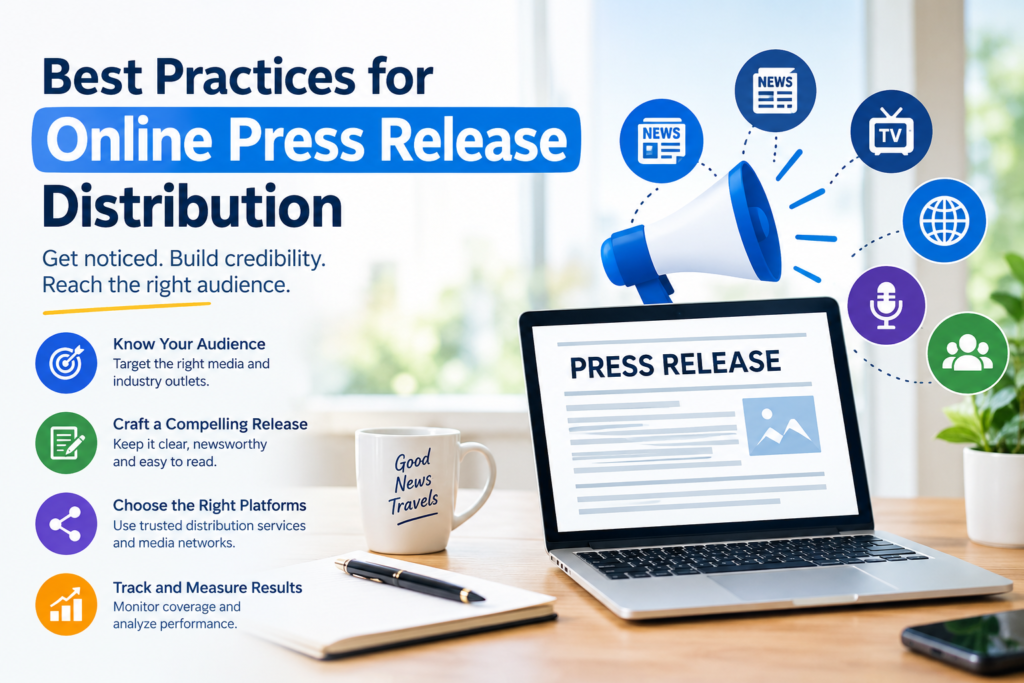
Online press release distribution remains a useful way for businesses, organizations, startups, and professionals to communicate important news with journalists, industry publications, customers, and the broader public. However, simply writing a press release and sending it to a distribution network does not guarantee media attention.
Successful distribution depends on several factors, including the quality of the announcement, audience targeting, timing, formatting, factual accuracy, and the distribution method selected. Businesses should also understand press release pricing before choosing a service, since costs can vary significantly depending on distribution reach, publication options, geographic targeting, and additional features.
This guide explains practical best practices for online press release distribution and how businesses can approach Press Release Publishing more effectively.
1. Start With Newsworthy Information
The first step in effective press release distribution is making sure the announcement contains genuine news.
A press release should communicate something that an audience would reasonably consider important or useful. Examples can include:
- A new product or service launch
- A significant company milestone
- A partnership or collaboration
- An executive appointment
- A business expansion
- New research or survey findings
- An important event
- A merger or acquisition
- A community initiative
- A major award or recognition
A common mistake is treating a press release as a general advertisement. Journalists and readers are more likely to pay attention when the announcement provides meaningful information rather than promotional claims.
Before distributing a release, ask a simple question: Why would someone outside the company care about this news?
If the answer is unclear, the announcement may need a stronger news angle.
2. Write a Clear and Specific Headline
The headline is one of the most important parts of a press release because it immediately tells readers what the announcement is about.
An effective headline should be:
- Clear
- Specific
- Concise
- Fact-based
- Relevant to the target audience
Avoid exaggerated statements such as “The World’s Greatest Company Announces the Most Revolutionary Product Ever.”
Instead, communicate the actual news. For example:
“California Technology Company Launches New Software Platform for Small Businesses”
The second headline tells readers exactly what happened and who may be interested.
A strong headline also makes the distribution process easier because journalists can quickly understand the subject of the announcement.
3. Focus on the First Paragraph
The opening paragraph should provide the most important information.
Traditionally, press releases follow the inverted pyramid approach. The most significant facts appear first, followed by supporting information and background.
The opening should generally answer questions such as:
- Who is making the announcement?
- What happened?
- Where did it happen?
- When did it happen?
- Why does it matter?
For example, if a company announces a new service, readers should not have to read five paragraphs before discovering what was launched.
A direct opening improves readability and allows journalists to quickly determine whether the story is relevant to their audience.
4. Use Reliable Facts and Sources
Accuracy is essential in professional press communication.
Businesses should verify statistics, dates, names, financial figures, product information, quotations, and other factual claims before distribution. Incorrect information can damage credibility and may create problems if the release is republished across multiple websites.
This is particularly important for claims involving:
- Market size
- Customer numbers
- Revenue
- Research findings
- Industry rankings
- Awards
- Product performance
- Regulatory information
When statistics or research are included, identify the source whenever possible. Providing verifiable information strengthens the credibility of the release and supports an EEAT-oriented approach.
5. Include Relevant Quotes
A well-written quote can add context and a human perspective to an announcement.
Quotes commonly come from:
- CEOs
- Founders
- Company executives
- Researchers
- Industry specialists
- Project leaders
- Relevant partners
A useful quote should provide interpretation or insight rather than simply repeat information already presented in the release.
For example, instead of:
“We are excited to announce our new service.”
A stronger quote might explain why the service was created, what problem it addresses, or what the organization learned during development.
The quote should still sound natural and reflect something the speaker could realistically say.
6. Choose the Right Distribution Audience
Not every press release needs the widest possible distribution.
A local business announcing a new location may benefit more from regional or city-focused exposure than from attempting to reach every market in the United States.
Similarly, a technology company may want to focus on technology publications, business media, startup audiences, or specialized industry outlets.
Before distribution, identify the intended audience:
Geographic audience:
Local, regional, national, or international.
Industry audience:
Technology, healthcare, finance, retail, real estate, education, manufacturing, and so on.
Professional audience:
Investors, business owners, consumers, journalists, or industry professionals.
Audience targeting can make a distribution campaign more relevant and may reduce unnecessary costs.
7. Understand Press Release Pricing
Businesses should compare press release pricing carefully rather than selecting a service based only on the lowest advertised price.
Distribution costs can depend on factors such as:
- Geographic distribution
- Number and type of media outlets
- Industry targeting
- Word count
- Multimedia options
- Editorial review
- Publication opportunities
- Reporting and analytics
- Additional distribution networks
A low-cost package may provide basic publishing, while a higher-priced option may include broader distribution or additional reporting features.
The key question is not simply, “How much does the press release cost?”
Instead, businesses should ask:
“What does the price actually include?”
Comparing services based on included features makes it easier to understand the real value of different options.
8. Follow Proper Press Release Formatting
Professional formatting makes a press release easier to read and process.
A standard release commonly includes:
- Company or organization name
- Headline
- Subheadline, if appropriate
- Dateline
- Introduction
- Supporting information
- Quote
- Additional background
- Contact information
- Company boilerplate
Use short paragraphs and clear language. Large blocks of text can make an announcement difficult to scan, particularly for journalists working under tight deadlines.
The release should also be carefully proofread before submission.
9. Use Links Carefully
Online press release distribution often allows businesses to include links. However, links should serve a useful purpose rather than turn the release into an aggressive SEO campaign.
Relevant links might direct readers to:
- A product page
- An official company website
- A research report
- An event registration page
- A relevant company announcement
For example, if a release discusses an organization’s media strategy, a contextual reference to Vertex Newswire can be included naturally when relevant to the topic.
The goal should be usefulness and context rather than excessive keyword placement or repetitive anchor text.
10. Consider Multimedia Elements
Visual content can make a press release more engaging, particularly for announcements involving products, events, people, locations, or research.
Depending on the distribution platform, businesses may be able to include:
- Product photographs
- Company logos
- Executive headshots
- Infographics
- Charts
- Videos
However, multimedia should support the announcement. Adding unrelated images simply to make a release appear more substantial does not necessarily improve its quality.
Images should also have appropriate file names, descriptions, and accessibility information where supported.
11. Select the Right Publishing Time
Timing can influence how effectively an announcement reaches its intended audience.
Businesses should consider industry schedules, major holidays, company events, and competing news when deciding when to publish.
For time-sensitive announcements, publishing too early may reduce relevance, while publishing too late may limit media response.
For routine company news, there may be more flexibility.
It is also useful to consider the working schedules of the intended audience. A release aimed at U.S. business journalists, for example, should generally be planned around U.S. business hours and the relevant time zone.
12. Don’t Confuse Publishing With Media Coverage
One of the most important things businesses should understand about Press Release Publishing is that publication and earned media coverage are not the same thing.
A distribution service can make a release available through its network, but that does not mean journalists will automatically write an independent article about the announcement.
Earned coverage typically requires a compelling story, relevant media contacts, strong timing, and genuine news value.
Therefore, businesses should avoid making unrealistic assumptions about guaranteed editorial coverage.
A press release can be one part of a broader communications strategy that may also include direct journalist outreach, social media, company content, email communication, and industry networking.
13. Measure the Results
After distribution, businesses should review available performance information.
Useful metrics can include:
- Number of published locations
- Referral traffic
- Website visits
- Engagement
- Geographic traffic
- Social sharing
- Brand searches
- Inquiries
- Conversions where appropriate
Businesses should interpret these numbers in context.
For example, a large number of views does not necessarily mean a campaign was successful if the audience was irrelevant. Likewise, a smaller campaign can be valuable if it reaches the right industry audience.
Measurement should therefore focus on business objectives rather than a single headline metric.
14. Avoid Common Distribution Mistakes
Several mistakes can reduce the effectiveness of online press release distribution.
Excessive Promotional Language
A press release should communicate news rather than read like a sales page.
Keyword Stuffing
Repeating keywords unnaturally can reduce readability and make the content appear artificial.
Unsupported Claims
Statements about being “number one,” “best,” or “industry-leading” should be supported when used.
Poor Grammar
Typos and unclear writing can undermine professional credibility.
Overly Long Introductions
Readers should understand the main announcement quickly.
Irrelevant Distribution
Sending every announcement to every possible audience can waste resources.
Expecting Guaranteed Coverage
Publishing a release does not guarantee that journalists will independently cover the story.
15. Build Press Releases Around Long-Term Communication Goals
Press releases are most useful when they form part of a broader communications strategy.
Businesses can maintain a consistent approach by documenting major milestones, identifying relevant media audiences, maintaining accurate company information, and evaluating previous announcements.
Over time, this approach can help organizations understand which types of announcements attract the most attention and which audiences are most relevant.
The objective should not be to publish a press release simply because a company has something to say. Instead, each release should answer a clear question:
Is this information genuinely useful or interesting to the intended audience?
If the answer is yes, online distribution can provide a structured way to communicate the news.
Conclusion
Effective online press release distribution starts with strong news, accurate information, clear writing, appropriate targeting, and realistic expectations. Businesses should focus on providing useful information rather than turning every announcement into an advertisement.
Understanding press release pricing is equally important. Companies should compare distribution services based on their actual features, audience reach, publishing options, and reporting rather than price alone.
Finally, successful Press Release Publishing should be viewed as one component of a wider communications strategy. When a release is timely, relevant, factually sound, and written for a specific audience, it has a stronger foundation for reaching readers and potentially attracting meaningful media attention.