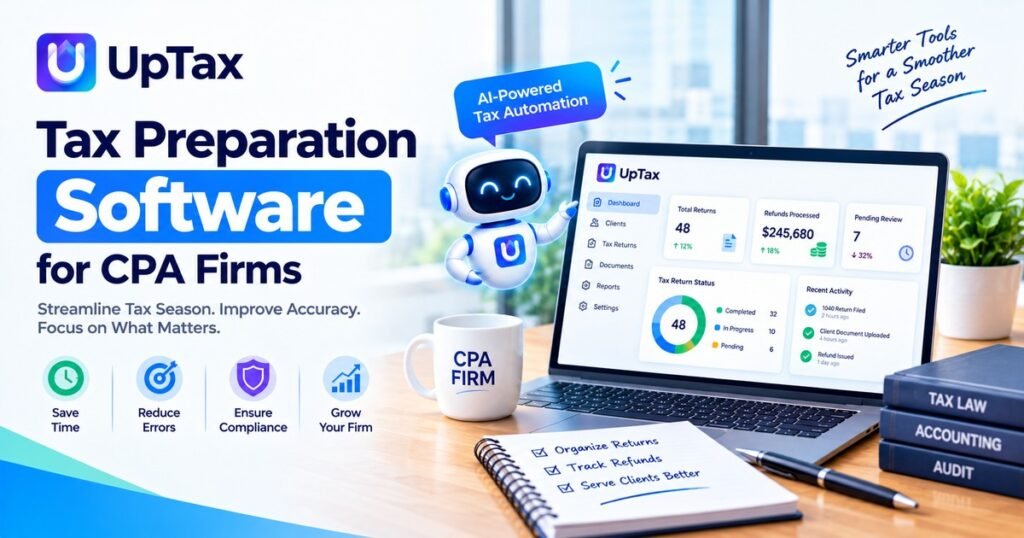
Every CPA firm owner has had this moment: it’s 9 p.m. in March, a return needs one more signature, and the software just froze.
When you multiply that by dozens of clients and a small team, tax season ceases to be a chore and becomes a battle for survival.
The good news is that the tools needed to do this have evolved over the past few years, and the right choice can make all the difference in transforming chaos into controlled chaos.
Why Tax Preparation Software Choice Matters More Than Ever
Tax preparation software for CPA firms isn’t just a filing tool anymore. It’s the backbone of how a firm manages client data, tracks deadlines, and stays compliant with shifting IRS rules.
Firms that still rely on older, form-based software often deal with:
- Manual re-entry of data across multiple systems
- Limited visibility into where a return sits in the review process
- No built-in way to catch common errors before submission
Newer platforms are closing these gaps with automation and AI-assisted review, which matters most when a firm is juggling hundreds of returns in a compressed window.
What to Look for in the Best AI Tax Filing Software
Not every “AI-powered” tool actually saves time. Here’s what separates the useful ones from the marketing buzzwords.
1. Real Automation, Not Just Digital Forms
Genuine automation means the software pulls data from source documents (W-2s, 1099s, K-1s) and populates the return without manual re-typing. This is different from software that simply digitizes a paper form.
2. Built-In Error Detection
Look for tools that flag mismatches — like income reported on a 1099 that doesn’t match a client’s bank statement — before the return goes out the door. Catching this during preparation is far less costly than catching it during an audit.
3. Multi-Client Workflow Management
For a firm handling 50, 200, or 1,000+ returns, the software needs a dashboard that shows status at a glance: who’s ready for review, who’s missing documents, and who’s waiting on a signature.
4. Security and Compliance Standards
Tax data is sensitive. Any platform handling it should meet SOC 2 compliance and IRS security guidelines.
Comparison Framework
Rather than naming a “winner,” it’s more useful to compare software across the criteria that actually affect a firm’s day-to-day work:
| Criteria | Why It Matters |
| Data import speed | Reduces manual entry time |
| Error-flagging accuracy | Prevents costly amendments |
| Client portal quality | Improves client communication |
| Learning curve | Affects onboarding time for staff |
| Pricing model | Per-return vs. flat-fee affects scalability |
Firms evaluating new software should request a trial period that spans an actual busy week, not just a demo, since real workflow friction often only shows up under volume.
How AI Is Changing Review, Not Just Data Entry
The most useful shift in recent tax software isn’t speed — it’s review quality. Tools like UpTax.AI‘s AI tax preparation software are built specifically to help CPA firms catch inconsistencies during the review stage, rather than relying entirely on a preparer’s manual double-check.
This kind of layered review doesn’t replace a CPA’s judgment; it gives them a second set of eyes that never gets tired at hour eleven of a filing marathon.
This matters because errors caught before filing are inexpensive. Errors caught after filing — through an IRS notice or an amended return — cost time, client trust, and sometimes penalties.
Common Mistakes Firms Make When Switching Software
- Switching mid-season. Most successful transitions happen between April and September, giving staff time to train before the next rush.
- Ignoring staff input. The people using the software daily should have a say before a firm commits to a multi-year contract.
- Underestimating data migration time. Moving historical client data can take weeks, not days.
Frequently Asked Questions
What is the best tax filing software for CPA firms?
There is no one best option for all companies. It comes down to the number of clients the firm has, the budget they have, and if they want an application that can offer multi-preparer workflow.
Is AI tax software accurate enough to replace manual review?
No AI tool should fully replace a CPA’s review. The strongest platforms use AI to flag potential issues, while a licensed preparer still makes the final call.
How much does tax preparation software cost for a CPA firm?
Pricing varies widely by provider and firm size, often ranging from per-return fees to flat annual licenses.
Can small CPA firms benefit from AI tax software, or is it only for large firms?
Smaller firms often see a bigger relative time savings, since they typically have fewer staff to absorb manual workload during peak season.
How long does it take to switch tax software providers?
Most firms budget 60-90 days for a full transition, including data migration and staff training, though this varies by firm size and data volume.