Manage loans, repayments, collections, borrower servicing, and compliance with Roopya's cloud-based loan management software. AI-powered, secure, scalable LMS for NBFCs, banks, MFIs, and fintech lenders.
The financial services industry is experiencing a massive digital transformation. Traditional loan processing methods that relied heavily on paperwork, spreadsheets, manual approvals, and disconnected systems are rapidly becoming obsolete. Modern lenders need speed, automation, scalability, compliance, and superior customer experiences to remain competitive.
This is where Cloud-Based Loan Management Software comes into play.
Cloud-based loan management software enables banks, NBFCs, fintech lenders, microfinance institutions, cooperative societies, and digital lending businesses to manage the complete lifecycle of a loan through a centralized online platform. From borrower onboarding and loan disbursement to repayment tracking, collections, compliance, and reporting, everything can be automated and managed efficiently from a secure cloud environment.
Roopya’s cloud-native lending platform empowers financial institutions to automate lending operations, reduce costs, improve borrower experiences, and scale faster without investing in expensive infrastructure. The platform combines Loan Origination System (LOS), Loan Management System (LMS), Collections Management, Analytics, and AI-powered decisioning into a single integrated ecosystem.
What is Cloud-Based Loan Management Software?
Cloud-Based Loan Management Software is a digital platform hosted on cloud infrastructure that helps lenders manage loans throughout their entire lifecycle.
Unlike traditional on-premise software that requires dedicated servers, IT teams, and costly maintenance, cloud-based systems operate through secure internet access, enabling lenders to access their lending operations anytime and from anywhere.
The software handles:
- Borrower onboarding
- KYC verification
- Loan origination
- Credit assessment
- Loan approval workflows
- Disbursement management
- EMI scheduling
- Repayment tracking
- Collections management
- Customer servicing
- Regulatory compliance
- Portfolio reporting
A cloud-based approach eliminates infrastructure limitations while providing enhanced scalability, security, and operational efficiency.
Why Modern Lenders Need Cloud-Based Loan Management Software
Today’s borrowers expect instant decisions, digital experiences, and seamless communication. Traditional lending systems struggle to meet these expectations.
Financial institutions face challenges such as:
- High operational costs
- Manual processing delays
- Data silos
- Compliance risks
- Collection inefficiencies
- Limited scalability
- Poor customer experiences
Cloud-based lending platforms address these challenges through automation, centralized data management, AI-driven workflows, and real-time visibility across lending operations.
Key Features of Cloud-Based Loan Management Software
1. Centralized Loan Portfolio Management
Manage thousands of active loan accounts from a single dashboard.
Lenders can monitor:
- Active loans
- Outstanding balances
- Collection performance
- Delinquent accounts
- Loan statuses
- Portfolio risk exposure
Real-time visibility allows management teams to make informed decisions quickly.
2. Automated Loan Servicing
Automation eliminates repetitive manual work and improves operational efficiency.
Key automated functions include:
- EMI calculations
- Interest accrual
- Loan amortization schedules
- Payment processing
- Account updates
- Statement generation
This significantly reduces human error and operational costs.
3. Borrower Self-Service Portal
Modern borrowers prefer self-service experiences.
A cloud-based platform enables customers to:
- View loan details
- Download statements
- Make payments
- Update information
- Raise support requests
- Track repayment schedules
This improves customer satisfaction while reducing support workload.
4. Multi-Channel Payment Collection
Efficient repayment management is essential for lender profitability.
Cloud-based loan management software supports:
- UPI collections
- NACH mandates
- eNACH
- NEFT
- IMPS
- Payment gateways
- Digital wallets
Automated reminders ensure higher repayment success rates.
5. Advanced Collections Management
Collections become more effective through automation.
Capabilities include:
- Automated payment reminders
- Delinquency tracking
- Agent assignment
- Collection workflows
- Recovery monitoring
- Promise-to-pay tracking
This helps lenders reduce NPAs and improve recovery rates.
Benefits of Cloud-Based Loan Management Software
Faster Loan Processing
Automated workflows significantly reduce processing times.
What previously required days can now be completed within minutes.
Reduced Operational Costs
Automation minimizes manual intervention, reducing staffing requirements and operational expenses.
Improved Accuracy
System-generated calculations eliminate human errors in:
- Interest calculations
- EMI schedules
- Repayment tracking
- Portfolio reporting
Enhanced Customer Experience
Borrowers enjoy:
- Faster approvals
- Online servicing
- Real-time updates
- Digital communication
Better Compliance
Built-in compliance controls help organizations stay aligned with regulatory requirements and lending guidelines.
Scalability
Cloud infrastructure allows lenders to grow without investing in new hardware or servers.
Whether managing 100 loans or 1 million loans, performance remains consistent.
Cloud-Based vs Traditional Loan Management Software
| Feature | Traditional Software | Cloud-Based Software |
|---|---|---|
| Deployment | On-Premise | Cloud |
| Infrastructure Cost | High | Low |
| Maintenance | Internal Team | Vendor Managed |
| Scalability | Limited | Unlimited |
| Accessibility | Office Only | Anywhere |
| Updates | Manual | Automatic |
| Security | Organization Managed | Enterprise Grade |
| Disaster Recovery | Complex | Built-In |
| Implementation Time | Months | Days |
Cloud-based platforms offer a significant competitive advantage for modern lenders.
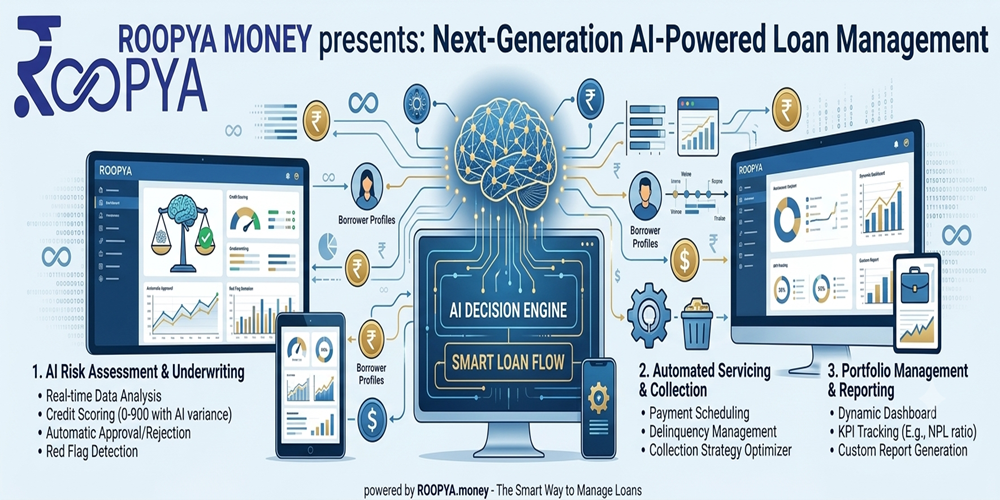
AI-Powered Loan Management
Artificial Intelligence is transforming lending operations.
Modern loan management software utilizes AI for:
Risk Monitoring
AI models continuously monitor borrower behavior and repayment trends.
Predictive Delinquency Detection
Potential defaults can be identified before they occur.
Automated Collections
AI recommends optimal collection strategies for each borrower.
Smart Reporting
Executives receive actionable insights instead of raw data.
Fraud Detection
Machine learning algorithms identify suspicious borrower activities and fraudulent applications.
Security in Cloud-Based Loan Management Software
Financial data security is a top priority.
Enterprise-grade platforms provide:
- Data encryption
- Role-based access controls
- Audit trails
- Multi-factor authentication
- Secure API architecture
- Automated backups
- Disaster recovery
Cloud infrastructure often provides stronger security than traditional on-premise systems.
Regulatory Compliance Management
Lenders operate within strict regulatory frameworks.
Cloud-based software helps organizations comply with:
- RBI guidelines
- KYC regulations
- Data privacy requirements
- Audit requirements
- AML compliance
- Digital lending regulations
Automated compliance workflows reduce regulatory risk and improve governance.
Integration Capabilities
Modern lending ecosystems require seamless connectivity.
Cloud-based platforms integrate with:
- Credit bureaus
- Account aggregators
- Payment gateways
- Core banking systems
- CRM software
- ERP platforms
- KYC providers
- eSign platforms
- Collection systems
Roopya offers extensive API integrations that help lenders create a fully connected lending ecosystem.
Industries That Benefit from Cloud-Based Loan Management Software
NBFCs
Manage personal, business, vehicle, and MSME loans efficiently.
Banks
Digitize retail and commercial lending operations.
Fintech Companies
Launch scalable digital lending products rapidly.
Microfinance Institutions
Improve borrower servicing and repayment management.
Credit Cooperatives
Modernize loan administration processes.
Digital Lenders
Automate high-volume lending operations.
Why Choose Roopya Cloud-Based Loan Management Software?
Roopya is designed specifically for modern lenders operating in India’s rapidly evolving financial ecosystem.
Key advantages include:
- Cloud-native architecture
- AI-powered automation
- End-to-end lending lifecycle management
- Loan Origination System (LOS)
- Loan Management System (LMS)
- Collections Management
- Lending Analytics
- No-code configuration
- 300+ API integrations
- Multi-product support
- RBI-ready compliance framework
- Fast implementation
- Enterprise-grade security
Roopya enables lenders to manage the entire customer journey from application to loan closure through a single integrated platform.
The Future of Cloud-Based Lending
The future of lending is digital, automated, and cloud-powered.
Emerging technologies such as:
- Artificial Intelligence
- Machine Learning
- Open Banking
- Account Aggregators
- Embedded Finance
- Predictive Analytics
will continue transforming how loans are originated, serviced, and collected.
Organizations adopting cloud-based loan management software today position themselves for long-term growth, operational excellence, and competitive advantage.
Cloud-Based Loan Management Software has become an essential technology investment for modern lenders seeking efficiency, scalability, compliance, and superior borrower experiences.
As lending volumes increase and customer expectations evolve, manual processes can no longer support sustainable growth.
Roopya’s cloud-based loan management platform empowers NBFCs, banks, fintech lenders, and financial institutions to automate lending operations, improve portfolio performance, reduce operational costs, strengthen compliance, and deliver exceptional borrower experiences.
Whether you are launching a new lending business or modernizing existing operations, cloud-based loan management software provides the technological foundation required for success in today’s digital lending landscape.
:::
(FAQs)
1. What is Cloud-Based Loan Management Software?
Cloud-Based Loan Management Software is a digital platform that automates loan servicing, repayment tracking, collections, borrower management, and reporting through secure cloud infrastructure.
2. How does cloud-based software differ from traditional loan software?
Cloud-based software is hosted online, requires no local servers, offers automatic updates, better scalability, and lower maintenance costs.
3. Is cloud-based loan management software secure?
Yes. Modern platforms use encryption, access controls, audit trails, backups, and enterprise-grade cloud security.
4. Can Roopya support NBFC lending operations?
Yes. Roopya is specifically designed for NBFCs, banks, MFIs, fintech lenders, and digital lending businesses.
5. Does Roopya integrate with credit bureaus?
Yes. Roopya supports integrations with CIBIL, Experian, CRIF High Mark, Equifax, and other financial data providers.
6. Can borrowers make EMI payments online?
Yes. Borrowers can pay through UPI, NACH, eNACH, NEFT, IMPS, and integrated payment gateways.
7. Is the platform scalable?
Yes. Cloud architecture allows lenders to scale from hundreds to millions of loan accounts without infrastructure upgrades.
8. Does Roopya support automated collections?
Yes. Automated reminders, collection workflows, delinquency monitoring, and recovery management are built into the platform.
9. How quickly can the software be implemented?
Roopya offers rapid deployment and configurable workflows for faster implementation.
10. Does the platform support multiple loan products?
Yes. Personal loans, business loans, MSME loans, home loans, vehicle loans, microfinance loans, and custom lending products are supported