A properly functioning duct system is essential for maintaining comfortable indoor temperatures and consistent airflow throughout your property. Whether you use a ducted air conditioning system at home or manage a commercial building, your ductwork plays an important role in distributing conditioned air efficiently.
Over time, ducts can develop leaks, loose connections, damaged insulation, blockages, and other problems. These issues can reduce cooling performance, increase energy consumption, and create uncomfortable temperature differences between rooms.
Professional duct system repairs help identify and resolve these problems before they affect the overall performance of your heating and cooling equipment.
However, not every ductwork problem requires complete replacement. Many issues can be resolved through targeted repairs, sealing, insulation improvements, or reconnection of damaged sections.
Understanding how your duct system works, recognising early warning signs, and arranging suitable maintenance can help protect your property and maintain reliable indoor comfort.
This guide explains common ductwork problems, repair methods, associated costs, and when professional assistance may be necessary.
What Are Duct System Repairs?
Duct system repairs involve identifying and fixing problems within the network of ducts responsible for distributing conditioned air throughout a building.
These ducts connect the air conditioning unit to different rooms through supply outlets and return air pathways.
When ductwork becomes damaged or incorrectly installed, air may escape, airflow may become restricted, or insulation may lose its effectiveness.
Depending on the problem, repairs may involve:
- Sealing leaking duct connections.
- Repairing torn flexible ducts.
- Reconnecting disconnected sections.
- Replacing damaged insulation.
- Removing airflow restrictions.
- Securing loose duct supports.
- Repairing damaged sheet metal ducts.
- Correcting poorly positioned ductwork.
- Improving connections around air outlets.
The appropriate repair depends on the duct material, location, damage severity, and overall system condition.
In many cases, repairing a small damaged section can restore suitable airflow without requiring an entirely new duct installation.
How Does a Duct System Work?
Understanding how ductwork operates makes it easier to recognise why repairs are sometimes necessary.
A ducted air conditioning system uses a central unit to condition indoor air before distributing it throughout the property.
The duct network generally includes several important components.
Supply Air Ducts
Supply ducts carry conditioned air from the air conditioning unit to different rooms.
They connect to ceiling, wall, or floor outlets, depending on the building design.
Properly designed supply ducts help deliver suitable airflow to each area.
Return Air Ducts
Return air pathways transport indoor air back towards the air conditioning unit.
The system then filters and conditions the air before distributing it again.
Restricted return airflow can affect system performance and comfort.
Duct Insulation
Insulation reduces unwanted heat transfer between conditioned air and surrounding spaces.
This is particularly important when ductwork passes through roof cavities or other unconditioned areas.
Damaged insulation can reduce cooling efficiency and contribute to condensation problems.
Duct Connections and Seals
Duct connections join individual sections and connect the duct network to other system components.
Properly sealed joints help prevent conditioned air from escaping.
Loose or damaged connections can reduce the amount of air reaching the intended rooms.
Common Signs Your Duct System Needs Repairs
Ductwork is often installed in hidden locations, making damage difficult to identify without an inspection.
However, several warning signs can indicate that your system requires attention.
Uneven Temperatures Between Rooms
One of the most noticeable signs of ductwork problems is inconsistent cooling.
For example, your living room may feel comfortable while bedrooms remain warm.
This may happen because of leaking ducts, restricted airflow, disconnected sections, or incorrect duct sizing.
Other possible causes include blocked filters, faulty dampers, and air conditioning equipment problems.
A professional inspection can help identify the source.
Weak Airflow From Vents
If air coming from your supply vents feels weaker than usual, the duct system may have an obstruction or damaged section.
Common causes include:
- Crushed flexible ducts.
- Disconnected duct sections.
- Blocked air passages.
- Poorly positioned ductwork.
- Damaged internal liners.
- Restricted return air pathways.
Addressing the underlying problem can help restore appropriate airflow.
Higher Energy Bills
Damaged ductwork can allow conditioned air to escape into roof spaces, wall cavities, or other unconditioned areas.
This means the air conditioning system may need to operate longer to maintain the selected temperature.
Leaking ducts can therefore contribute to higher electricity consumption.
However, dirty filters, ageing equipment, poor insulation, and incorrect thermostat settings can also affect energy usage.
Unusual Noises From Ductwork
Rattling, whistling, and vibration noises may indicate problems within the duct system.
Loose supports, damaged connections, excessive airflow resistance, and poorly positioned flexible ducts can create unusual sounds.
Persistent noises should be investigated to prevent further damage.
Visible Damage to Ducts
Accessible ductwork should be checked periodically for visible deterioration.
Look for:
- Torn flexible duct material.
- Loose connections.
- Damaged insulation.
- Crushed sections.
- Corroded metal ducts.
- Loose mounting supports.
- Gaps around duct joints.
Extensive damage may require replacement rather than a simple repair.
Unpleasant Smells From Air Vents
Unusual odours coming from air outlets may indicate contamination, moisture problems, or accumulated debris.
Damaged insulation and condensation can sometimes contribute to these conditions.
However, smells may also originate from filters, drain systems, or other air conditioning components.
An inspection can help identify the actual source.
Common Causes of Ductwork Problems
Duct systems can develop problems for several reasons.
Understanding these causes helps property owners prevent recurring damage.
Ageing Materials
Ductwork materials can deteriorate over time.
Flexible ducts may develop cracks, tears, or weakened connections.
Insulation can also lose its effectiveness because of damage, moisture, or general deterioration.
Regular inspections help identify ageing components before they affect system performance.
Poor Installation
Incorrect installation can create problems from the beginning.
Examples include:
- Excessive duct bends.
- Incorrect duct sizing.
- Insufficient support.
- Poorly sealed connections.
- Compressed flexible ducts.
- Inadequate insulation.
These issues can restrict airflow and increase the likelihood of future repairs.
Physical Damage
Ductwork can be damaged during roof maintenance, renovations, electrical work, or other building activities.
Storage items placed against accessible ducts can also cause compression or tears.
Care should be taken when working around duct systems.
Moisture and Condensation
Moisture can affect duct insulation and surrounding building materials.
Condensation may occur when humid air contacts cold surfaces or when insulation is insufficient.
Persistent moisture can contribute to material deterioration and unwanted indoor conditions.
Rodent and Pest Activity
Rodents may chew flexible duct materials and insulation when they enter roof cavities or other building spaces.
This can create air leaks and contamination concerns.
If pest activity is suspected, address the underlying infestation and assess any damaged ductwork.
Different Types of Duct System Repairs
The repair method depends on the type of damage and the material used in the duct system.
Professional technicians inspect the affected areas before recommending a suitable solution.
Duct Leak Sealing
<AsyncImage query=”HVAC technician sealing air conditioning duct joint with professional foil duct tape” aspectRatio=”16:9″ width=”100%”/>
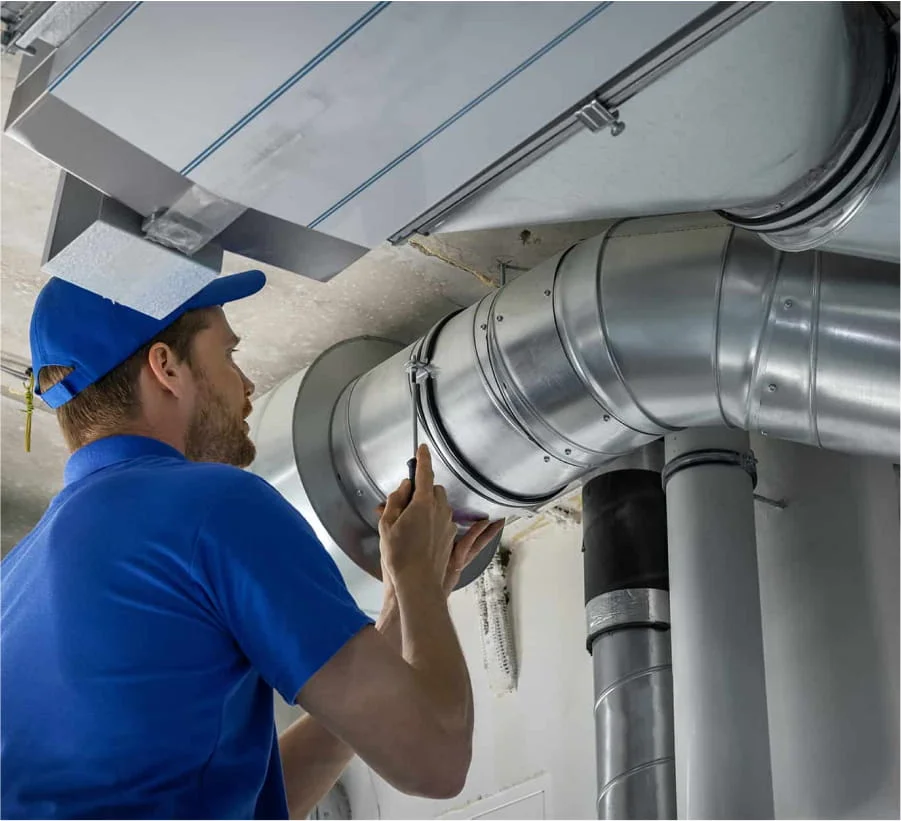
Air leaks commonly occur around duct connections, joints, and damaged sections.
Suitable sealing materials can help close these gaps and reduce conditioned air loss.
Professional sealing may involve specialised tapes, approved sealants, or mechanical fastening methods.
Ordinary household adhesive tape is not a suitable long-term solution for most duct repairs.
Flexible Duct Repairs
Flexible ductwork is widely used in residential air conditioning systems.
Its lightweight construction makes installation easier, but it can become damaged through compression, tearing, or poor support.
Depending on the condition, technicians may reconnect, reseal, reposition, or replace damaged sections.
Severely deteriorated flexible ducts may need complete section replacement.
Duct Insulation Repairs
Insulation damage can reduce thermal performance and contribute to condensation.
Repairs may involve replacing damaged insulation, securing loose coverings, or improving insulation around connections.
The replacement material should be suitable for the duct type and installation environment.
Sheet Metal Duct Repairs
Sheet metal ducts are commonly used in commercial and larger building systems.
They may develop loose joints, damaged sections, corrosion, or gaps.
Repairs can involve resealing joints, securing connections, replacing damaged panels, or installing suitable reinforcement.
Duct Support Repairs
Ductwork requires appropriate support to maintain its shape and position.
Loose or damaged supports can cause ducts to sag, become compressed, or place stress on connections.
Technicians may install additional supports or reposition existing sections.
Correct support is particularly important for flexible duct systems.
Benefits of Professional Duct System Repairs
Addressing ductwork problems can improve the performance and reliability of your air conditioning system.
The actual benefits depend on the condition of the existing installation and the repairs completed.
Improved Airflow
Repairing disconnected, crushed, or leaking ducts can help restore airflow to affected rooms.
This can improve air distribution and reduce temperature differences throughout the property.
Better Energy Efficiency
Sealing leaks and repairing damaged insulation can reduce unnecessary conditioned air losses.
This may help the system maintain indoor temperatures without operating longer than necessary.
Energy savings depend on the original condition of the ductwork and other system components.
Improved Indoor Comfort
Duct repairs can help ensure conditioned air reaches the intended areas.
This is particularly useful in properties where some rooms consistently receive insufficient airflow.
Reduced Air Leakage
Damaged connections and gaps can allow conditioned air to escape.
Proper repairs help reduce these losses and improve duct system performance.
Longer Equipment Life
When ductwork problems create excessive airflow resistance, the air conditioning system may experience additional operating strain.
Correcting duct restrictions and other faults can help support normal system operation.
However, equipment lifespan also depends on servicing, installation quality, and operating conditions.
Reduced Maintenance Problems
Addressing recurring duct leaks and damaged sections can reduce the need for repeated temporary repairs.
Professional inspection also helps identify other developing problems before they become more extensive.
Duct System Repairs vs Complete Duct Replacement
Not every ductwork issue requires a complete replacement.
In many situations, targeted repairs are more practical and cost-effective.
When Repairs Are Usually Suitable
Repairs may be appropriate when:
- Damage is limited to a small area.
- One or two connections have become loose.
- Minor air leaks are present.
- Insulation damage is localised.
- Ductwork remains structurally sound.
- The existing duct design is suitable.
- Airflow problems have an identifiable cause.
A technician may be able to repair the affected area without disturbing the entire system.
When Replacement May Be Necessary
Replacement may be more suitable when:
- Multiple duct sections are severely damaged.
- Insulation has deteriorated extensively.
- Ductwork has widespread leakage.
- Flexible ducts are crushed or deteriorated.
- Existing duct sizing is unsuitable.
- Previous repairs have repeatedly failed.
- The duct layout requires significant redesign.
A professional assessment can help compare the cost and long-term suitability of repairs against replacement.
The Professional Duct Repair Process
Professional duct system repairs generally involve several stages.
Understanding these steps helps property owners know what to expect.
Initial Inspection
The technician examines accessible ductwork and identifies signs of damage.
The inspection may include:
- Flexible ducts.
- Metal duct sections.
- Insulation.
- Supply connections.
- Return air pathways.
- Supports and hangers.
- Air outlets.
- Accessible joints.
The technician may also investigate airflow complaints and unusual noises.
Identifying the Main Problem
After inspection, the technician determines the likely cause of the problem.
For example, weak airflow may result from a crushed duct, loose connection, blocked filter, or incorrect system design.
Identifying the actual cause helps avoid unnecessary repairs.
Selecting Suitable Repair Materials
The materials used depend on the duct construction and location.
Professional repairs may require approved sealants, specialised tapes, replacement duct sections, insulation, or mechanical fasteners.
Materials should be suitable for the operating conditions.
Completing the Repairs
The technician repairs or replaces the affected sections.
This may involve reconnecting ductwork, sealing gaps, restoring insulation, or securing loose supports.
Care should be taken to avoid creating additional restrictions or damage.
Testing System Performance
After completing the work, the technician should check the repaired sections and assess airflow.
Testing helps confirm that connections are secure and that the system operates as expected.
Any remaining problems should be investigated.
How Much Do Duct System Repairs Cost?
The cost of duct repairs depends on several factors.
There is no fixed price that applies to every property because duct systems differ in size, accessibility, material, and condition.
Type of Damage
Minor sealing work generally requires less labour and material than replacing a damaged duct section.
Extensive insulation repairs or multiple damaged connections may increase the overall cost.
Duct Material
Flexible ductwork, sheet metal, and fibreglass duct systems require different repair materials and techniques.
The selected repair method can influence the price.
Accessibility
Ducts located in accessible roof spaces may be easier to repair than those installed inside enclosed ceilings or restricted structural areas.
Limited access can increase labour time.
Number of Affected Sections
Repairing one connection generally requires less work than addressing multiple damaged areas.
The technician should inspect the complete accessible system to identify related problems.
Additional Work
The total cost may increase if the job also requires insulation replacement, support upgrades, pest-related repairs, or duct redesign.
Request an itemised quote explaining the repair work, materials, labour, and any additional charges.
Why Professional Duct Repairs Matter
Ductwork plays an important role in the overall performance of an air conditioning system.
Poorly completed repairs can create additional leaks, airflow restrictions, and insulation problems.
Correct Sealing Techniques
Different duct materials require suitable sealing methods.
Professional technicians can select materials appropriate for the duct construction and installation environment.
Proper Airflow Management
Duct repairs should not introduce unnecessary bends, restrictions, or changes in duct dimensions.
Maintaining suitable airflow is important for system performance.
Appropriate Insulation
Insulation must be suitable for the location and operating conditions.
Correct installation helps reduce heat transfer and moisture-related problems.
Safe Access and Installation
Ductwork is often installed near electrical wiring, roof structures, and other building services.
Professional technicians can assess these conditions and work within applicable safety requirements.
How to Prevent Future Ductwork Problems
Regular maintenance can help reduce the likelihood of recurring duct damage.
Property owners can take several practical steps to protect their duct systems.
Schedule Regular Air Conditioning Maintenance
Routine servicing helps identify developing problems with filters, airflow, connections, and other system components.
Ask the technician to inspect accessible ductwork when necessary.
Keep Air Filters Clean
Dirty air filters can restrict airflow and affect system operation.
Follow the manufacturer’s recommendations for cleaning or replacement.
Avoid Blocking Air Vents
Furniture, curtains, and other objects should not obstruct supply or return air openings.
Clear vents help maintain suitable airflow.
Protect Ductwork During Renovations
Inform contractors about the location of existing ductwork before starting roof, ceiling, or electrical work.
This helps reduce accidental damage during renovations.
Address Pest Problems
Inspect accessible roof spaces for signs of rodents and other pests.
If pests have damaged ductwork, arrange suitable pest management and repair the affected sections.
Investigate Unusual Changes
Changes in airflow, unusual noises, and unexplained energy consumption should not be ignored.
Early investigation can help prevent minor problems from becoming more expensive.
Final Thoughts
Ductwork is an essential part of any ducted air conditioning system.
When ducts develop leaks, damaged insulation, loose connections, or airflow restrictions, they can affect indoor comfort and system performance.
Professional duct system repairs help address these problems through targeted sealing, reconnection, insulation improvements, and replacement of damaged sections.
Whether you are experiencing weak airflow, uneven room temperatures, unusual duct noises, or increased energy consumption, a thorough inspection can help identify the underlying cause.
Before considering complete duct replacement, assess whether targeted repairs can restore suitable performance.
With appropriate materials, professional workmanship, and regular maintenance, your duct system can continue supporting reliable airflow and comfortable indoor temperatures.
Frequently Asked Questions
What are duct system repairs?
Duct system repairs involve fixing problems within the ductwork that distributes conditioned air throughout a building. Common repairs include sealing leaks, reconnecting loose sections, replacing damaged insulation, and repairing torn ducts.
How do I know if my ductwork needs repairs?
Common signs include weak airflow, uneven room temperatures, unusual noises, damaged insulation, visible duct tears, and increased energy consumption. A professional inspection can identify the underlying problem.
How much do duct system repairs cost?
Costs depend on the type of damage, duct material, accessibility, number of affected sections, and labour requirements. Request an inspection and itemised quote for accurate pricing.
Can leaking ducts increase electricity bills?
Yes. Leaking ducts can allow conditioned air to escape into roof spaces and wall cavities. This may cause the air conditioning system to operate longer to maintain the desired temperature.
Can damaged flexible ducts be repaired?
Yes. Minor damage may be repaired by reconnecting or resealing suitable sections. However, severely torn, crushed, or deteriorated flexible ducts may require replacement.
What causes ductwork to become damaged?
Common causes include ageing materials, poor installation, physical damage, moisture, pest activity, and insufficient support. Renovations and maintenance work can also accidentally damage ducts.
Is duct repair better than duct replacement?
Repair is often suitable when damage is limited and the existing ductwork remains in good condition. Replacement may be more appropriate when deterioration is widespread or the original system is unsuitable.
Can duct repairs improve airflow?
Yes. Repairing disconnected, leaking, crushed, or restricted duct sections can help restore airflow to affected rooms. Results depend on the underlying problem and the condition of the system.
How long do duct system repairs take?
Repair time depends on the damage, duct material, accessibility, and number of affected sections. Minor repairs may take less time than extensive insulation or duct replacement work.
Do damaged ducts affect indoor air quality?
They can. Damaged ductwork may allow dust and contaminants to enter the air distribution system, particularly when ducts are exposed to contaminated spaces. Moisture problems may also contribute to unwanted indoor conditions.
Can rodents damage air conditioning ducts?
Yes. Rodents can chew flexible duct materials and insulation, creating holes and air leaks. Any suspected pest infestation should be addressed alongside the duct damage.
Should air conditioning ducts be insulated?
Yes. Insulation helps reduce unwanted heat transfer between conditioned air and surrounding spaces. It is particularly important when ducts pass through unconditioned roof cavities.
How often should ductwork be inspected?
Inspection frequency depends on the system, property conditions, and operating environment. Accessible ductwork should be checked during routine maintenance and whenever unusual airflow changes or visible damage appear.
Can I repair ductwork myself?
Simple visual checks and basic maintenance can be performed by property owners. However, duct sealing, insulation replacement, and repairs inside restricted roof or ceiling spaces are best handled by qualified professionals.
When should I call a professional for duct system repairs?
Contact a professional when you notice persistent airflow problems, damaged duct sections, unusual noises, insulation deterioration, or unexplained increases in energy consumption. Early repairs can help prevent more extensive damage.