The HORECA industry—covering hotels, restaurants, cafés, catering companies, and other food-service businesses—depends on efficient food preparation, consistent quality, and reliable supply. With customers expecting delicious meals served quickly, commercial kitchens need practical solutions that can simplify preparation without compromising the dining experience.
Frozen Paratha has become a convenient option for many professional kitchens because it can help reduce preparation time while offering consistency across multiple servings. From breakfast menus and quick-service restaurants to catering operations and hotel buffets, frozen flatbreads can support a wide range of food-service requirements.
Why Convenience Matters in HORECA
Time is an important resource in any commercial kitchen. Traditional paratha preparation can involve mixing ingredients, preparing dough, portioning, rolling, layering, and cooking. When restaurants have to handle these steps in large quantities, preparation can require additional staff, equipment, and working space.
A ready-to-cook alternative can simplify several stages of this process. Staff can focus more on cooking, plating, and customer service rather than spending extensive time on dough preparation.
This convenience can be particularly valuable during busy periods. Breakfast services, lunch hours, catering events, and dinner rushes can create significant pressure on kitchen teams. Having an easy-to-manage frozen product available can help kitchens organize their workflow more efficiently.
Consistency Across Every Serving
Consistency is another major consideration for HORECA businesses. Customers generally expect the same menu item to have a familiar taste, appearance, texture, and portion size whenever they order it.
Preparing parathas manually can sometimes result in variations because different employees may use different quantities of dough, rolling techniques, cooking times, or temperatures. These small differences can affect the final product.
A commercially produced Frozen Paratha can help businesses maintain greater uniformity when the product is stored, handled, and cooked according to recommended instructions. Standardized portions can also make it easier for kitchen managers to estimate serving requirements and control food preparation.
For restaurants operating multiple branches, consistency can be even more important. A standardized food product can support similar preparation practices across different locations.
Quality Considerations for HORECA Buyers
Convenience should not come at the expense of quality. HORECA buyers should consider several factors before selecting frozen flatbread products for their menus.
Ingredients and Product Standards
Food businesses should review ingredient information and understand what goes into the product. Quality ingredients can influence flavor, texture, aroma, and overall customer satisfaction.
Businesses may also consider their target customers and menu positioning. A product intended for a premium restaurant may have different requirements from one designed for a high-volume café or catering operation.
Texture and Cooking Performance
Texture is an important part of the eating experience. A good product should perform reliably during cooking and deliver an appealing texture when served.
Kitchen teams should follow the recommended cooking method and storage conditions. Incorrect temperatures, extended storage, or improper handling can affect the final result.
Packaging and Storage
Commercial kitchens need products that are easy to store and manage. Packaging should protect the food from contamination and help maintain product quality during frozen storage.
Before purchasing in bulk, businesses should check storage requirements, package sizes, shelf-life information, and handling instructions. Proper freezer organization can also help reduce unnecessary product loss.
How Frozen Paratha Supports Kitchen Efficiency
One of the biggest advantages of using frozen ready-to-cook products is the potential to simplify kitchen operations.
Instead of preparing dough from the beginning, kitchen staff can move directly toward cooking and serving. This can reduce preparation steps and make workforce planning easier.
For high-volume operations, even small time savings can become significant over an entire working day. Restaurants can allocate employees to other important tasks, such as preparing curries, assembling dishes, managing orders, or maintaining kitchen hygiene.
Frozen Kiing offers frozen food solutions designed to support the practical needs of homes and professional food-service businesses, giving HORECA operators another option when planning their frozen food supply.
Applications Across Different HORECA Businesses
The versatility of paratha makes it suitable for various food-service environments.
Hotels
Hotels can include paratha as part of breakfast buffets, room-service menus, or Indian cuisine selections. Consistent preparation can be useful when large numbers of guests need to be served within a limited period.
Restaurants
Restaurants can serve paratha alongside curries, vegetables, kebabs, lentils, or other dishes. It can also be incorporated into specialty meal combinations according to the restaurant’s menu concept.
Cafés
Cafés often need food products that can be prepared efficiently without requiring extensive kitchen operations. A ready-to-cook flatbread can work well with breakfast dishes, snacks, and quick meals.
Catering Companies
Catering businesses frequently deal with fluctuating order volumes. Frozen products can provide flexibility because stock can be managed according to expected requirements while helping caterers prepare large quantities efficiently.
Managing Frozen Products Effectively
Purchasing a quality product is only one part of achieving good results. Proper storage and handling are equally important.
Businesses should maintain appropriate freezer temperatures and avoid unnecessary temperature fluctuations. Products should remain properly sealed and organized to reduce the possibility of damage or contamination.
Stock rotation is also important. A first-in, first-out approach can help kitchens use older inventory before newer deliveries. Staff should also understand the manufacturer’s cooking and handling instructions.
Kitchen managers can monitor inventory regularly to identify usage patterns. This can help businesses plan future purchases more accurately and reduce the risk of both shortages and excessive stock.
Cost and Operational Benefits
HORECA businesses need to balance food quality with operating costs. Labor, ingredients, equipment, preparation time, and food waste can all affect profitability.
A ready-to-cook frozen product can potentially reduce some preparation requirements. It may also make portion planning easier because products are typically supplied in standardized formats.
Reducing unnecessary preparation steps can help commercial kitchens use their staff and equipment more efficiently. However, businesses should evaluate the complete cost rather than focusing only on the purchase price. Storage requirements, serving size, cooking performance, wastage, and customer acceptance should all be considered.
Choosing the Right Supplier
Selecting a dependable supplier is an important step for any HORECA operation. Businesses should look for suppliers that can provide consistent product quality, dependable delivery, suitable packaging, and clear storage instructions.
Before committing to large-volume purchases, buyers may request product samples and test them in their own kitchen environment. This allows chefs and kitchen managers to evaluate taste, texture, cooking time, portion size, and overall suitability.
Frozen Kiing provides frozen food options for professional food businesses looking for convenient products that can fit into efficient kitchen operations.
The Growing Role of Frozen Food in HORECA
The food-service industry continues to look for ways to improve operational efficiency while maintaining customer expectations. Frozen food can help address some of these challenges by providing products that are easier to store, manage, and prepare.
For HORECA businesses, the value of a frozen product is not simply about saving preparation time. It can also be about creating a more predictable workflow, supporting portion control, and maintaining consistency during periods of high demand.
As restaurants and catering businesses continue to balance convenience with quality, frozen flatbreads can remain a practical component of modern commercial kitchens.
Conclusion
Frozen Paratha offers HORECA businesses a convenient approach to serving a popular flatbread while simplifying several aspects of kitchen preparation. Its potential benefits include easier workflow management, consistent portions, reduced preparation requirements, and flexible menu applications.
However, choosing the right product requires attention to ingredients, texture, storage, packaging, cooking performance, and supplier reliability. When these factors are considered carefully, frozen paratha can become a useful part of a well-organized food-service operation.
For restaurants, hotels, cafés, and catering companies, the goal is to find a solution that supports efficient operations while meeting customer expectations for taste and quality.
FAQs
Q1. What is Frozen Paratha?
Frozen Paratha is a commercially prepared flatbread that is frozen to preserve its quality and make it convenient to store and cook when required. It is commonly used by homes and food-service businesses.
Q2. Why do HORECA businesses use frozen paratha?
HORECA businesses may use it to simplify preparation, reduce kitchen workload, support consistent portions, and serve customers efficiently during busy service periods.
Q3. How should frozen paratha be stored?
It should generally be kept in a suitable freezer according to the supplier’s recommended storage conditions. Businesses should also follow the packaging instructions regarding handling, shelf life, and cooking.
Q4. Can restaurants use frozen paratha for breakfast menus?
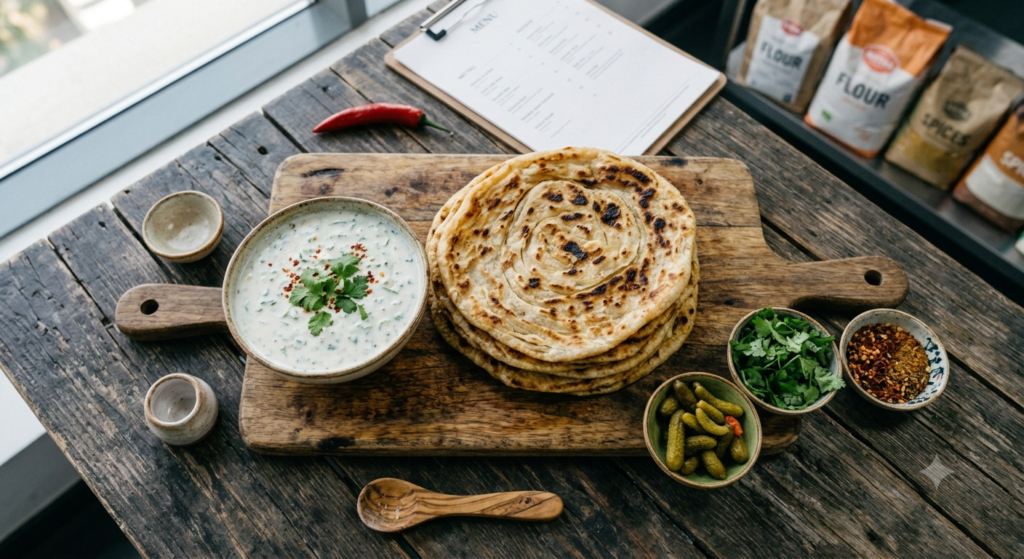
Yes. Restaurants and hotels can use it as part of breakfast menus and serve it with curries, vegetables, yogurt, eggs, or other suitable accompaniments.
Q5. What should HORECA buyers consider when choosing a supplier?
Buyers should consider product quality, ingredients, packaging, storage requirements, cooking performance, supply reliability, pricing, and the supplier’s ability to meet their required order volumes.