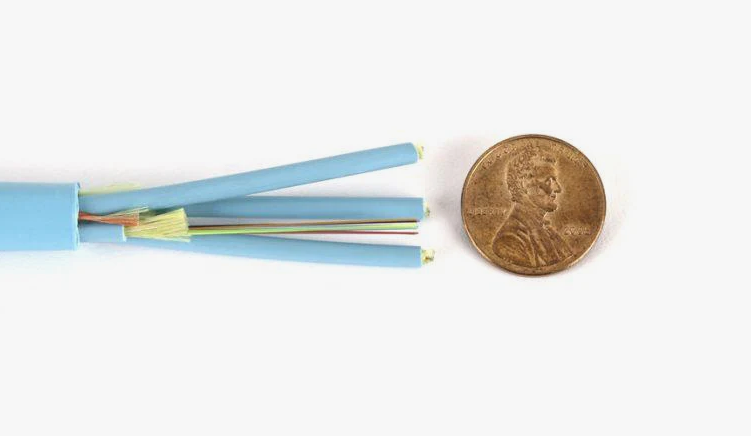
A high density cable is designed to carry a large number of data transmission channels within a compact and efficient structure. It is widely used in modern networking environments such as data centers, telecommunications systems, cloud infrastructure, and enterprise IT networks. The main purpose of high density cabling is to maximize connectivity while reducing physical space usage and improving overall network performance.
What Is a High Density Cable?
A high density cable is a specialized cabling system that combines multiple transmission pathways usually fiber optic or copper—into a single compact cable assembly. In fiber-based systems, it can contain dozens or even hundreds of fibers inside one jacket.
This design helps reduce cable clutter, improve airflow in server environments, and simplify large-scale network management.
How High Density Cable Works
High density cables function by grouping multiple independent transmission channels within one structured cable. Each channel carries data simultaneously, allowing parallel communication.
The process includes:
- Data is converted into electrical or light signals
- Signals travel through multiple internal channels
- Each channel transmits data independently
- Signals are received and processed at the destination
This parallel transmission increases bandwidth and improves efficiency.
Structure of High Density Cable
Transmission Elements
These are the internal fibers or conductors responsible for carrying data signals.
Buffer Layers
Protect internal components from mechanical stress and environmental damage.
Strength Members
Provide structural support to prevent stretching and bending damage.
Outer Jacket
A protective layer that shields the cable from moisture, dust, and physical impact.
Types of High Density Cable
High Density Fiber Optic Cable
Uses multiple optical fibers to transmit data using light signals. It is the most common type in modern networks.
High Density Copper Cable
Uses multiple copper conductors for electrical signal transmission in short-distance applications.
Ribbon Cable Systems
Organize fibers or conductors in flat arrays for easier mass termination and installation.
MPO-Based Cable Systems
Designed for high-speed fiber networks using MPO connectors for multi-fiber connectivity.
Key Benefits of High Density Cable
Space Efficiency
Allows a large number of connections in a compact physical area.
High Bandwidth Capacity
Supports large-scale data transmission for modern digital systems.
Reduced Cable Clutter
Minimizes cable congestion and improves airflow in server environments.
Scalability
Enables easy network expansion without major infrastructure changes.
Improved Network Performance
Reduces complexity and improves maintenance efficiency.
Applications of High Density Cable
Data Centers
High density cables are essential for connecting servers, switches, and storage systems efficiently.
Telecommunications
They form the backbone of modern telecom networks and internet infrastructure.
Cloud Computing
Cloud providers use high density cabling to manage large-scale data traffic.
Enterprise Networks
Businesses rely on high density cabling for internal communication systems.
5G and Modern Networks
Supports high-capacity mobile networks and next-generation communication systems.
Installation Process
Planning and Design
Engineers design network layouts based on capacity and space requirements.
Cable Routing
Cables are installed through trays, conduits, or structured pathways.
Termination or Splicing
Connections are completed using connectors or fiber splicing techniques.
Testing
Technicians verify signal quality, continuity, and performance.
Challenges of High Density Cable
Despite its advantages, there are some challenges:
- Complex installation process
- Higher initial cost
- Requires skilled technicians
- Sensitive to improper handling or bending
Proper planning and installation are essential for optimal performance.
Future of High Density Cable Technology
As global data usage continues to grow, high density cable systems will continue to evolve. Future improvements include:
- Higher fiber counts in smaller cables
- Improved flexibility and durability
- Faster installation methods
- Integration with automated network systems
These advancements will support next-generation digital infrastructure.
Conclusion
A high density cable is a critical component of modern networking systems, enabling efficient, scalable, and high-capacity data transmission in compact spaces. It plays a vital role in data centers, telecom networks, cloud systems, and enterprise IT environments. As digital demand increases, high density cabling will remain essential for supporting fast and reliable global connectivity.