A maintenance supervisor notices heavy scoring on a set of brake drums during a monthly inspection. The shoes need swapping — they always do at this point in the duty cycle. But the last set was used up three weeks ago, and the reorder hasn’t arrived yet. The crane sits for two days waiting on a hundred-and-fifty-dollar component.
Situations like this aren’t anomalies. They’re the natural result of a purchasing model that reacts to consumption instead of anticipating it.
For operations that depend on aging overhead cranes, bulk ordering wear parts offers a straightforward way to reduce both direct costs and unplanned downtime. The approach requires no special tools or systems — just a shift in how you think about the parts you already know you’ll need.
Understanding the Wear-Part Category
Wear parts share a defining characteristic: they’re designed to be used up. Brake linings sacrifice material to friction with every stop. Contactor tips degrade incrementally through electrical arcing. Bearings, bushings, and pins lose their tolerance through continuous movement.
Wire rope, seals, gaskets, sheave liners, and collector shoes all fall into this classification. Your maintenance schedule already accounts for their replacement because failure is a matter of when, not if.
This predictability is what separates bulk ordering of wear components from speculative inventory hoarding. You aren’t forecasting uncertain demand. You’re pre-positioning supply for needs your operation will absolutely generate.
Anatomy of the Reactive Purchasing Penalty
Most maintenance departments buy parts as needed. A component fails, someone picks up the phone, and a replacement ships. The system functions, which is precisely why it persists unexamined.
But the cumulative cost of that approach is higher than it appears.
Price per unit. Suppliers reward volume. Ordering a single brake assembly means paying the single-unit rate every time. Over a year, that markup adds up across multiple categories.
Freight repetition. Ten small shipments per year mean ten separate freight invoices. A consolidated order replaces most of those with one.
Urgency premiums. When a crane is idle and production is suffering, nobody pauses to compare shipping options. Next-day rates get approved reflexively. That premium exists solely because planning failed.
Idle equipment. An out-of-service crane can cost thousands of dollars per day in lost throughput and sidelined labor. The total annual cost of the wear parts responsible for most unplanned stops is typically a fraction of a single day’s production loss.
Transaction labor. Each purchase order triggers a sequence of administrative steps — creation, approval, receiving, invoice matching, payment. Dozens of small orders per year consume far more administrative time than a handful of planned ones.
These costs are real, but they’re dispersed across freight bills, production reports, and labor summaries. They rarely appear together in a way that reveals their true magnitude.
Translating the Concept Into Dollars
Consider a practical example. Suppose your cranes consume twelve sets of contactor tips annually at roughly forty-five dollars per set.
Purchased individually, that’s twelve orders with twelve freight charges. At least two or three will likely ship overnight when a tip failure catches the crew without stock. The per-unit premium on small orders, combined with those freight charges, could push annual overspend to four hundred dollars or more. That figure assigns no value to the hours of downtime involved.
Purchased in bulk, you lock in a single rate, pay freight once, and keep tips in the stockroom ready for the next scheduled changeout. When you apply this framework across all P&H crane parts your fleet cycles through regularly, the savings compound meaningfully over a single fiscal year.
Components Suited to Bulk Ordering
The filter for bulk-order candidacy is simple. If your crew replaces a component on a recurring basis multiple times per year, it’s a candidate.
For typical P&H overhead cranes, high-turnover wear items include:
- Brake linings, shoes, and related hardware
- Contactor tips and arc chutes
- Fuses and commonly rated electrical spares
- Wheel assemblies and wheel bearings where wear rates are tracked
- Pins, bushings, and bearings in trolley and bridge drives
- Wire rope where usage patterns are consistent
- Sheave liners and hook component kits
- Seals and gaskets for gearbox and drive housings
Every item on this list will be consumed within the coming year under normal operating conditions. The money allocated to stocking them isn’t trapped capital — it’s operating expense arriving early.
Components to Exclude From Bulk Orders
Discipline in what you don’t stock matters as much as what you do. Large assemblies that fail rarely are poor candidates for advance purchasing. Gear reducers, drums, motors, and heavy castings may sit on a shelf for years. If a crane is retired or re-rated during that time, the part becomes dead inventory.
Shelf-life concerns also apply. Rubber products like bumper pads and some seal types degrade in storage regardless of conditions. Friction materials tolerate longer holding periods, but even those should not be purchased beyond a reasonable consumption horizon.
A practical guideline: if a part won’t see installation within twelve to eighteen months, it doesn’t belong in a bulk order.
Determining Your Stocking Quantities
Forecasting wear-part needs doesn’t require complex models. It requires good records and straightforward analysis.
Pull two to three years of work-order history and tally replacements by component across your fleet. Cross-reference those counts with inspection findings and OEM-specified service intervals. The convergence of these three sources yields a dependable consumption baseline.
Then take that baseline to your crane parts supplier and discuss it together. An attentive supplier has visibility into your ordering patterns that may reveal consumption rates your internal records understate. A bearing ordered four times in eighteen months, for example, or a seal kit that appears every quarter like clockwork — these patterns inform stocking targets you might otherwise miss.
Begin with six to twelve months of supply for your fastest-moving items. That window is enough to capture pricing and freight benefits without overextending budget or storage capacity.
The Underappreciated Value of Supplier Loyalty
Consistent volume purchasing produces a benefit that no invoice captures: preferential attention when supply chains tighten.
P&H cranes in active service today span many years of production. Some components are still manufactured to original specifications. Others have been discontinued, requiring sourcing from specialty shops or locating dwindling original stock. Tracking down P&H crane parts that are no longer in production demands real effort from a motivated supplier.
A supplier who understands your equipment and has visibility into your purchasing history will invest more energy in solving difficult sourcing problems. They’ll give advance notice when a component is being phased out. They’ll secure scarce inventory on your behalf. They’ll identify valid alternative sources when the original manufacturer is gone.
This consideration should factor into how you evaluate a crane parts supplier before committing your purchasing volume. Ask specifically about their process for handling legacy and obsolete components. A buyer who orders sporadically gets transactional service. A buyer who orders consistently builds a partnership that delivers compounding returns over the life of a fleet.
Protecting Your Stock Investment
Bulk purchasing only generates returns if the parts remain in usable condition when needed.
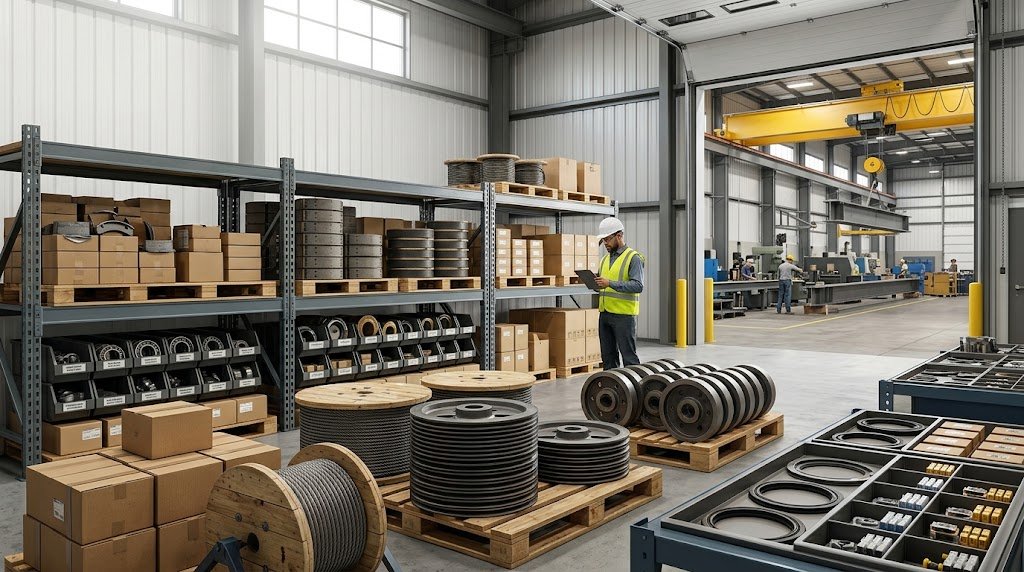
Keep all stock in a dry environment, elevated from the floor. Label every bin with the manufacturer’s part number rather than informal shorthand or operator slang. Follow strict first-in, first-out rotation so older pieces get installed before newer deliveries.
Assign ownership of the stockroom to a specific individual. That person should maintain awareness of quantities on hand, items issued, and items approaching reorder thresholds. Parts that nobody can find represent the same operational gap as parts that were never ordered.
Testing the Approach on a Small Scale
Operations unfamiliar with bulk purchasing should begin with a limited trial rather than a full restructuring.
Identify your five to ten highest-consumption wear items. Request a quote from your crane parts supplier covering a full year’s projected need for each line item. Then compare that quote against what you spent on the identical items over the prior year — including freight charges, rush-shipping fees, and a reasonable estimate of production losses caused by component-related downtime.
For most operations, the numbers settle the question quickly. The per-unit savings are directly measurable. The avoided downtime, however, is where the largest financial impact actually accumulates.
Reframing the Purchasing Decision
Every wear component your cranes consume is a purchase your operation will make. The only question is whether it happens under your terms or under the breakdown’s terms — at planned prices with stock on the shelf, or at emergency prices with production stalled.
Ordering P&H crane parts in bulk is not a purchasing gimmick. It reflects basic supply discipline applied to machinery your business cannot afford to have idle. When you plan the purchases you already know are coming, you eliminate the premium you’ve been paying for urgency that good planning would have prevented.