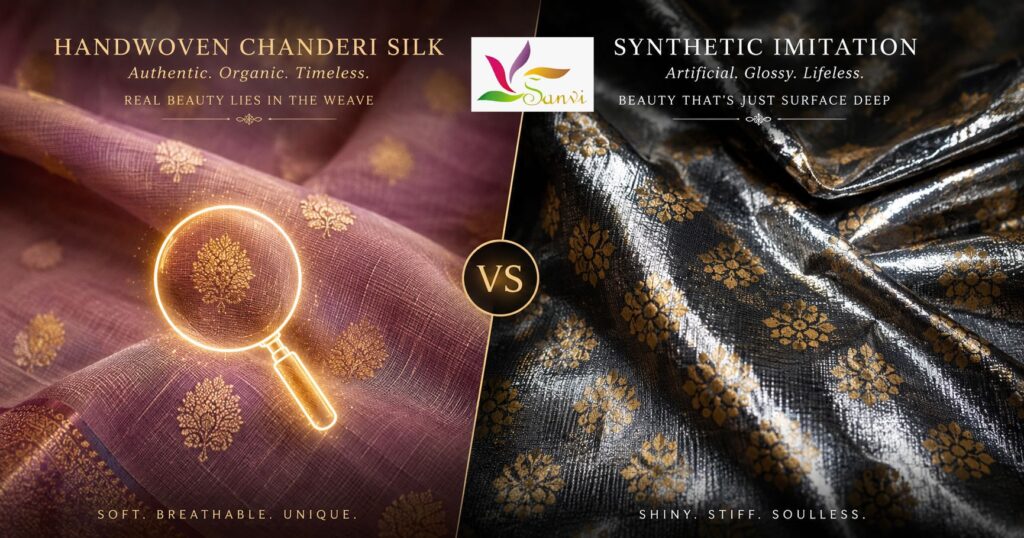
Spotting the difference: True handwoven Chanderi silk features a delicate, translucent grid weave and a soft, organic luster.
Pure Chanderi Silk Suits: The timeless charm of a handwoven Chanderi suit is unparalleled. Known for its luxurious sheen, gossamer-light texture, and rich heritage, Chanderi silk has remained a favorite among royalty and modern fashion enthusiasts alike. Originating from the historic town of Chanderi in Madhya Pradesh, this exquisite fabric represents a brilliant marriage of cotton and silk threads, meticulously interwoven by skilled master artisans.
However, the explosive growth of online e-commerce has made navigating the digital marketplace challenging. The digital space is flooded with powerloom lookalikes, cheap synthetic polyesters, and deceptive art-silk variations passed off as genuine handloom heritage. When you are purchasing luxury ethnic wear online, you cannot physically touch the fabric or run a flame test before entering your credit card details. This comprehensive guide outlines the exact visual markers, technical specifications, and strategic questions needed to successfully differentiate authentic, pure Chanderi silk from synthetic blends online.
1. The Translucency and Sheen Quotient
Authentic Chanderi silk possesses a highly distinct, translucent quality that sets it apart from other Indian textiles. This iconic “see-through” nature is the result of using high-quality, un-degummed raw silk yarns combined with exceptionally fine cotton threads. When light passes through genuine handwoven Chanderi, it displays a delicate, grid-like structure under magnification.
When browsing online product imagery, look closely at the product photographs. A genuine Chanderi fabric displays a subtle, natural, and subdued luster that shifts elegantly as the fabric moves. In stark contrast, synthetic polyester or nylon blends exhibit a highly uniform, harsh, metallic shine that reflects camera flashes aggressively. If the suit looks excessively glossy, slick, or uniformly reflective like satin, it is highly likely a synthetic counterfeit.
2. Examine the Motifs and Weaving Irregularities
The intricate motifs (known as butis) on traditional Chanderi fabric provide critical clues about its authenticity. On a pure, handwoven Chanderi suit, these motifs—ranging from traditional floral creepers (nalfarma) to peacocks and geometric shapes—are painstakingly woven into the fabric using separate needles or spools filled with pure zari or silk threads.
Because these pieces are made by hand, look for minute, charming irregularities in the placement, sizing, or alignment of the motifs. If an online boutique provides high-resolution zoom functionality, inspect the edges of the motifs. Powerloom or machine-printed synthetic suits feature flawless, perfectly identical, and perfectly spaced motifs without a single variation. Furthermore, look for pictures showing the reverse side of the fabric if available; handwoven motifs will show loose, hand-cut thread ends on the back, whereas machine-made or printed pieces look perfectly smooth or show uniform, continuous machine loops.
Spotlight on Contemporary Heritage
For those looking to invest in genuine craftsmanship, exploring the Latest Chanderi Silk Suit Designs reveals a beautiful balance of tradition and modern aesthetics. Today’s master weavers are moving beyond traditional borders, introducing refreshing pastel palettes, minimalist geometric borders, and lighter, contemporary motifs designed specifically for day-long comfort and upscale style.
3. Analyze the Price Discrepancy
While everyone enjoys finding a good deal, price remains one of the most reliable online indicators of fabric authenticity. Weaving a single, pure Chanderi silk suit fabric on a traditional handloom can take an artisan anywhere from several days to a few weeks, depending entirely on the complexity of the zari work.
When you factor in the market cost of raw mulberry silk, fine cotton yarns, real or high-quality tested zari, and fair artisanal wages, it becomes mathematically impossible to sell a genuine pure Chanderi silk suit for a nominal amount. If an online listing offers a “Pure Chanderi Silk Suit Set” at an unbelievably low price (such as under INR 1,500 to 2,000), you are undoubtedly looking at a synthetic blend, art silk, or a pure powerloom polyester imitation. True handloom luxury commands a premium that directly reflects the artisan’s time, labor, and material inputs.
| Characteristic | Pure Handwoven Chanderi Silk | Synthetic / Powerloom Blends |
| Fabric Luster | Soft, organic, shifting glow | Harsh, metallic, uniform glossy shine |
| Texture & Weight | Light, airy, slightly crisp hand-feel | Slippery, heavy, or stiff synthetic feel |
| Motif (Buti) Structure | Minor organic variations; unique edges | Flawless, perfectly identical replication |
| Price Range | Premium: reflects intensive manual labor | Suspiciously low; mass-manufactured |
4. Decode the Product Descriptions and Terminology
Reputable and authentic online brands take immense pride in their textile supply chains and use precise, clear language in their product descriptions. When evaluating an e-commerce listing, meticulously scan the specifications section for details about the fabric composition.
Look for explicit terms such as “handwoven,” “pure silk cotton Chanderi,” “80/100 count cotton,” or “pure mulberry silk.” Conversely, be wary of ambiguous, misleading catchphrases engineered to mimic luxury. Terms like “Chanderi Look,” “Semi-Chanderi,” “Poly-Chanderi,” “Synthetic Chanderi,” or “Art Silk Chanderi” are clever marketing euphemisms for synthetic polyester or nylon fabric blends that lack the breathability and longevity of natural fibers.
5. Verify Certifications and Vendor Transparency
One of the safest ways to guarantee that you are purchasing genuine handloom Chanderi online is to verify the platform’s credentials. The Government of India protects authentic regional crafts through specific certification marks. Look for symbols like the Silk Mark (which certifies the purity of silk used) or the Handloom Mark displayed on the website or within the product image gallery.
Additionally, don’t hesitate to utilize the platform’s customer support channels, such as WhatsApp or email.
Ask the vendor direct technical questions:
“Is this fabric handloom or power loom?”
“What is the exact percentage blend of silk and cotton?”
“Can you share a real-time, unedited video of the fabric drape under natural light?”
A transparent seller dedicated to preserving authentic handloom crafts will happily provide these details, whereas sellers dealing in synthetic replicas will often provide vague, evasive responses.
Conclusion
Shopping for ethnic luxury online does not have to be a game of chance. By training your eye to spot subtle fabric variations, looking for the small, beautiful imperfections of hand-guided weaving, looking past misleading descriptions, and demanding total vendor transparency, you can invest with complete confidence. A pure Chanderi silk suit is more than just a garment; it is a breathable piece of living wearable art that grows softer and more cherished with each passing generation.
Author’s bio
Sanvi Creation is a premier ethnic wear brand dedicated to celebrating authentic Indian handlooms. They curate the finest apparel, specializing in bringing the timeless elegance of authentic Chanderi silk suit designs to the modern wardrobe.