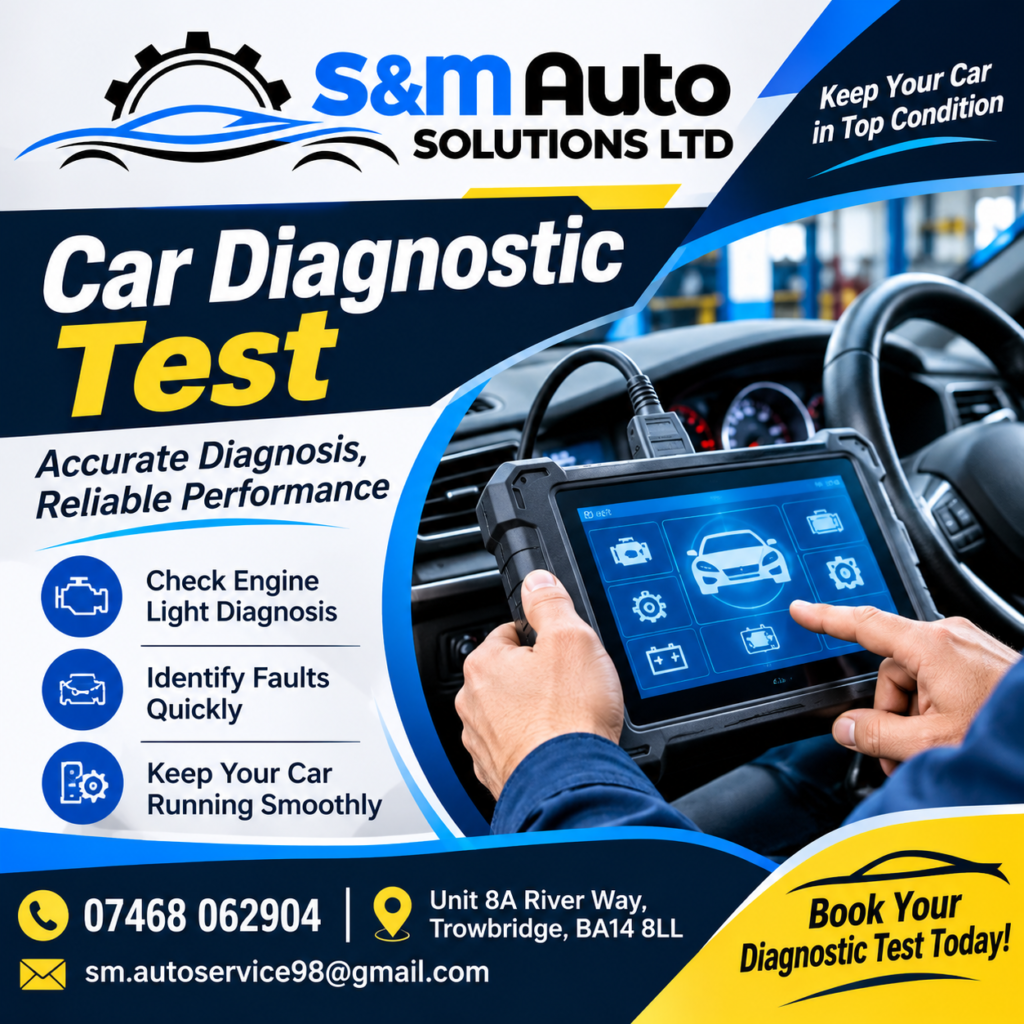
Modern vehicles are becoming increasingly sophisticated, combining mechanical engineering with advanced electronics, computer-controlled systems and intelligent sensors. While these developments have improved vehicle performance, safety and fuel efficiency, they have also made identifying faults more complicated. A warning light on the dashboard may indicate anything from a minor sensor issue to a problem affecting engine performance or vehicle emissions.
This is where professional vehicle diagnostics becomes important. A car diagnostic test helps identify potential problems by retrieving information from a vehicle’s onboard computer and electronic control systems. Rather than relying entirely on guesswork, technicians can use diagnostic information to investigate faults more accurately and recommend appropriate repairs.
As automotive technology continues to develop in 2025 and 2026, understanding vehicle diagnostics is becoming an essential part of responsible car ownership throughout the United Kingdom.
1. How Modern Car Diagnostic Technology Works
Most modern vehicles contain an onboard diagnostic system, commonly known as OBD-II. This system monitors different vehicle components and records information when certain operating conditions fall outside acceptable parameters.
When a fault is detected, the vehicle may store a diagnostic trouble code (DTC). A technician can access these codes using compatible diagnostic equipment connected to the vehicle’s diagnostic port.
However, a fault code does not automatically identify the exact component that needs replacing. It provides an indication of where a problem may exist.
A professional diagnostic investigation may involve:
- Reading stored and active fault codes.
- Reviewing engine management information.
- Checking sensor readings and electrical signals.
- Investigating emissions-related problems.
- Examining communication between electronic control modules.
- Clearing fault codes after appropriate repairs and verification.
For example, an engine warning light might be associated with an oxygen sensor, an air intake issue, a wiring fault or another engine management problem. Replacing a component without investigating the underlying cause can lead to unnecessary expenses.

This is why diagnostic equipment should be combined with technical knowledge and practical inspection.
2. Why Vehicle Diagnostics Is Becoming More Important in 2025 and 2026
The automotive industry is experiencing significant technological changes. Manufacturers are introducing more sophisticated driver assistance systems, electronic controls, hybrid powertrains and connected vehicle technologies.
These developments create additional diagnostic requirements.
Increasing electronic complexity
Modern vehicles rely on multiple electronic control units (ECUs). These systems manage functions such as:
- Engine performance and fuel delivery.
- Anti-lock braking systems (ABS).
- Airbag and safety systems.
- Electronic steering assistance.
- Transmission operation.
- Battery and charging management.
- Climate control and vehicle sensors.
A problem within one system can sometimes affect another. Proper investigation helps technicians understand whether the fault is isolated or connected to a wider electrical or mechanical issue.
Greater focus on emissions and efficiency
Vehicle emissions regulations and fuel-efficiency requirements have increased the importance of monitoring engine performance. Problems involving oxygen sensors, exhaust systems, catalytic converters and other emissions-related components can affect how efficiently a vehicle operates.
Diagnostic testing can help identify issues before they develop into more serious problems.
Growth in hybrid and electric vehicles
Hybrid and electric vehicles introduce additional systems, including high-voltage batteries, power electronics and electric motors. These technologies require suitable diagnostic equipment and appropriately trained technicians.
As the UK vehicle market evolves, workshops increasingly need to understand both traditional engine diagnostics and newer vehicle technologies.
3. Common Warning Signs That Your Vehicle May Need Diagnostic Testing
Drivers often notice changes in vehicle behaviour before a complete breakdown occurs. Recognising these warning signs can help prevent further damage.
Here are some common situations where professional investigation may be appropriate.
Illuminated engine warning light
An engine management warning light indicates that the vehicle’s monitoring system has detected an issue. The cause may involve emissions, ignition, fuel delivery or engine sensors.
A flashing engine warning light can indicate a more serious problem. Drivers should stop safely and seek appropriate professional advice rather than continuing to drive unnecessarily.
Poor fuel economy
If a vehicle suddenly uses more fuel than usual, possible causes include faulty sensors, incorrect air-fuel mixtures, ignition problems or engine management issues.
Difficulty starting
Starting problems may be associated with battery condition, starter motor faults, fuel delivery, ignition components or electrical connections.
Loss of engine power
Reduced acceleration, hesitation or irregular engine performance can indicate problems with the air intake, fuel system, turbocharger, sensors or ignition system.
Unusual engine behaviour
Rough idling, unexpected stalling or inconsistent engine performance may require further investigation using diagnostic equipment and physical checks.

In these situations, arranging a car diagnostic test Near Me can help drivers identify the possible source of a problem before deciding which repairs are necessary.
4. Choosing a Reliable Car Diagnostic Service in the UK
Finding a suitable diagnostic service involves more than simply locating a garage with a scanning tool. The quality of the investigation, the technician’s experience and the suitability of the equipment all matter.
When comparing a car diagnostic test UK service, consider the following factors.
Appropriate diagnostic equipment
Different vehicle manufacturers use different electronic systems. A suitable diagnostic tool should be compatible with the vehicle being inspected and capable of accessing the relevant control modules.
Basic code readers may only retrieve general engine-related information, while more advanced equipment can investigate additional vehicle systems.
Technical experience
Diagnostic codes require interpretation. An experienced technician should be able to combine electronic readings with mechanical inspection and manufacturer-related information.
Clear explanations
A reliable garage should explain what the diagnostic results indicate, which checks have been completed and whether additional investigation is required.
Drivers should receive understandable information rather than being presented with fault codes without explanation.
Transparent repair recommendations
Diagnostic findings should help establish the next steps. A garage should explain which repairs are necessary, which components may require further testing and what the potential consequences of delaying repairs could be.
For motorists searching for car diagnostic Trowbridge services, S&M Auto Service provides a local example of an automotive workshop offering vehicle diagnostic assistance. More information about its diagnostic service and location can be found at https://www.smautoservice.co.uk/car-diagnostic-test-trowbridge-uk/.
5. Common Diagnostic Mistakes and How to Avoid Them
Although diagnostic equipment is extremely useful, incorrect interpretation can create unnecessary repair costs.
Some common mistakes include:
Replacing parts based only on fault codes
A diagnostic code may identify a circuit or system rather than a specific failed component. Technicians should investigate wiring, connectors, sensors and related components before recommending replacement.
Ignoring intermittent warning lights
A warning light that disappears does not necessarily mean the problem has been resolved. Some faults occur intermittently and remain stored in the vehicle’s computer.
Using incompatible diagnostic equipment
Not every scanning tool supports every vehicle model or electronic system. Using appropriate equipment is essential for obtaining meaningful information.
Clearing codes without repairing the underlying issue
Deleting fault codes may temporarily remove a warning, but it does not repair the actual problem. The fault may return once the vehicle detects the same abnormal condition.
Ignoring regular vehicle maintenance
Diagnostic testing is not a replacement for servicing. Oil changes, filter replacements, brake inspections, battery checks and other maintenance tasks remain important for vehicle reliability.

Practical Tips for Maintaining Your Vehicle’s Health
Drivers can take several straightforward steps to reduce the likelihood of unexpected vehicle problems.
- Pay attention to dashboard warning lights.
- Follow the manufacturer’s recommended servicing schedule.
- Check engine oil and coolant levels regularly.
- Monitor changes in fuel consumption.
- Investigate unusual noises, vibrations or starting difficulties.
- Avoid ignoring recurring electrical problems.
- Keep records of repairs and diagnostic investigations.
- Seek professional advice when warning lights appear.
These habits help motorists recognise potential problems earlier and make better-informed maintenance decisions.
Conclusion: Make Vehicle Diagnostics Part of Responsible Car Maintenance
Modern vehicles depend on interconnected mechanical and electronic systems. As automotive technology advances throughout 2025 and 2026, understanding how these systems operate is becoming increasingly important for motorists.
Professional diagnostic testing provides useful information about potential vehicle faults, supports more accurate repair decisions and can help prevent unnecessary component replacement. However, the most effective approach combines diagnostic equipment, technical expertise and practical mechanical inspection.
Whether investigating an engine warning light, reduced fuel efficiency, electrical problems or unexpected changes in performance, drivers should treat early warning signs seriously.
Choosing a suitable diagnostic specialist and maintaining a regular servicing routine can help improve vehicle reliability, safety and long-term ownership costs.
Contact Us : https://www.smautoservice.co.uk/contact-us/
About Us : https://www.smautoservice.co.uk/about-us/
Website Link : https://www.smautoservice.co.uk/
Read More :