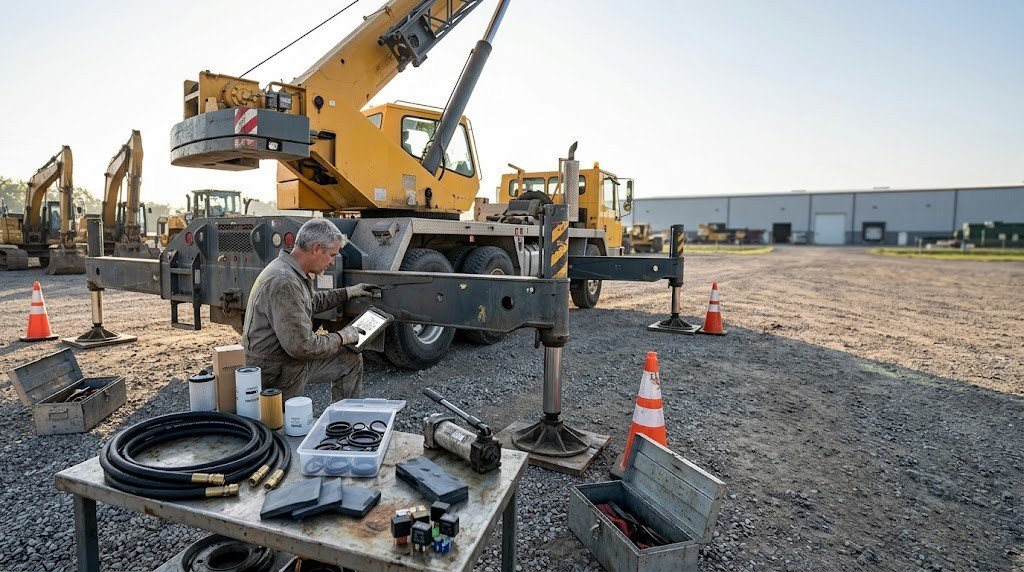
Grove TMS cranes are workhorses. You see them on highways, bridges, and commercial job sites. They are reliable, tough, and built to last. But they are not invincible. Like any heavy equipment, they wear down. Parts break. And when your crane is down, your project stops.
Finding the right Grove crane parts quickly is critical. But buying parts isn’t just about getting the first piece of metal that fits. You need to know what to look for, where to buy, and how to avoid mistakes that cost you time and money. This guide breaks down what you need to know to keep your TMS crane working.
Know Your Machine Before You Pick Up the Phone
Before you call a supplier, get your facts straight. Grove built the TMS series over many decades. A TMS 300E is different from a TMS 870. Even cranes of the same model year can have different components depending on the factory build.
Start with the serial number. It is usually on a plate near the cab or on the frame. Write it down. Next, get the exact part number. Do not guess based on what the part looks like. If you cannot read the part number because of rust or wear, check the manual. If you do not have the manual, many older Grove manuals are available online or through dealers.
If you guess, you will probably get the wrong part. Then you deal with return shipping, restocking fees, and more downtime. A few minutes of research saves hours of headaches later.
OEM vs. Aftermarket Grove Parts
This is a constant debate in the heavy equipment world. Should you buy Original Equipment Manufacturer (OEM) parts or aftermarket parts?
OEM parts come straight from Grove or their approved partners. They fit perfectly. They meet factory specs. They come with a solid warranty. You pay a premium for that peace of mind.
Aftermarket parts are made by third-party companies. They cost less. Some are built to the exact same standards as OEM. Others are cheap knockoffs.
How do you choose? Look at the part’s function. For critical safety and operational components—like load moment indicators (LMI), main hydraulic pumps, or hoist brakes—stick to OEM. Do not risk your crew’s safety to save a few bucks.
For routine maintenance items, high-quality aftermarket Grove parts are usually fine. Things like oil filters, air filters, and standard hydraulic hoses are often produced by well-known manufacturers. As long as the specs match, you are good to go. Just make sure you trust the brand you are buying.
Watch Out for TMS-Specific Wear Items
TMS cranes deal with a lot of stress. Because they are truck-mounted, they see road vibration, weather, and heavy lifting. Certain parts take a beating and need regular attention.
Pay attention to the outrigger system. Outrigger pads, beams, and hydraulic cylinders see massive loads. The seals on outrigger cylinders can leak over time. Keep spare seals and rods on hand.
The swing drive is another area to watch. This is what rotates the crane cab. If you hear grinding or notice sluggish rotation, the swing gear or bearings might be failing. These are heavy, expensive parts, so you want to catch the wear early before it damages the housing.
Do not forget the boom. Extendable booms rely on cables, sheaves, and wear pads. The wear pads keep the boom sections aligned. When they thin out, metal rubs on metal. Inspect these pads regularly and keep spares in the shop.
Keep These Common Parts in Stock
Do not wait for something to break to start looking for a replacement. TMS cranes work in harsh conditions. Keep a stock of the usual suspects on your shelf.
Fluids and filters are a must. Keep extra hydraulic filters, oil filters, and fuel filters on hand. Stock extra hydraulic oil, engine oil, and grease.
Hydraulic hoses are another big one. They rub, they age, and they blow at the worst possible times. Keep an assortment of common fittings and hoses. If you cannot keep them in stock, find a local hose shop that can make them on short notice.
Look at your electrical system, too. Keep fuses, relays, and limit switches in the toolbox. If your crane has a hard time starting or the boom will not extend, a blown fuse or bad relay is often the culprit.
Where to Source Your Parts
You have a few options when buying parts. Each has its pros and cons.
Authorized Grove dealers are the safest bet. They have the complete parts catalogs, technical support, and genuine inventory. If you need something specific and complex, start here. The downside is they might be more expensive. They can also take longer if the part is on backorder.
Independent heavy equipment parts suppliers are another option. Many of these companies specialize in cranes. They often carry hard-to-find parts for older TMS models that dealers no longer stock. A good independent supplier will know cranes inside and out. Build a relationship with one or two of them. They can be lifesavers when you are in a jam.
You can also look at salvage yards. If you need a major component like a cab, an axle, or a boom section, used parts can save you a lot of money. Just be careful. Inspect used parts closely. Ask for maintenance records. Do not buy used critical safety components like LMI cables or hoist motors without a thorough inspection by a qualified mechanic.
Avoid These Common Buying Mistakes
When buying Grove crane parts, a few mistakes trip up buyers over and over.
First, do not buy on price alone. A cheap hydraulic valve that fails in a month costs more than an expensive one that lasts five years. Factor in the cost of labor to install the part and the cost of downtime if it fails.
Second, pay attention to lead times. If a part takes six weeks to arrive, find out if there is a faster alternative. Sometimes paying a little more for faster shipping or buying from a local supplier is worth it to get your crane back to work.
Third, verify the return policy. Sometimes the part number is right, but the part does not fit because of a mid-year factory change. Sometimes you just ordered the wrong thing. Make sure the supplier allows returns or exchanges without a huge fight.
Fourth, do not ignore the small things. When you order a major part, order the gaskets, O-rings, and seals you will need to install it. There is nothing worse than having a new pump sitting on the shop floor because you are missing a two-dollar O-ring.
The Importance of Good Records
When you buy Grove crane parts, keep the paperwork. Do not just throw the invoice in a folder. Note the serial numbers, dates, and part numbers. Write down who you bought it from.
Better yet, take photos. Snap a picture of the part before you install it, and a picture of the tag. Keep these in a digital file on your phone or computer.
Good records help with warranties. If a part fails early, you need proof of purchase to get a replacement. Good records also help the next time you need to order the same thing. Instead of digging through the manual again, you just look at your notes. It makes future repairs much faster.
Wrapping Up
Grove TMS cranes are built to take a beating, but they still need care. Buying parts does not have to be a headache if you approach it the right way. Know your machine. Keep the right wear parts on hand. Choose your suppliers wisely. Balance OEM and aftermarket parts based on what the part actually does.
Treat your crane like the investment it is. Keep good records, avoid cheap shortcuts on critical components, and your TMS will keep lifting for years to come.