Outdoor paving plays an important role in the appearance, accessibility and functionality of residential and commercial properties. From private driveways and garden pathways to business entrances and shared pedestrian areas, paved surfaces need to withstand regular use and changing weather conditions. Paving and Pavers ACT is a relevant consideration for property owners looking to maintain these spaces and address common paving problems before they become more serious.
Over time, pavers can become loose, cracked, broken or uneven due to ground movement, poor installation and drainage problems. While some defects may initially seem minor, they can affect the safety and usability of an outdoor area. Understanding the causes of paving damage and the available repair methods helps property owners make informed maintenance decisions.
Common Paving Problems in Residential and Commercial Properties
Paving deterioration can happen gradually, particularly in areas exposed to frequent foot traffic, vehicle movement and moisture. Recognising the early warning signs makes it easier to organise suitable repairs.
Some common issues include:
- Loose pavers: Individual pavers may move underfoot when their bedding material becomes unstable.
- Cracked pavers: Impact, excessive weight and ground movement can create cracks across the surface.
- Broken or missing pavers: Damaged or displaced units leave gaps that affect the appearance and stability of paved areas.
- Uneven surfaces: Changes in the underlying ground level can cause some pavers to sit higher or lower than others.
- Sunken sections: Poor foundation preparation or water entering the base can cause sections of paving to settle.
These defects can create trip hazards, particularly around entrances, driveways, pedestrian paths and shared outdoor spaces. For commercial properties, uneven paving may also make access more difficult for customers, employees and visitors.
What Causes Paving to Become Damaged?
Before repairing a paved surface, it is important to understand why the problem developed. Addressing only the visible damage may lead to repeated repairs if the underlying cause remains unresolved.
Inadequate Base Compaction
The foundation beneath paving provides support and helps distribute weight across the surface. If the base material is not compacted properly during installation, it can gradually settle under pressure. This often results in loose pavers, uneven joints and sunken sections.
Poor Drainage and Water Movement
Water that collects around or beneath paved areas can weaken bedding materials and contribute to soil movement. Without suitable drainage, repeated exposure to moisture may cause sections of paving to shift or sink.
Damaged Edge Restraints
Edging helps keep pavers securely positioned. When restraints fail or become loose, individual units can spread apart, creating gaps and reducing the stability of the paved surface.
Heavy Loads and Vehicle Movement
Driveways and commercial paved areas must be constructed to accommodate their intended use. Repeated pressure from heavy vehicles, machinery or equipment can damage surfaces that are not designed to support those loads.
Tree Roots and Ground Movement
Tree roots can grow beneath pathways and driveways, gradually pushing pavers upwards. This may create raised edges, uneven surfaces and displaced units, especially around established trees and landscaped areas.
Identifying these factors helps determine whether a repair should focus on individual pavers, the bedding layer or the wider foundation.
Practical Methods for Repairing Damaged Paving
The appropriate repair method depends on the type and extent of damage. A small number of damaged pavers may only require localised attention, while widespread movement can indicate a deeper structural problem.
Replacing Broken or Missing Pavers
Severely damaged or missing units should be replaced to restore a continuous surface. The affected pavers are lifted or removed, and the underlying area is checked for instability before replacement units are installed.
Selecting pavers with a similar size, thickness, colour and finish helps maintain a consistent appearance.
Re-Bedding Loose Pavers
When pavers become loose, the bedding material beneath them may have shifted or deteriorated. Re-bedding involves removing the affected units, preparing the supporting layer and reinstalling the pavers on a suitable, stable base.
Proper jointing is also important because it helps maintain the position of individual units and reduces unwanted movement.
Re-Levelling Sunken Sections
Sunken paving requires attention to the underlying foundation. The affected section should be lifted so the base can be inspected, adjusted and compacted where necessary.
Once the foundation has been corrected, the pavers can be reinstated at the appropriate height and gradient. This helps restore an even surface and supports effective water runoff.
Keeping Paving Clean, Dry and Safe
Regular cleaning is an important part of maintaining paved outdoor areas. Dirt, leaves, moss and oil deposits can affect both the appearance and usability of a surface.
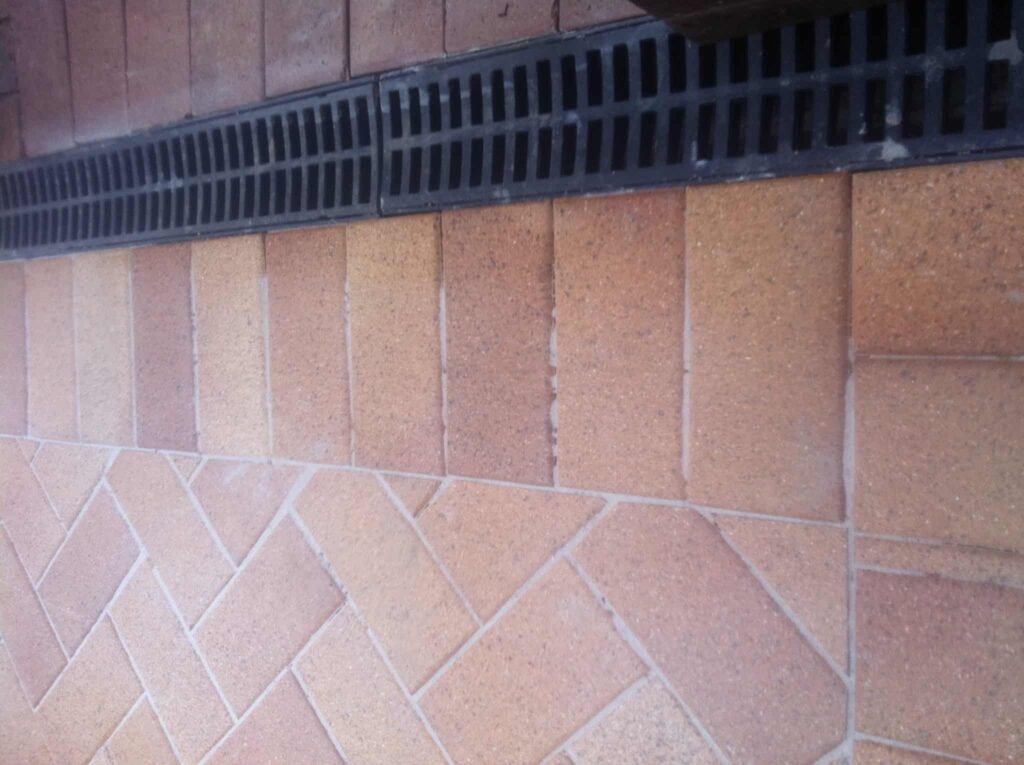
Water pooling should be investigated rather than treated as a simple cleaning issue. Incorrect paving levels or inadequate drainage may be responsible. Depending on the site, correcting the gradient, installing drainage channels or adding suitable collection points can help manage excess water.
Moss and algae commonly develop in shaded, damp locations. Sweeping away organic debris, improving airflow and using appropriate paving cleaners can help reduce their growth. Slippery areas should receive particular attention, especially along frequently used pathways and entrances.
Oil stains are often found on driveways and commercial parking surfaces. Suitable paving degreasers can help break down oil deposits, but cleaning products should always be checked for compatibility with the paving material.
Pressure washing may be useful for certain surfaces, although excessive pressure can remove jointing material or damage softer pavers. A suitable cleaning method should be selected according to the surface condition.
Why Routine Paving Maintenance Matters
Preventative maintenance can help property owners identify problems before extensive repairs become necessary.
For residential properties, regular inspections should cover driveways, patios, garden paths and outdoor entertaining areas. Commercial property managers should also monitor entrances, parking spaces, pedestrian routes and shared access areas.
A straightforward maintenance routine includes:
- Checking for loose, cracked and missing pavers.
- Looking for raised edges and uneven sections.
- Removing leaves, dirt and debris regularly.
- Monitoring areas where water collects after rainfall.
- Cleaning moss, algae and oil stains appropriately.
- Inspecting edging for signs of movement.
- Checking paved surfaces around trees for root-related displacement.
These checks help maintain safer outdoor environments and provide an opportunity to address minor defects before they spread.
The Importance of Professional Repair and Proper Foundations
Some paving maintenance tasks can be handled through regular cleaning and basic inspections. However, recurring settlement, widespread movement and drainage problems often require a more detailed assessment.
Professional repair work considers the condition of the surface as well as the foundation beneath it. This is important because replacing loose pavers without correcting poor compaction may not prevent further movement. Similarly, repairing a sunken area without addressing water infiltration can allow the same problem to return.
A suitable repair process should consider base preparation, drainage, edge restraints, paving materials and the expected loads on the surface. These factors are particularly important for commercial properties where safe pedestrian access and regular vehicle movement must be accommodated.
Conclusion
Well-maintained paving contributes to safer, more accessible and attractive outdoor spaces across Canberra. However, loose pavers, cracks, uneven levels and drainage problems should not be ignored, as they can gradually affect the condition of the entire paved area.
Understanding the causes of deterioration and selecting suitable repair methods can help property owners maintain reliable surfaces for everyday use. With regular inspections, effective drainage and properly prepared foundations, residential and commercial paving can remain functional and easier to maintain over the long term.