A decade sounds like an eternity when you’re standing beside a brand-new crane. The hydraulics are crisp. The paint gleams. The engine purrs with that new-machine confidence. But anyone who’s spent years in this industry knows the truth: time accelerates. Seasons blur. Job sites change. Crews come and go. Then one morning, the service reminder appears. The 10-year inspection is due, and it’s nothing like the annual checks you’ve been scheduling all along.
This is a comprehensive, invasive evaluation. Technicians will tear into major assemblies, hunt for hidden damage, and frequently recommend extensive repairs. If you haven’t financially prepared, the impact can cascade through your entire operation. But this scenario is completely avoidable. With thoughtful planning, you can forecast the expense with confidence. You can protect your cash position and keep your crane productive. Here’s how to budget smartly for your Tadano crane’s 10-year service interval.
Know What You’re Actually Paying For
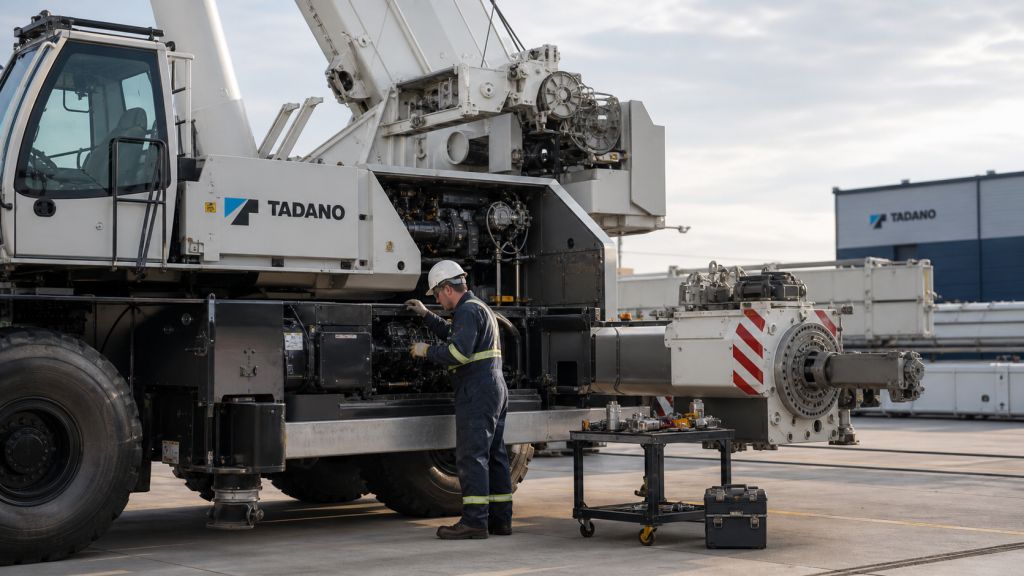
Start by understanding the scope differential. Annual inspections are observational. Technicians review safety interlocks, scan for visible wear, and generate compliance documentation. The 10-year inspection demands mechanical depth. It typically requires partial disassembly of the boom structure, swing mechanism, and hoist assembly.
Specialists apply non-destructive testing to structural welds and load-bearing pins. They’re searching for micro-cracks and internal corrosion that evade routine detection. Hydraulic cylinders are generally removed, inspected internally, and resealed with new components. Wire rope is replaced preventively, independent of visual assessment. Labor requirements multiply significantly compared to standard service. Your provider’s labor estimate is your budget foundation. But recognize it represents only a portion of the total investment.
Brace for Parts Surprises
This phase historically destroys budgets. Once assemblies are opened, concealed deterioration becomes visible. A boom pin that appeared serviceable may be deeply grooved. A sheave might measure below factory minimums. Hydraulic hoses that passed casual inspection could be cracked and weakened internally.
Create a dedicated parts reserve before disassembly commences. Analyze your maintenance records with forensic attention. Have you been repeatedly servicing the same hydraulic circuit? Has the swing drive developed an audible change in character? These patterns predict what lies beneath the surface. Rectifying root causes during the 10-year service prevents exponentially more expensive field failures later.
Your crane’s production year directly influences parts strategy. Mature units may require Tadano crane parts that have become challenging to locate. Some items may have transitioned to obsolete classification. You might need to secure remanufactured alternatives or factory-approved updated designs. For safety-critical applications, specify genuine Tadano crane parts. Correct components ensure inspection passage and sustained operational integrity.
Factor Procurement Timelines and Opportunity Cost
Components operate on their own delivery schedules, not yours. If a vital part is backordered, your crane sits inactive. Downtime converts directly to financial impact. For equipment that generates revenue, each idle day represents lost earning capacity. If rental replacement becomes necessary to honor commitments, that’s an additional cost layer.
Establish early communication with a reliable crane parts supplier. Request availability confirmations for typical 10-year replacement categories. Standard consumables like seal kits, filters, and wire rope are generally in stock. However, structural pins or proprietary hydraulic pumps may require extended procurement cycles. This intelligence enables strategic scheduling. Time the inspection during a naturally slower operational window, avoiding peak demand periods.
Account for Supporting Expenses
Labor and primary parts dominate budget conversations. But ancillary costs accumulate meaningfully. Transporting heavy components for specialized recoating generates freight expenses. If a boom section requires off-site surface restoration, that’s logistics plus additional labor.
Certification requirements carry separate fees. Following inspection completion, formal approval for return to service may involve load testing and third-party verification charges. Surface protection deserves budget attention too. With the crane disassembled for inspection, it’s the ideal opportunity to address paint and corrosion. Proper protective coating extends structural lifespan and enhances future marketability. Incorporate these elements initially to prevent mid-process financial strain.
Maintain Contingency Reserves
Unexpected findings are guaranteed. You budgeted for seal replacement, but discovered the cylinder barrel is scored beyond serviceable limits. You planned for wire rope, but found a cracked sheave hub. This is normal operational reality for decade-old equipment.
Build contingency into your total budget. An additional 10 to 20 percent above calculated estimates provides prudent cushion. If unused, you’ve preserved liquidity. If needed, you avoid emergency financing or operational compromise. This reserve absorbs the discoveries that inevitably surface during comprehensive teardown work.
Compare Multiple Service Proposals
Never rely on a single estimate. Contact several qualified service organizations. Request detailed proposals with labor and materials itemized separately. Examine them critically. An apparently favorable bid might exclude required testing protocols or certification documentation.
Assess their experience depth with your specific Tadano model. Relevant expertise directly impacts quality and efficiency. A technician intimately familiar with your model’s characteristic wear patterns inspects more thoroughly and works more efficiently. They identify developing problems before they escalate into failures. That proficiency reduces total labor investment and improves long-term reliability.
Preserve Long-Term Asset Value
A meticulously documented 10-year inspection enhances your crane’s market position. When disposition time arrives, buyers scrutinize maintenance history. They seek assurance that major service intervals were completed properly and professionally.
Specifying authentic Tadano crane parts throughout the inspection reinforces this value proposition. It signals adherence to manufacturer standards. While aftermarket alternatives might offer immediate cost reduction, they can undermine buyer confidence and suppress resale value. Knowledgeable purchasers distinguish between cranes maintained to specification and those maintained to minimum cost. Approach this inspection as a value-preservation strategy.
Plan for Subsequent Major Intervals
Once this cycle concludes, immediately orient toward the next milestone. Does your crane have a 15-year or 20-year inspection requirement? Begin accumulating funds without delay. Establish a dedicated maintenance reserve funded through consistent monthly allocations.
This discipline converts equipment ownership from a sequence of financial disruptions into a predictable cost structure. It eliminates the scramble when major service intervals arrive. It also strengthens your position when negotiating with service providers, enabling schedule flexibility based on operational needs rather than financial urgency.
Closing Perspective
The 10-year inspection represents a significant operational and financial commitment. It requires careful preparation, adequate capital, and strategic scheduling. Yet it also offers an unmatched opportunity to restore your crane to optimal condition. You can eliminate accumulated wear, install current components, and validate structural soundness for the coming decade.
Don’t defer financial planning until the deadline approaches. Begin roughly twelve months ahead. Consult your service provider. Verify parts availability through your crane parts supplier. Construct your budget with embedded contingency and execute with discipline. Do this properly, and your Tadano will continue delivering reliable, productive service for years ahead. That’s how you protect your capital investment and sustain business momentum.