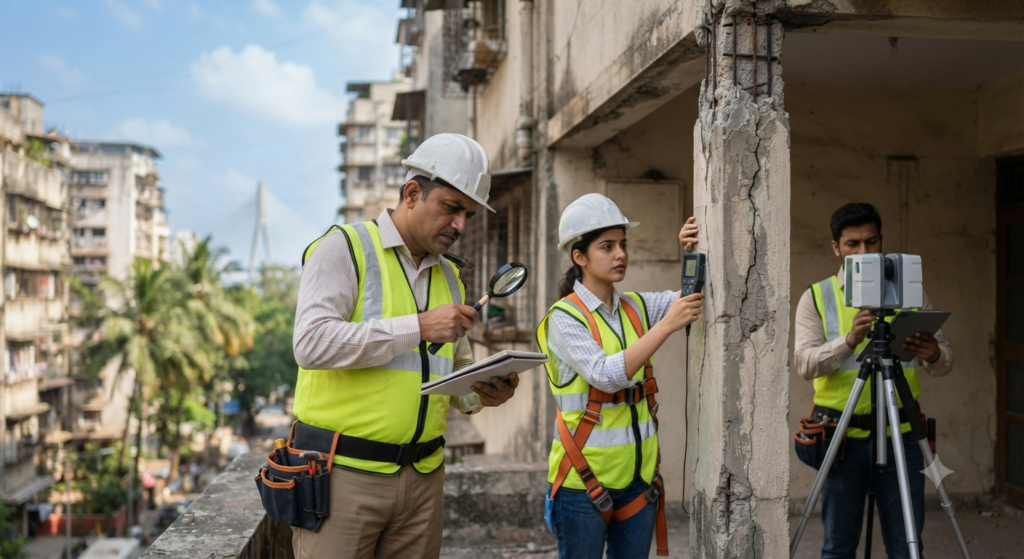
Mumbai has a large number of residential societies, commercial properties, industrial buildings, and aging structures that require regular inspection and maintenance. Over time, exposure to moisture, corrosion, construction defects, changing usage, and environmental conditions can affect a building’s structural performance. Professional structural audits and assessments help identify such concerns before they become more serious.
A Structural Consultant Mumbai can assist property owners, housing societies, developers, and facility managers in evaluating the condition of a building and determining appropriate repair or strengthening measures. Structural consultancy is not limited to identifying visible damage; it also involves understanding the causes of defects and assessing the overall condition of important structural elements.
What Is a Structural Audit?
A structural audit is a systematic examination of a building’s structural condition. It involves inspecting components such as columns, beams, slabs, foundations, staircases, balconies, and other load-bearing elements.
The objective is to identify visible and potential structural deficiencies and understand whether repair, rehabilitation, or strengthening is required. Depending on the building’s age and condition, an audit may include visual inspection, review of available drawings, assessment of previous repairs, and appropriate non-destructive testing.
For older buildings, regular structural audits can provide useful information about deterioration and help property owners plan maintenance activities in a more organized manner.
Why Structural Assessments Matter in Mumbai
Mumbai’s buildings experience a range of environmental and operational conditions. High humidity, monsoon exposure, water seepage, inadequate maintenance, corrosion of reinforcement, and aging construction materials can contribute to deterioration.
A professional structural assessment helps determine the present condition of a building rather than relying only on visible symptoms. For example, cracks may indicate different underlying causes, including shrinkage, settlement, corrosion, movement, or other structural and non-structural issues.
A Structural Consultant Mumbai can investigate these conditions and recommend further evaluation where necessary. This approach helps building owners understand whether an observed defect requires routine maintenance, specialized repair, or detailed structural investigation.
Key Components of a Structural Audit
1. Visual Inspection
The first stage generally involves a detailed visual examination of accessible structural and related building components. Engineers may look for cracks, spalling concrete, exposed reinforcement, corrosion, dampness, leakage, deformation, and other signs of deterioration.
Photographs and site observations can be documented to establish a record of the building’s condition.
2. Review of Available Documents
Where available, structural drawings, architectural plans, previous audit reports, repair records, and other technical documents can provide useful background information.
Understanding the building’s original design and previous modifications helps engineers interpret current site conditions more effectively.
3. Non-Destructive Testing
Visual inspection may not reveal deterioration occurring inside concrete or around reinforcement. In such situations, non-destructive testing can provide additional information without significantly damaging the structure.
Common methods may include rebound hammer testing, ultrasonic pulse velocity testing, and cover meter testing. The selection of testing methods depends on the building, suspected defects, and assessment objectives.
4. Structural Analysis and Assessment
Depending on the findings, an engineer may evaluate structural elements and consider factors such as loads, material condition, observed damage, alterations, and available design information.
The purpose is to understand the significance of identified defects and determine whether additional investigation or remedial measures are appropriate.
5. Recommendations
The final stage involves documenting observations and providing suitable recommendations. These may include routine maintenance, waterproofing, concrete repairs, corrosion treatment, structural strengthening, rehabilitation, or further investigation.
Recommendations from a Structural Consultant Mumbai should be based on actual site conditions rather than applying the same repair approach to every building.
Common Problems Identified During Structural Assessments
Buildings can develop different types of defects throughout their service life. Some commonly observed issues include:
- Cracks in beams, slabs, columns, and walls
- Concrete spalling
- Corrosion of reinforcement
- Water seepage and dampness
- Honeycombing and poor-quality concrete
- Exposed reinforcement
- Deterioration caused by moisture
- Unauthorized or significant structural modifications
- Deficiencies associated with aging components
- Damage resulting from inadequate maintenance
Not every crack or defect indicates an immediate structural danger. However, unusual or recurring damage should be professionally evaluated by a Structural Consultant Mumbai to understand its cause and significance.
Role of a Structural Consultant in Building Maintenance
A qualified Structural Consultant Mumbai can play an important role in developing a practical maintenance strategy. Instead of addressing defects only after they become extensive, professional assessments can help identify deterioration at an earlier stage.
For housing societies, this can be particularly useful when planning major repairs, rehabilitation, or redevelopment-related decisions. A technical assessment can help decision-makers understand the building’s existing condition and identify areas that may require attention.
Consultants can also coordinate with contractors, testing agencies, architects, and project management teams where specialized repair or rehabilitation work is required.
Structural Audits for Aging Buildings
Many older structures require greater attention because construction materials and building components naturally deteriorate over time. However, building age alone does not determine its structural condition.
Maintenance history, exposure to moisture, quality of original construction, modifications, loading conditions, and previous repairs can all influence performance.
A periodic structural assessment by a Structural Consultant Mumbai provides an opportunity to document deterioration and establish priorities for maintenance. For older properties, the findings can also support decisions regarding repair, rehabilitation, strengthening, or other long-term options.
How to Choose a Structural Consultancy Firm
When selecting a consultancy firm, property owners and societies should consider relevant technical experience, qualifications, scope of services, testing capabilities, and familiarity with local building conditions.
It is also important to understand what the assessment will cover. A professional consultancy should clearly explain the inspection process, testing requirements, documentation, and expected deliverables.
Gopinath Nambiar & Associates provides structural engineering consultancy services covering structural audits, NDT testing, building repairs, rehabilitation, strengthening, and technical assessments in Mumbai.
Benefits of Professional Structural Assessment
A properly conducted assessment can provide several practical benefits:
Better Understanding of Building Condition
It provides property owners with technical information about visible and suspected defects.
Early Identification of Deterioration
Detecting deterioration earlier can help owners plan appropriate maintenance before problems become more extensive.
Informed Repair Planning
Assessment findings can help engineers develop repair or strengthening recommendations based on observed conditions.
Improved Maintenance Planning
A documented structural condition assessment can help societies and property managers prioritize maintenance activities.
Support for Long-Term Building Performance
Regular inspection and timely intervention can contribute to maintaining the serviceability and durability of a building.
When Should a Structural Audit Be Considered?
A structural audit may be considered when a building is aging, significant cracks or deterioration are observed, major repairs are planned, or there have been substantial modifications to the structure.
It can also be useful when a society is evaluating rehabilitation or redevelopment options. The appropriate timing and scope depend on the building’s characteristics, condition, history, and applicable requirements.
Property owners should not wait for visible deterioration to become severe before seeking professional technical advice from a Structural Consultant Mumbai.
Conclusion
Structural audits and assessments provide an important way to understand the condition of buildings and plan appropriate maintenance or remedial measures. In a city such as Mumbai, where many properties are exposed to moisture, aging, intensive use, and changing requirements, professional structural evaluation can support better building management.
A Structural Consultant Mumbai can combine site inspection, technical documentation, appropriate testing, and engineering assessment to develop a clearer understanding of structural conditions. The resulting recommendations can help property owners and societies make informed decisions about repairs, rehabilitation, strengthening, and long-term maintenance.
Gopinath Nambiar & Associates supports building owners and societies with structural engineering services designed to evaluate existing conditions and address structural maintenance and assessment requirements.
FAQs
Q1. What is a structural audit?
A structural audit is a systematic technical inspection used to evaluate the condition of a building’s structural components and identify defects, deterioration, or areas requiring further investigation or repair.
Q2. What does a structural consultant inspect?
A consultant may inspect columns, beams, slabs, foundations, balconies, staircases, and other relevant structural components. The scope depends on the building and objectives of the assessment.
Q3. Is non-destructive testing required for every structural audit?
Not necessarily. The need for NDT depends on site observations, building condition, available information, and the specific objectives of the assessment. Engineers can recommend suitable testing where visual inspection alone is insufficient.
Q4. Can a structural assessment help with building repairs?
Yes. Assessment findings can help identify the causes and extent of deterioration and support the development of suitable repair, rehabilitation, or strengthening recommendations.
Q5. When should an old building undergo a structural assessment?
An assessment may be considered when a building shows deterioration, recurring cracks, corrosion, leakage-related damage, or other concerns, and as part of planned maintenance for aging properties. The appropriate timing should be determined based on the building’s condition and applicable requirements.