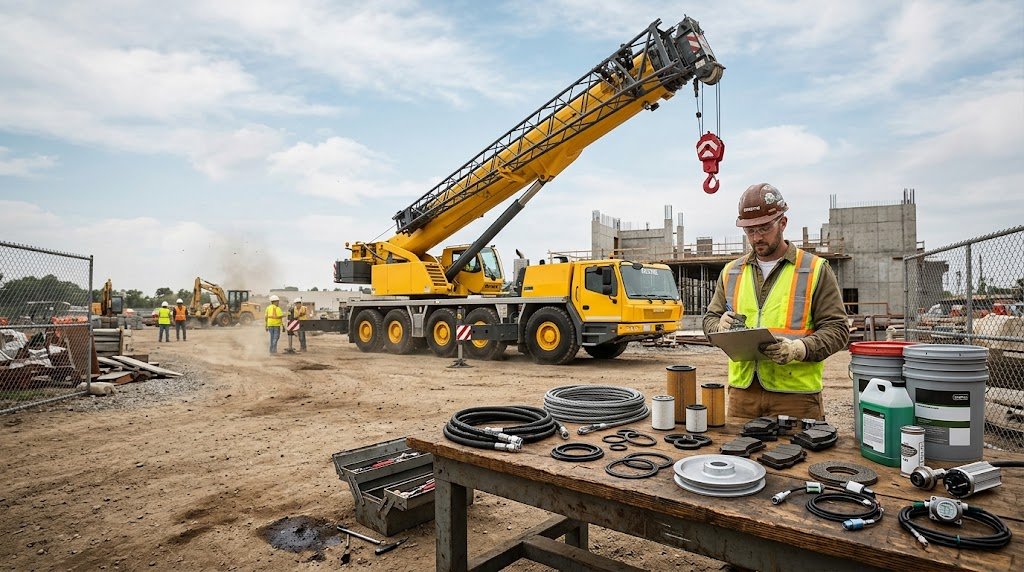
Mobile cranes earn a reputation for toughness, and Grove models are no exception. They work in yards, along roadsides, and inside active industrial plants. Every lift adds stress to ropes, pins, bearings, and seals. That stress accumulates whether or not the machine looks worn.
Most of the damage stays hidden. It develops inside hose walls, beneath friction material, and within bearing races. By the time a symptom shows up, the repair has already grown. A written maintenance plan turns that surprise into a scheduled task.
The ten areas below account for the majority of routine replacements. Consider them a checklist when you build your next shutdown list. Each one includes the warning signs worth reporting early.
1. Wire Rope, Slings, and Rigging Hardware
Rope supports the load and absorbs shock on every cycle. It works outside, exposed to grit, moisture, and sunlight. Inspect it at the start of each shift, not just weekly. Look for broken wires, crushed strands, kinks, and rust bloom.
Stretch and core wear build gradually under heavy duty. Once fraying reaches the surface, the rope is already past its limit. Track replacements by operating hours and by cumulative load history.
Slings, shackles, and master links age on a similar schedule. Retire anything with stretched eyes or distorted pins. Early changeouts are far cheaper than a dropped load.
2. Hydraulic Circuits: Hoses and Seals
Boom lift, extension, and outrigger deployment all depend on pressurized fluid. That pressure tests every hose, fitting, and seal in the circuit. Heat, vibration, and contact with brackets break down rubber from the inside. A burst hose halts work and spreads hot oil across the ground.
Walk the machine and look for cracks, blisters, and damp fittings. Cylinder weeping usually signals a seal that has passed its service life. Replace O-rings whenever a joint is opened during maintenance.
Keeping the correct hoses and seal kits on the shelf is a practical habit, since these crane parts fail with little advance notice.
3. Hydraulic, Air, and Fuel Filtration
Filters stand between contamination and the precision components inside your machine. They catch grit, water, and metal debris before those particles travel further. A restricted filter cuts flow and starves the engine or pump. Performance drops, and operating temperatures begin to climb.
Change hydraulic filters every time the fluid is serviced. Air and fuel filters follow their own intervals listed in the manual. Skipping those intervals shortens engine life more than most operators expect.
Filters count among the most frequently ordered Grove parts in a service operation. Select media that matches the manufacturer’s specification, and record the change date.
4. Service, Park, and Swing Brakes
Controlled stopping is as critical as controlled lifting. Service brakes, park brakes, and swing brakes each manage heavy rotating mass. They rely on friction material that thins with every application. Longer stopping distances and squealing noises are the first clues.
Replace pads, shoes, and discs before they reach the backing plate. Running them down to metal damages drums and rotors behind them. Those larger components take longer to source and cost more to fix.
Inspect the hydraulic or mechanical actuator while the assembly is apart. A small leak can imitate worn friction material. Fix the underlying problem before fitting new parts.
5. Hoist Brake Bands and Clutch Packs
No other assembly in the crane handles as much heat and torque. The hoist raises, holds, and lowers every load you place. Brake bands and clutch discs inside it slip by design to control descent. That controlled slip steadily wears away the friction lining.
If a suspended load begins to creep downward, the lining is worn. Treat that sign as urgent and schedule the repair immediately. Ignoring it puts the crew below the load at risk.
Bands and discs are standard Grove parts carried by most dealers and distributors. While the hoist is open, check drums for scoring and springs for tension. Uneven wear often points to a problem deeper in the gearing.
6. Slewing Bearing and Swing Ring
Rotation under load is handled by a single large bearing. Boom weight, counterweight, and the suspended load all pass through it. Thrust forces and tipping moments concentrate in one place. That duty makes inspection and lubrication a permanent part of the schedule.
This bearing outlasts a filter many times over, yet it still wears. Grinding noise or noticeable play during rotation signals advancing damage. Slow the duty cycle and plan a teardown before it worsens.
Replacement of a swing ring is a major job with extended downtime. Documentation for these crane parts should include inspection notes and torque records. Early detection keeps the intervention small and predictable.
7. Hook Blocks, Sheaves, and Hooks
The hook block is the final link between crane and load. Sheaves inside it guide the rope through every lift and hold. Groove wear develops as the rope runs across the same contact points. A damaged groove cuts into the rope and shortens its life.
Check the hook for stretch, twist, or bending near the throat. Test the safety latch for spring tension and free movement. A throat that has opened indicates the hook has passed its yield point.
Take measurements at each inspection and keep them in the log. Comparing readings over time shows wear that a glance will miss. Replace blocks and sheaves as soon as the numbers fall outside tolerance.
8. Tires and Outrigger Support
On a mobile unit, tires carry the machine between lifting positions. They also take static weight while the boom is working. Pressure changes with temperature and duty, so check it often. Cuts, bulges, and uneven wear each justify a replacement.
Outrigger pads absorb the reaction load during setup. Steel pads can bend under concentrated loading. Composite pads may splinter, crack, or separate at the edges. Inspect them before every lift and retire anything damaged.
Pads and tires rank among the Grove parts carried in a typical service truck. Match pad area to ground conditions and to the load chart. Extra timber or matting spreads pressure on soft or uneven ground.
9. Sensors, Switches, and LMI Electronics
Modern cranes rely on electronics to enforce safe working limits. Load moment indicators use sensors to warn before stability is lost. Limit switches stop the boom at full extension and near the drum. Rain, mud, and constant vibration attack this hardware daily.
Corroded connectors and stuck switches are the usual failure points. If the LMI reports false values, begin with the sensor circuit. Verify wiring, grounds, and calibration before suspecting the display unit.
Spare sensor harnesses and switches are modest crane parts to keep on the shelf. A quick swap during a scheduled shutdown keeps the safety system online. Log each replacement so calibration records stay complete.
10. Hydraulic Oil, Engine Oil, and Coolant
Oil lubricates, transmits force, and carries heat out of the machine. Coolant protects the engine through wide temperature swings. Both fluids degrade with time and with accumulated operating hours. Additives break down, and moisture enters through seals and reservoirs.
Contaminated oil damages pumps and valves from within, quietly at first. Follow the service intervals in the manual, and shorten them under severe duty. Send a used sample to a lab at each drain.
The lab report identifies which internal parts are shedding material. Use only the specified grades, and keep stored fluid sealed and labeled.
Planning Ahead
Every machine wears; the outcome depends on how wear is managed. Unplanned failures cost shifts, revenue, and margin for error. Planned replacements keep those costs predictable and visible.
Use the ten areas above to shape your next inspection window. Keep a small stock of common Grove parts so routine tasks are not delayed. Store them clean and dry where they will not degrade before use.
Arrange a dependable source for crane parts and general rigging supplies as well. A known supplier shortens the wait when a unit is already down. Compare lead times and technical documentation before committing to one.
Follow the schedule, record every change, and train the crew to report small symptoms. The work you plan today prevents the repairs you cannot schedule tomorrow. Your team stays protected, and the crane keeps earning.