In the fast-paced world of horology, where smartwatches become obsolete in a few years and fashion trends flicker like candlelight, few names command as much respect and endurance as Seiko. For over a century, the Japanese powerhouse has balanced the scales between cutting-edge innovation and a deep reverence for tradition. While luxury often carries a gatekeeping price tag, Seiko has mastered the art of “democratized excellence,” proving that true elegance isn’t defined by a five-figure receipt, but by craftsmanship, history, and a relentless pursuit of precision.
To understand why a Seiko watch never goes out of style, one must look beyond the stainless steel and sapphire crystal. The brand’s longevity is rooted in a philosophy that prioritizes the wearer’s experience, resulting in timepieces that transition seamlessly across generations.
A Legacy of “Firsts”
The enduring appeal of Seiko is built upon a foundation of genuine historical significance. This isn’t a brand that relies on marketing fluff; it is a brand that changed the course of timekeeping. In 1969, Seiko introduced the Astron, the world’s first quartz wristwatch. While this “Quartz Revolution” sent shockwaves through the traditional Swiss industry, it established Seiko as a pioneer of accessibility and accuracy.
Owning a Seiko means wearing a piece of that disruptive spirit. Whether it is the legendary 62MAS—Seiko’s first professional diver—or the introduction of the Spring Drive movement, the brand has always been at the forefront of technical evolution. This heritage gives the watches an “intellectual” style. They are respected by seasoned collectors and novice enthusiasts alike because they represent milestones in human engineering.
The Versatility of Design Language
One of the primary reasons a Seiko remains relevant in a wardrobe for decades is its versatile design language. Seiko does not chase “hype” in a way that dates the watch. Instead, they lean into clean lines, functional layouts, and high-quality finishing that feels appropriate in 1970, 2024, or 2050.
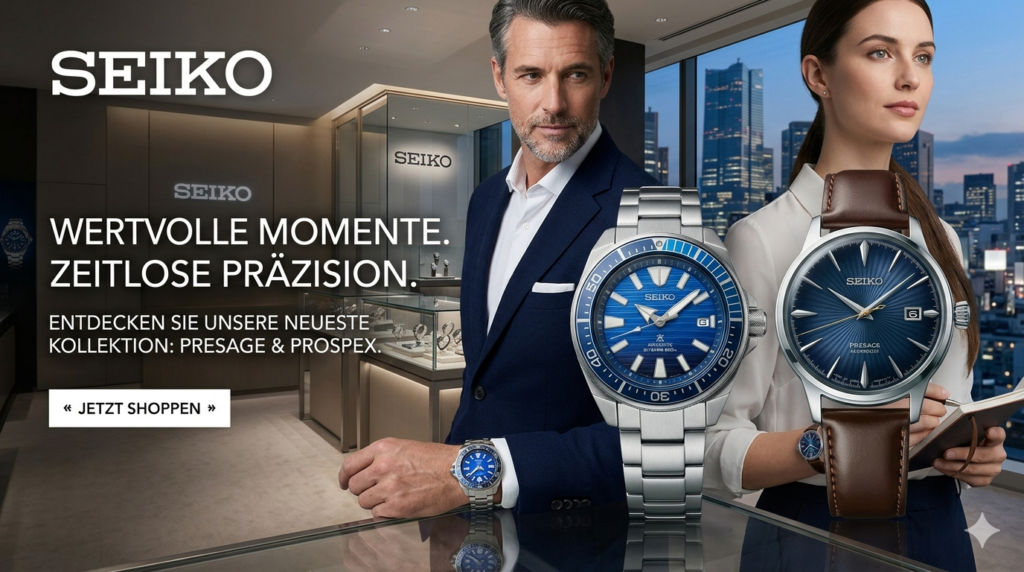
Consider the Seiko 5 Sports line. It captures a rugged, adventurous aesthetic that pairs just as easily with a weekend hoodie as it does with a casual blazer. On the other end of the spectrum, the Presage collection showcases “The Art of Japan,” featuring enamel, Urushi lacquer, and Arita porcelain dials. These are not merely watches; they are wearable art pieces. Because these designs are rooted in traditional craftsmanship rather than fleeting “color of the month” trends, they possess a permanent aesthetic value.
Vertical Integration: The “In-House” Advantage
In the Seiko watch world, the term “in-house” is often used to justify exorbitant prices. Seiko, however, is one of the few truly vertically integrated manufactures in the world. They produce almost every component—from the hairsprings and oils to the movements and cases—entirely within their own facilities.
This level of control ensures a consistent quality that outshines many competitors at the same price point. When you buy a Seiko, you aren’t buying a “fashion watch” with a third-party movement dropped into a generic shell. You are buying a cohesive machine where every gear and lever was designed to work in harmony. This mechanical integrity is a form of elegance in itself; it provides the owner with the confidence that the watch will continue to tick long after cheaper alternatives have failed.
The Cult of the Professional (Prospex)
The Prospex line—short for “Professional Specifications”—has carved out a permanent niche in style history. Originally designed for divers, pilots, and explorers, these watches have become icons of the “tool watch” aesthetic.
Models like the “Turtle,” the “Samurai,” and the “Tuna” have developed cult-like followings. Their chunky, purposeful shapes were born out of necessity—maximum legibility and water resistance—but they have evolved into symbols of reliability. The “tool watch” look never goes out of style because it communicates a sense of readiness and adventure. Even if the closest the watch gets to water is a splash from a sink, the over-engineered nature of a Prospex provides a tactile satisfaction that “thin” fashion watches simply cannot replicate.
The Bridge Between Value and Luxury
Seiko occupies a unique space in the market: it is perhaps the only brand that is equally at home in a budget-conscious collection as it is in a high-end vault. This “classlessness” is a key component of its style. A Seiko watch doesn’t try to broadcast how much money you have; it broadcasts that you have good taste and an appreciation for value.
Collectors who own Swiss watches worth tens of thousands of dollars often still keep a Seiko SKX or a “Cocktail Time” in their rotation. There is a certain “cool factor” in wearing a watch that performs brilliantly without the need for pretension. This lack of ego makes Seiko a timeless choice; it fits into any social situation without feeling out of place or “try-hard.”
Evolution Without Losing the Soul
While Seiko respects its past, it is never trapped by it. The brand continues to innovate with technologies like Solar, which powers the watch through light, and GPS Solar, which adjusts the time zone automatically anywhere on Earth.
Even with these modern updates, the core DNA remains. A modern Seiko Sharp Edged Series GMT might look contemporary, but its case finishing utilizes the same attention to geometry and light that defined the “Grammar of Design” established by Seiko designers in the 1960s. By evolving the technology while maintaining the aesthetic soul, Seiko ensures that their watches never feel like “old tech.”
Conclusion
A Seiko watch is more than a tool for telling time; it is a testament to the idea that quality and style should be accessible. It survives the turnover of fashion cycles because it isn’t built on the shifting sands of “cool”—it is built on the solid rock of Japanese engineering, artistic tradition, and functional excellence.
Whether it is the shimmering dial of a Presage, the rugged dependability of a Prospex, or the classic charm of a Seiko 5, these watches offer a rare “forever” quality. In a world that often feels disposable, a Seiko remains a constant—a timeless companion that looks as good on your wrist today as it will on the wrist of the person you eventually pass it down to. That is the true definition of timeless elegance.