Carpets remain an important part of interior flooring due to their comfort, insulation, and aesthetic value. Over time, constant foot traffic, furniture pressure, spills, and environmental exposure start weakening carpet fibers and backing. These issues slowly reduce both appearance and durability. Small damages often go unnoticed at first, yet they expand into serious problems that affect the entire flooring system. Carpet Repair Services help restore damaged sections without requiring full replacement. Proper handling of carpet issues ensures longer lifespan, improved appearance, and reduced maintenance costs for residential and commercial spaces.
What Causes Carpet Damage
Carpet damage usually develops from repeated physical stress and environmental exposure over time. Heavy furniture creates dents that compress fibers and reduce texture quality. High-traffic areas lose color and strength due to constant friction from footsteps. Liquid spills and chemical cleaners penetrate deep into fibers, leaving stubborn stains that are difficult to remove. Pet activity also contributes through scratching, chewing, and accidental soiling. Moisture buildup underneath carpets weakens adhesive bonds and may lead to mold formation. These combined factors gradually reduce carpet durability and lead to visible structural and aesthetic damage.
Key Carpet Repair Issues and Their Signs
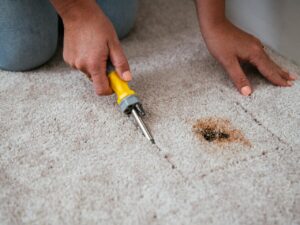
Carpet issues often appear gradually, making early detection important for effective repair. Frayed edges usually develop near corners and entry points due to continuous friction. Wrinkles and ripples form when carpet tension loosens or humidity levels fluctuate. Burn marks from heat sources create permanent dark patches that affect appearance. Tears and cuts appear from sharp object contact or heavy movement of furniture. Stains cause uneven coloration across the surface, while carpet lifting occurs when adhesive weakens or moisture penetrates the base. Recognizing these signs early helps prevent further spread of damage and costly restoration work.
Step-by-Step Way to Handle Carpet Repair Issues
Handling carpet repair issues begins with a careful inspection of the affected area to understand the type and depth of damage. Surface cleaning plays an important role in removing dust, debris, and moisture before any repair work begins. Clean surfaces allow better visibility of damaged sections and support accurate repair decisions. Identification of matching carpet texture and pattern is essential for achieving a seamless finish. Damaged areas are then trimmed or isolated using precise tools to prepare for repair or patching work.After preparation, the repair process focuses on restoring structure and appearance. Small damaged sections are replaced using matching carpet pieces cut to exact size and shape. Proper alignment ensures that patterns and fibers blend naturally with surrounding areas. Adhesives or bonding materials secure the patch firmly in place. In cases involving wrinkles or ripples, stretching techniques are applied to restore tension and flatten the surface. Final grooming helps blend repaired sections, ensuring uniform texture and consistent appearance across the carpet.
Professional Carpet Repair Process Explained
Professional carpet repair follows a systematic approach designed to ensure long-lasting results. The process begins with a detailed inspection of carpet condition, fiber type, and damage severity. This assessment helps determine whether patching, stretching, or partial replacement is required. Technicians then prepare tools and select materials that match the existing carpet structure and design for seamless restoration. Damaged portions are carefully removed or lifted without disturbing surrounding areas. Replacement patches are cut with precision to match exact dimensions and patterns. Strong adhesive or heat bonding techniques are used to secure repaired sections in place. Specialized stretching equipment helps eliminate ripples and restore flatness across larger surfaces. Final finishing includes fiber trimming, surface grooming, and alignment checks to ensure repaired sections blend naturally with original carpet areas.
Preventing Future Carpet Damage
Preventing carpet damage requires consistent care and simple maintenance practices that protect fibers from long-term wear. Regular vacuuming removes dirt particles that gradually weaken carpet texture. Furniture pads placed under heavy objects reduce pressure marks and prevent permanent dents. Immediate cleaning of spills prevents stains from settling deep into fibers. Rotating furniture placement distributes weight and foot traffic evenly across the surface, reducing localized wear. Additional protection can be achieved by using rugs or runners in high-traffic areas such as hallways and living rooms. Maintaining balanced indoor humidity levels prevents carpet expansion and contraction that leads to wrinkles. Periodic inspections help identify early signs of damage, allowing timely repairs before issues become severe. These preventive measures significantly extend carpet lifespan and maintain its original appearance.
Conclusion
Effective carpet repair management depends on early detection, proper assessment, and suitable repair techniques. Small issues such as stains or minor tears can be addressed with simple methods, while more serious damage requires structured repair processes for long-term stability. Understanding the causes of carpet deterioration helps in reducing future risks and improving maintenance habits. Regular care, preventive strategies, and timely repairs ensure carpets remain durable, visually appealing, and functional for many years without requiring full replacement.