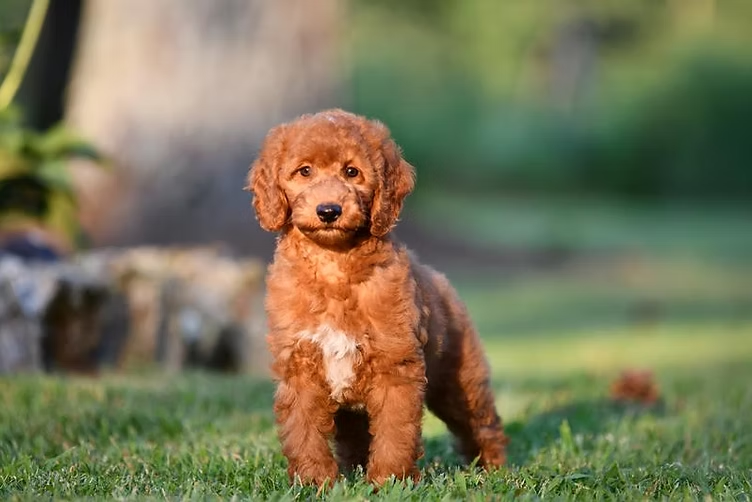
A well-trained dog is easier to live with, safer in public, and more confident in unfamiliar situations. Goldendoodles are known for being intelligent, social, and eager to interact with their families, but those qualities still need the right direction. For owners raising a Goldendoodle oklahoma families often choose for companionship, using reward-based training, clear routines, and patient repetition can make learning enjoyable while building a strong relationship between dog and owner.
Why Goldendoodles Respond Well to Modern Training
Goldendoodles often inherit a mix of traits from Golden Retrievers and Poodles. Both breeds are generally intelligent and responsive to human interaction, which can make training rewarding when lessons are structured properly.
However, intelligence does not automatically mean a dog will obey every command. A Goldendoodle can become distracted, excited, bored, or overly interested in its surroundings. Training works best when owners make expectations clear and reward the behaviors they want to see more often.
Consistency is particularly important. If jumping is allowed when greeting family members but discouraged when meeting visitors, the dog may struggle to understand the rule.
Modern training therefore focuses less on punishment and more on communication. The goal is to teach the dog what to do rather than simply correct what it does wrong.
Positive Reinforcement Is One of the Best Methods
Positive reinforcement remains one of the most practical approaches for teaching a Goldendoodle. The method involves rewarding desirable behavior immediately after it happens.
Rewards can include small treats, praise, toys, petting, or access to something the dog enjoys. The reward helps the dog connect an action with a positive result.
For example, when teaching “sit,” wait for the dog to place its bottom on the floor and immediately provide a reward. With repetition, the dog begins to understand what behavior earns the reward.
How to Make Rewards More Effective
Timing matters. A reward given several seconds after the desired behavior may not clearly communicate what the dog did correctly.
Keep training sessions short and focused. Five to ten minutes can be enough for a young dog, especially when you repeat several short sessions throughout the day.
Try these practical habits:
- Use small, tasty treats that are easy to eat quickly.
- Reward good behavior immediately.
- Gradually reduce treats as the behavior becomes reliable.
- Combine food rewards with verbal praise.
- Practice in different locations once the dog understands the command.
The objective is not to keep feeding treats forever. Instead, rewards help establish the behavior before owners gradually shift toward praise, play, and occasional treats.
Use Clicker Training for Precise Communication
Clicker training can complement positive reinforcement. A clicker produces a consistent sound that tells the dog exactly when it has performed the desired action.
For example, if you are teaching your Goldendoodle to touch your hand with its nose, you can click at the precise moment the nose makes contact. A treat follows the click.
The click itself does not have to be exciting. Its value comes from what the dog learns to associate with it.
When Clicker Training Helps Most
A clicker can be especially useful for behaviors that are difficult to mark with your voice. It can also help owners become more precise about their timing.
Start by teaching the dog that the click predicts a reward. Once that connection is established, use the click consistently when the desired behavior occurs.
If a clicker is inconvenient, a short verbal marker such as “yes” can work as well. The important factor is consistency.
Start Socialization Early and Carefully
Training is not limited to commands. Socialization teaches a dog how to behave calmly around people, animals, sounds, places, and everyday experiences.
A Goldendoodle that receives positive exposure to different environments may become more comfortable handling changes in its surroundings. Socialization should be gradual rather than overwhelming.
Introduce new experiences at a pace the dog can handle. For instance, a puppy can first observe visitors from a comfortable distance before being encouraged to interact.
Useful socialization experiences may include:
- Meeting calm, friendly people.
- Hearing household appliances.
- Walking on different safe surfaces.
- Riding calmly in a vehicle.
- Visiting dog-friendly environments.
- Seeing bicycles, traffic, and other common sights.
- Learning to remain relaxed around appropriate dogs.
Always watch body language. If the dog becomes frightened or overwhelmed, increase the distance and allow it to settle before continuing.
Crate Training Can Build Good Habits
When introduced properly, crate training can give a Goldendoodle a comfortable place to rest. It can also support house training and help a dog learn to settle independently.
The crate should never become a place for punishment. Instead, make it inviting by adding appropriate bedding and offering treats or safe enrichment inside.
Start with short periods. Allow the dog to enter voluntarily, reward calm behavior, and gradually increase the time spent inside.
Common Crate Training Mistakes
One common mistake is expecting a puppy to remain crated for too long. Young dogs have limited bladder control and need frequent opportunities to exercise, eliminate, and interact with their families.
Another mistake is using the crate only when leaving the house. If that happens, the dog may begin to associate the crate with separation.
Instead, provide positive crate experiences while you are home as well. This helps make the space feel normal rather than restrictive.
Teach Basic Commands Through Everyday Activities
Basic commands become more useful when they are practiced outside formal training sessions. A Goldendoodle can learn while waiting for dinner, preparing for a walk, or greeting guests.
Useful foundational commands include:
- Sit
- Stay
- Come
- Down
- Leave it
- Drop it
- Wait
- Place
Practice Commands in Real Situations
Ask for “sit” before putting down the food bowl. Practice “wait” before opening the front door. Use “leave it” when the dog shows interest in something it should not pick up.
These small repetitions turn training into part of everyday life.
Once the dog responds reliably at home, increase the difficulty. Practice in a quiet yard, then a less familiar location, and eventually around controlled distractions.
Leash Training Should Begin Early
A friendly, energetic Goldendoodle can become difficult to manage if it pulls toward people, dogs, or interesting smells.
Begin leash training in a low-distraction area. Reward the dog for walking near you with a loose leash instead of waiting until pulling becomes a habit.
When the leash becomes tight, avoid turning the walk into a tug-of-war. Pause, change direction, or wait for the dog to return attention to you. Reward the calm response and continue walking.
Make Walks Mentally Engaging
Physical exercise is important, but mental stimulation can be equally valuable. Allowing a dog to safely sniff during walks gives it opportunities to explore its environment.
You can also vary walking routes and incorporate simple training exercises. Asking for a “sit,” “look,” or short period of calm attention can make an ordinary walk more educational.
Manage Jumping and Excitement Without Harsh Corrections
Many Goldendoodles are enthusiastic greeters. Unfortunately, jumping can become a problem when the dog gets excited around family members or visitors.
Instead of rewarding jumping with attention, teach an alternative behavior. For example, ask the dog to sit before receiving attention.
Everyone in the household should follow the same rule. If one person pets the dog while it jumps, the behavior may continue because the dog has learned that jumping sometimes works.
Teach an Alternative Greeting
Ask visitors to ignore the dog until all four paws are on the floor. Once the dog settles, the visitor can offer calm attention.
Over time, the dog learns that staying composed produces the interaction it wants.
This approach teaches self-control without frightening or physically correcting the dog.
Use Consistent House Training Routines
House training becomes easier when owners establish predictable routines. Puppies often need to go outside after waking, eating, drinking, playing, and sleeping.
Take the puppy to the same general bathroom area and reward successful elimination immediately afterward.
Accidents are part of the learning process. Clean them thoroughly and avoid punishment after the fact, because the dog may not understand why it is being corrected.
Watch for Signals
As your puppy develops, learn its individual signals. Some dogs sniff the floor, circle, pace, or suddenly move toward a door when they need to eliminate.
Recognizing these behaviors allows you to act before an accident occurs.
A regular feeding and bathroom schedule can also make patterns easier to predict.
Keep Training Mentally Challenging
Because a Goldendoodle can be bright and curious, repetitive exercises may eventually become boring. Once a behavior is reliable, introduce small challenges.
For example, instead of practicing “stay” only in the living room, try it in the backyard. Later, practice while a family member walks nearby.
Puzzle toys, scent games, trick training, and food-dispensing toys can also provide useful mental stimulation.
| Training Method | Best Use | Practical Tip |
|---|---|---|
| Positive reinforcement | Basic obedience and manners | Reward desired behavior quickly |
| Clicker training | Precise behavior marking | Click immediately when the behavior occurs |
| Crate training | Rest and house-training support | Make the crate comfortable and positive |
| Socialization | Confidence and adaptability | Introduce new experiences gradually |
| Leash training | Calm walking | Reward a loose leash |
| Impulse-control games | Excitement management | Teach “wait,” “leave it,” and calm greetings |
| Puzzle activities | Mental stimulation | Increase difficulty gradually |
Avoid Punishment-Based Training
Harsh physical corrections, intimidation, and fear-based techniques can damage trust and may create additional behavior problems.
A dog that becomes afraid during training may focus more on avoiding punishment than understanding what the owner wants. This can make learning less reliable.
Instead, identify the behavior you want and create opportunities for the dog to perform it successfully.
If a Goldendoodle repeatedly jumps, for example, teach sitting as the preferred greeting behavior. If it grabs household objects, teach “drop it” and provide an appropriate toy.
Know When Professional Training Can Help
Some behavior challenges are difficult to solve without guidance. A qualified, reward-based trainer can observe the dog and help identify why a behavior is happening.
Professional assistance can be particularly valuable when dealing with serious fear, aggression, separation-related problems, or persistent leash reactivity.
Look for trainers who explain their methods clearly and prioritize humane, evidence-based techniques. Ask about their experience, training philosophy, and approach to difficult behaviors before hiring them.
Make Training a Family Routine
Dogs learn faster when everyone uses the same cues and expectations. Decide which words your household will use for important behaviors and avoid constantly changing them.
For example, if one person says “down” to ask the dog to lie down while another uses the same word to mean “get off the sofa,” confusion can follow.
Keep household rules simple. When everyone rewards calm behavior and responds consistently to unwanted behavior, the dog receives a much clearer message.
Conclusion
The most effective Goldendoodle training methods today focus on communication, consistency, rewards, and realistic expectations. Positive reinforcement, socialization, leash work, crate training, and mental stimulation can help a Goldendoodle develop reliable manners without damaging the bond between dog and owner. Short sessions and everyday practice often produce better results than long, demanding lessons. Most importantly, remember that every dog learns at its own pace. With patience and a consistent approach, owners can turn training into a rewarding part of daily life while helping their Goldendoodle become a confident, well-mannered companion.
FAQs
What is the best training method for a Goldendoodle?
Positive reinforcement is a strong foundation for Goldendoodle training. Reward desired behaviors with treats, praise, play, or other rewards the dog values.
When should I start training my Goldendoodle?
Basic training can begin when a puppy comes home. Start with simple behaviors, household routines, name recognition, socialization, and gentle handling.
Are Goldendoodles easy to train?
Many Goldendoodles are responsive to training because they can be intelligent, social, and eager to interact with people. However, individual temperament and consistency greatly affect results.
How long should a Goldendoodle training session last?
Short sessions of around five to ten minutes can work well, particularly for young dogs. Several brief sessions throughout the day are often more productive than one long session.
Should I use treats for every training exercise?
Treats can be very useful during the learning stage. Once a behavior becomes reliable, gradually vary rewards and use praise, toys, play, or occasional treats to maintain the behavior.