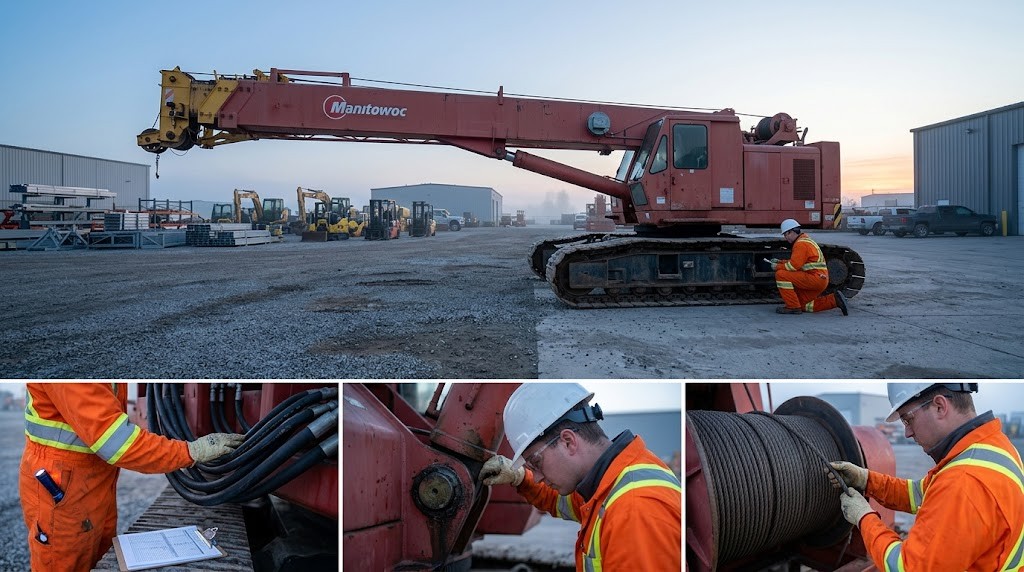
The most experienced crane professionals understand that equipment failure is never truly sudden. Before a major breakdown, the machine always provides advance notice. The hydraulic system develops a new sound. A structural member shows a hairline crack. Fluid appears where dryness should prevail. These indicators are present for those who systematically examine their equipment. Regular inspection is the disciplined practice that captures these warnings and transforms them into preventive maintenance actions.
Manitowoc cranes represent significant capital investment in machinery engineered for the most demanding lifting applications. These machines are built to endure harsh environments, extreme loads, and continuous operation that would incapacitate lesser equipment. But no engineering excellence can eliminate the fundamental laws of material behavior. Steel experiences fatigue under cyclic loading. Polymeric seals degrade through exposure and age. Hydraulic systems accumulate contamination that accelerates component wear. Acknowledging these realities is the foundation of effective equipment management.
Mechanisms of Component Degradation
Every operational cycle contributes to incremental component aging. Each lift generates stress waves that propagate through structural members. Every swing of the upper works creates wear in the slew ring and swing drive. Environmental factors compound mechanical wear through corrosion, contamination, and thermal cycling.
Consider the progression of wear in a boom pendant pin connection. Initially, the fit is precise and tight. Through thousands of load cycles, microscopic wear gradually enlarges the bore. The pin develops perceptible play, which accelerates wear through impact loading and fretting. Eventually, the connection becomes so loose that accurate load positioning is compromised, and the risk of structural failure increases dramatically.
Similarly, examine the degradation of a hydraulic hose subjected to flexing and pressure cycling. The reinforcement layers experience fatigue, gradually losing their ability to contain system pressure. The outer cover may show no visible damage while internal deterioration progresses. When the reinforcement finally fails, the hose ruptures suddenly, causing immediate loss of hydraulic function and creating safety hazards from high-pressure fluid release.
These scenarios illustrate physical processes governed by material properties and operating conditions. All components have finite service lives. Regular inspection provides visibility into degradation rates, enabling prediction of remaining service life and planning of replacement before failure occurs.
Safety: The Non-Negotiable Foundation
Human safety must remain the paramount consideration in all crane operations. When components fail under load, the consequences are often catastrophic. Structural fractures can cause complete collapse. Wire rope separation drops suspended loads without warning. Hydraulic failures eliminate load control instantaneously.
Inspection programs are specifically designed to identify these vulnerabilities before they manifest as accidents. Advanced testing techniques reveal subsurface defects that visual inspection cannot detect. Detailed wire rope examinations identify broken strands, core deterioration, and diameter reduction before catastrophic failure occurs.
These preventive measures create protective barriers around all personnel in the operating area. The crane operator faces the most concentrated risk, suspended in the cab with limited escape options. Ground crews working within the swing radius face substantial exposure from falling materials and uncontrolled boom movement. Even personnel outside the immediate work area may be affected by debris scatter and structural collapse. No production deadline or budget consideration justifies compromising these safety margins. When inspection findings indicate questionable integrity, immediate replacement is mandatory. Using authentic Manitowoc crane parts for these replacements maintains the safety factors engineered into the original design.
Economic Returns on Diligence
Beyond safety, systematic inspection delivers compelling financial returns. Minor issues resolved promptly cost a fraction of major failure remediation. A weeping hydraulic seal represents an inexpensive repair. Allowing the leak to persist until pump cavitation destroys the power unit multiplies costs by an order of magnitude.
Opportunities for early detection are abundant for attentive inspectors. That faint hydraulic seep around a cylinder gland becomes a steady stream given time. The subtle change in swing motor tone becomes a grinding howl before seizure. Addressing these symptoms at first appearance prevents the cascading damage that transforms manageable problems into major overhauls.
The downtime dimension amplifies cost considerations significantly. When a crane fails unexpectedly, direct repair costs are merely the visible portion of the financial impact. Idle labor, schedule delays, contractual penalties, and customer dissatisfaction accumulate rapidly beneath the surface. Strategic inventory of critical Manitowoc crane parts enables rapid repairs that restore revenue generation. A dependable crane parts supplier who maintains stock and provides accurate lead times supports this operational readiness.
Regulatory Framework and Documentation
Government oversight of crane operations continues to expand. OSHA mandates establish specific inspection frequencies—daily pre-operational checks by operators, monthly documented examinations, and annual comprehensive evaluations by qualified inspectors. These regulatory requirements exist because historical data consistently demonstrates their effectiveness in preventing accidents.
Incident investigations invariably scrutinize maintenance documentation. Organizations unable to produce complete, accurate records face severe penalties, potential criminal liability, and insurance coverage disputes. Conversely, thorough documentation proving compliance provides robust legal protection and supports warranty claims.
Effective record systems should specify inspection scope, methods employed, inspector qualifications, findings, and corrective actions taken. This comprehensive documentation demonstrates organizational commitment to safety and regulatory compliance.
What Comprehensive Inspections Should Include
Quality examinations follow systematic protocols rather than haphazard observation. Begin with comprehensive visual survey, examining the machine from multiple angles. Identify fluid leaks indicating seal failures. Locate cracks in structural members, particularly at stress concentration points. Verify fastener torque on critical connections.
Wire rope demands particular attention. Inspect the entire exposed length for kinking, birdcaging, broken wires, and core protrusion. Examine end terminations for looseness, corrosion, or deformation. Measure rope diameter at multiple points to detect internal wear and core collapse.
Structural inspection focuses on boom assemblies and jib components. Check weld zones for cracks, using paint crazing as an indicator of underlying stress. Inspect all pinned connections for clearance exceeding manufacturer specifications. Hydraulic hoses require examination for chafing, bulging, or soft spots that signal imminent failure.
Operational testing reveals conditions static inspection cannot detect. Listen carefully during function checks. Pump cavitation produces a distinctive high-pitched whine. Bearing distress creates grinding or rumbling sounds. Experienced operators develop exceptional sensitivity to normal machine sounds. Their reports of auditory changes warrant immediate investigation.
Clear Replacement Criteria
Inspection findings generate value only when they trigger appropriate action. Develop clear, written replacement criteria based on manufacturer specifications and recognized industry standards. Wire rope exhibiting excessive broken wires, diameter reduction below minimums, or visible damage requires replacement. Hydraulic components showing leaks, cracks, or deformation are mandatory replacement items.
The quality of replacement components directly impacts crane performance and safety. Aftermarket alternatives may offer lower initial acquisition cost but may not match original specifications for material grade, dimensional tolerance, or fatigue life. For load-bearing and safety-critical applications, genuine Manitowoc crane parts provide verified performance characteristics. Your crane parts supplier should verify part numbers against your specific equipment serial number to ensure correct application.
Building Supplier Relationships
Identifying worn components during inspection is preliminary to securing replacements efficiently. Supplier capability significantly influences repair timelines and operational availability.
Superior suppliers provide technical consultation beyond basic order fulfillment. They confirm application suitability, communicate realistic lead times, and offer alternatives when standard items face availability constraints. Suppliers maintaining dedicated inventory of Manitowoc crane parts support rapid response to urgent requirements.
Cultivating relationships with suppliers who understand your equipment configurations and operational constraints pays substantial dividends. The right partner helps optimize spare parts inventory levels, provides technical support, and accelerates emergency response.
Fostering Inspection Culture
Effective maintenance programs require organizational commitment transcending individual departments. Operators must complete thorough pre-shift examinations. Technicians must conduct periodic detailed inspections without production pressure. Management must allocate adequate time and resources.
Organizations where speed dominates safety experience degraded inspection quality. Rushed examinations miss critical indicators. Assumptions replace careful verification. The inevitable outcome is unexpected failure at the most disadvantageous moment.
Leadership must consistently communicate that equipment integrity takes absolute priority. When technicians identify concerns, management must support immediate corrective action rather than encouraging continued operation until failure. This visible commitment builds workforce confidence and encourages diligent inspection performance.
Long-Term Asset Preservation
Systematic inspection programs extend crane service life and preserve capital value. Prospective buyers and trade-in evaluators place significant weight on maintenance documentation. Comprehensive records demonstrating consistent care support premium valuations and facilitate transactions.
Beyond financial metrics, thorough inspection provides operational confidence. You understand your equipment condition with certainty. You’ve fulfilled your duty to protect your workforce. This assurance allows focus on productive operations rather than anxiety about potential failures.
Concluding Thoughts
Equipment inspection is fundamental operational discipline, not optional maintenance activity. It protects human life, preserves capital investment, and ensures regulatory compliance. Neglect invites consequences that responsible organizations cannot afford.
Implement rigorous inspection schedules with adequate resources. Maintain comprehensive documentation. Respond decisively to identified deficiencies. Source genuine Manitowoc crane parts for replacements to maintain original performance standards. Develop partnerships with knowledgeable crane parts suppliers who support your operational requirements. Cultivate organizational culture that values equipment care as essential to success. Your cranes represent significant capability and investment—protect them through disciplined inspection and maintenance.