I’ll be honest with you. I used to think water features were kind of a rich-person thing. Like, why would anyone spend money on a fountain when you could just… plant more flowers? Then a neighbor of mine put in a small pondless waterfall a couple summers back, and I sat on her patio one evening listening to it and thought, okay, I get it now. There’s something about moving water that just changes a space. It’s not decoration, not really. It’s more like giving your yard a heartbeat.
So let’s talk about water features, and more specifically garden fountains, because honestly they’re the easiest entry point if you’re new to this whole thing.
What Even Counts As A Water Feature Anyway
This term gets thrown around a lot and people use it to mean basically anything with water in it. Ponds, waterfalls, streams, bubbling urns, birdbaths that circulate water, the whole lot. Garden fountains fall under this umbrella too, but they’re kind of their own category because they’re self-contained. You don’t need a pond liner or a pump buried three feet underground. Most fountains just need a spot, an outlet (or solar panel these days), and water.
I think that’s why so many people start here. It’s low commitment. You’re not digging up your yard. You’re not calling a landscaper. You just… put a fountain somewhere and see how it feels.
And it feels good. There’s actual research on this — the sound of running water lowers stress, masks traffic noise, all that stuff. But you don’t need a study to tell you that. Anyone who’s sat near a fountain for five minutes knows.
Garden Fountains Aren’t All The Same, Not By A Long Shot
Here’s where people get tripped up. They picture one specific thing — maybe a tiered stone fountain, the kind you see outside old estates — and assume that’s the only option. It’s not even close.
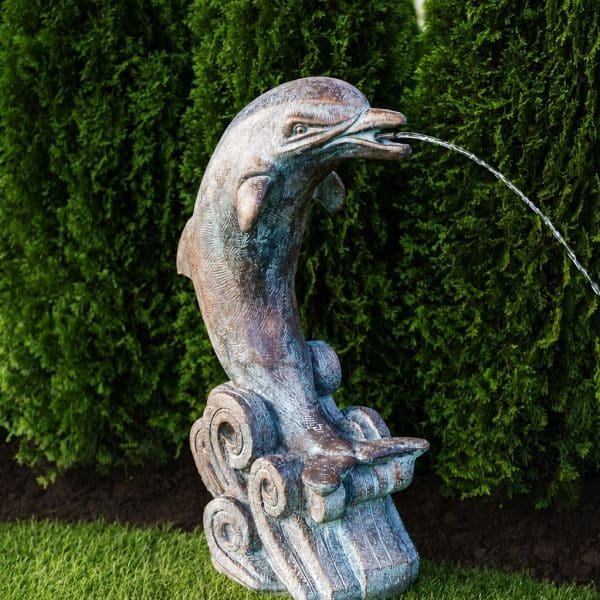
You’ve got tabletop fountains that fit on a porch railing. Wall-mounted ones that basically turn a blank fence into a feature. Solar-powered fountains that need zero wiring, which honestly is a game changer if you rent your place or just don’t want to deal with an electrician. There are modern ones too — sleek, minimal, almost sculptural — that look nothing like the classic cherub-and-basin style. Some are ceramic, some are cast stone, some are metal with a patina finish that ages beautifully over time.
The point is, “garden fountain” isn’t one look. It’s a category, and there’s probably a style in there that fits your space even if you think your yard is too small or too plain for one.
Where To Actually Put The Thing
This trips people up more than it should. You don’t need a grand entrance or a huge lawn. Some of the best fountain placements I’ve seen are in tiny spaces — a corner by the back door, tucked next to a bench, even inside a small courtyard between two walls where the sound bounces around nicely.
A few things worth thinking about before you place one:
Sunlight matters if you’re going solar — obviously. Wind matters too, more than people expect, because a strong breeze can send spray everywhere and you’ll be topping off the water constantly. And sightlines matter. Put it somewhere you’ll actually see and hear it, not tucked behind a hedge where it’s basically forgotten.
Also — and this is a small thing but it trips people up — think about where you’re going to plug it in, or refill it. A fountain that’s a hassle to maintain is a fountain that gets ignored after month two. I’ve seen it happen to friends. Beautiful fountain, dry within a season because it was just annoying to reach.
Water Features Do More Than Look Pretty
I keep coming back to this because I think it’s underrated. A well placed water feature changes how a whole yard functions, not just how it looks.
It draws birds. It can drown out road noise or nosy neighbors’ conversations, which, no judgment, is sometimes exactly what you want. It gives you a focal point for outdoor seating — people naturally gravitate toward water, so if you’re trying to figure out where to put a bench or a little seating area, near the fountain is usually a good bet.
There’s also a psychological thing that happens. A yard with moving water just feels more finished, more intentional. Even a small space starts to feel like an actual retreat instead of just “the backyard.” I don’t know how else to describe it except that it makes a space feel cared for.
Maintenance Isn’t As Bad As You’d Think
People assume fountains are high maintenance and honestly, some are, but most modern garden fountains are pretty low fuss. You’re mostly dealing with topping off water so the pump doesn’t run dry, occasionally cleaning out algae or debris, and maybe draining it before a hard freeze if you’re somewhere cold. That’s really it for a lot of the smaller ones.
Bigger water features — ponds, waterfalls, that kind of thing — obviously need more attention. Pumps, filtration, seasonal care. But if you’re starting small with a garden fountain, you’re not signing up for a part-time job. You’re signing up for maybe fifteen minutes a week, tops.
Picking One Without Overthinking It
Honestly, my advice is don’t overthink the material or the exact style too much on your first one. Go with something that fits your space and your budget, and just get water moving in your yard. You’ll learn what you like once you actually live with it. Maybe you’ll want something bigger next year. Maybe you’ll add a second one somewhere else. That happens a lot, actually — one fountain turns into two.
If you’re shopping around, it helps to actually browse a real selection rather than just picturing the one style in your head. There’s a lot more variety out there than most people realize, in terms of size, material, and price point too.
You can check out a solid range of options over at fountains.com — worth a look if you’re even a little bit tempted to bring some water sound into your outdoor space.
FAQs
Do garden fountains attract mosquitoes? Not if the water’s moving. Mosquitoes need still water to breed, so a fountain with a working pump is actually less of a mosquito magnet than, say, a stagnant birdbath. Just keep the pump running and you should be fine.
Can I run a fountain in winter? Depends on your climate. In areas that don’t freeze hard, sure, run it year round. Somewhere with real winters, you’ll usually want to drain it and store it, or at least remove the pump, before the first hard freeze. Cracking is the risk otherwise.
How much does a garden fountain typically cost? It’s a wide range, honestly. Small tabletop or solar fountains can be pretty affordable, while larger tiered or stone fountains cost more, obviously. It comes down to size, material, and whether it’s a standalone piece or something with extra features like lighting.
Do I need an outlet nearby to run a fountain? Not necessarily. Solar-powered fountains have gotten a lot better and don’t need wiring at all. If you go with an electric one though, yeah, you’ll want an outdoor-rated outlet within reach, or you’re looking at an extension cord setup, which nobody really loves long term.