Starting a skincare routine can feel incredibly overwhelming. Walk down any beauty aisle, and you are bombarded with multi-step regimens, confusing chemical names, and promises of overnight miracles. It is easy to feel like you need a chemistry degree just to wash your face.
But here is the truth: the most effective skincare routine is the one you actually stick to. You do not need a ten-step Korean beauty ritual to see healthier, glowing skin. In fact, doing too much too soon is the fastest way to compromise your skin barrier and cause breakouts or irritation.
If you want to build a habit that lasts, you need to strip away the noise and focus on a minimalist approach. Here is exactly how to start a skincare habit the easy way, build consistency, and understand what your skin truly needs.
Why Most Skincare Habits Fail
Before diving into what to buy, let’s talk about habits. Most people fail to stick to a routine for two main reasons:
- Complexity: Buying six new products at once and trying to remember the correct order of application from day one.
- Unrealistic Expectations: Expecting a dark spot or fine line to vanish in three days, getting discouraged, and quitting.
Skincare is a long game. Your skin cells take roughly 28 to 45 days to renew themselves. This means you won’t see the true results of a new habit for at least a month. To make the habit stick, we need to apply a golden rule of behavioral psychology: make it obvious, make it easy, and tie it to an existing habit.
Step 1: The Foundation (The Morning Routine)
Your morning skincare routine has one primary job: protection. Throughout the day, your face is exposed to environmental stressors like pollution, UV rays, and dirt.
To kickstart your morning habit, keep your products right next to your toothbrush. When you finish brushing your teeth, your brain receives a cue that it is time for the next step.
Start your morning by splashing your face with lukewarm water. If you have oily skin, you can use a very mild wash. Follow this up with a hydrating moisturizer to lock in water, and finish with a broad-spectrum sunscreen of at least SPF 30. Sunscreen is non-negotiable; without it, any other skincare step is practically useless.
Step 2: The Reset (The Evening Routine)
Your evening routine is all about recovery and repair. While you sleep, your skin goes into overdrive to heal damage and regenerate cells.
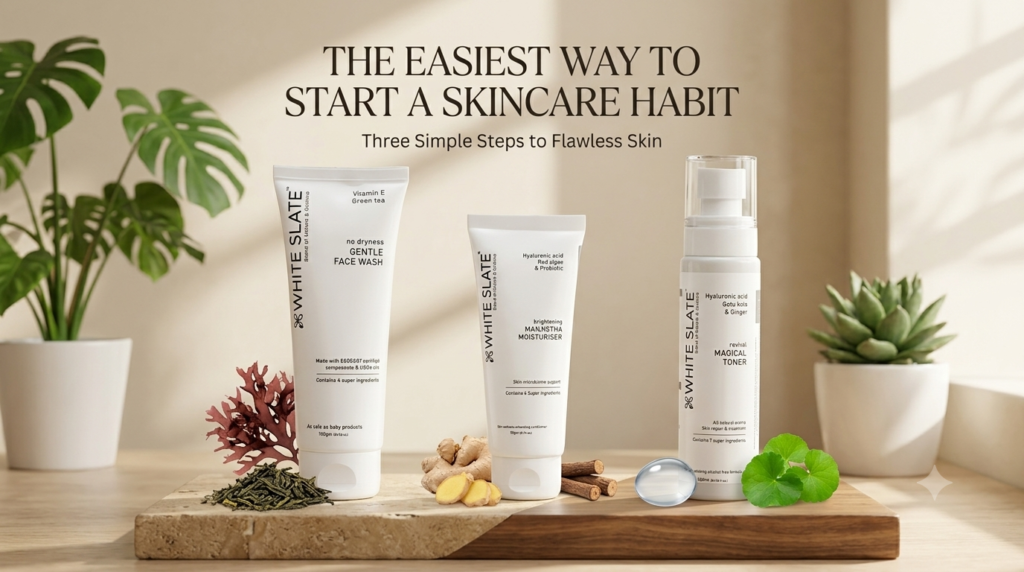
This is the moment where you wash away the day’s grime. You want a reliable Gentle cleanser that removes excess sebum, pollution, and sunscreen without leaving your face feeling tight, dry, or stripped of its natural oils.
The “Tightness” Myth: If your skin feels squeaky clean or tight after washing, your cleanser is too harsh. It has stripped your skin barrier, which actually triggers your skin to produce more oil to compensate.
After cleansing, apply your nighttime moisturizer while your skin is still slightly damp to maximize hydration.
Step 3: Upgrading Wisely (Targeting Specific Concerns)
Once you have mastered the simple “wash, moisturize, protect” routine for two to three weeks, your habit is locked in. Now, and only now, can you introduce targeted treatments for specific skin goals.
For Brightening and Even Skin Tone
If your goal is to fade acne scars, sun spots, or hyperpigmentation, look for serums containing tyrosinase inhibitors—ingredients that slow down the production of melanin. A popular and effective choice for sensitive skin is an alpha arbutin scrub or serum, which gently helps to fade discoloration without causing the irritation often associated with harsher brightening agents.
For Deep Hydration and Glow
If your skin tends to feel parched or flaky, especially during seasonal changes, you need an extra layer of moisture that seals everything in. Swapping your basic lotion for a rich, nourishing formula like a Silk Cream can rescue a compromised moisture barrier and give your skin a plump, velvet-like finish overnight.
For Refining Texture
Dead skin cells can accumulate on the surface of your skin, making it look dull and rough. To gently sweep them away, you might occasionally introduce a liquid exfoliant. Applying a magical toner infused with gentle chemical exfoliants like salicylic or lactic acid a few nights a week can dramatically smooth out texture and unclog stubborn pores without the need for harsh physical scrubbing.
For Traditional and Herbal Care
If you prefer incorporating time-tested, botanical elements into your routine to combat redness and inflammation, Ayurvedic ingredients offer incredible benefits. Using a manjistha cream can leverage the natural blood-purifying and skin-soothing properties of the Rubia cordifolia plant, helping to calm breakouts and promote an even, natural complexion.
How to Introduce New Products Without Ruining Your Skin
When you are excited to try new things, it is tempting to slather them all on your face at once. Avoid this temptation at all costs.
Introduce only one new product at a time. Use it for at least a week before adding another. If your skin breaks out or gets irritated, you will know exactly which product caused the reaction. If you introduce three things simultaneously and your skin reacts poorly, you have to guess which one is the culprit.
Always perform a patch test. Apply a small amount of the product to your inner wrist or the side of your neck for 24 to 48 hours to ensure you do not experience an allergic reaction.
Frequently Asked Questions (FAQ)
1. What is the absolute minimum number of products I need?
You only need three items to start: a cleanser, a moisturizer, and a sunscreen. Anything else is an optional extra to target specific issues.
2. Can I use the same moisturizer for day and night?
Yes, absolutely. However, make sure your daytime moisturizer either contains SPF or you apply a separate sunscreen over it. At night, ensure you aren’t using a moisturizer that contains built-in sun protection, as your skin doesn’t need filters while you sleep.
3. How long does it take to see results from a new skincare habit?
While basic hydration can be felt immediately, structural changes like fading dark spots, reducing acne, or smoothing out fine lines typically take 4 to 8 weeks of consistent, daily use.
4. My skin is purging. Should I stop using my new product?
If you are using active ingredients that speed up cell turnover (like retinol or chemical exfoliants), your skin may “purge” by bringing hidden clogs to the surface. This usually lasts 2 to 4 weeks. However, if a basic cleanser or moisturizer is causing breakouts, it is a negative reaction, and you should stop using it immediately.
Disclaimer
Disclaimer: The information provided in this article is for educational and informational purposes only and should not be construed as professional medical advice, diagnosis, or treatment. Every individual’s skin is unique, and what works for one person may cause irritation or allergic reactions in another. Always read product labels carefully and perform a patch test before integrating new items into your routine. If you suffer from severe acne, chronic rosacea, eczema, or other persistent skin conditions, please consult with a board-certified dermatologist before altering your skincare regimen.