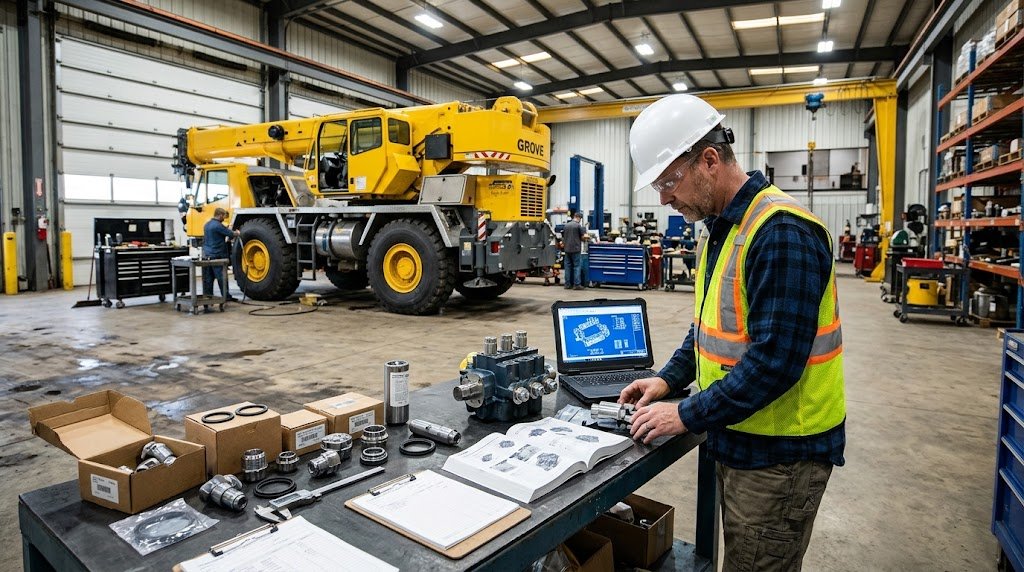
An idle crane due to a wrong component is a costly event. The procurement manager stands between a catalog entry and a part that fits the machine. This checklist covers what to verify before submitting an order and what to ask before trusting a supplier with a critical request.
The steps follow a typical procurement review. Each one addresses a common source of error. None requires special software or a lengthy process. A few minutes per step can prevent a much larger problem.
1. Confirm the Crane’s Model and Serial Number
Start with the data plate, not the parts catalog. Grove has built cranes across many production years and regional variants. Models such as the RT9150E, GMK5150L, and TMS9000E each carry multiple revision levels. A component for a 2012 RT9150E may not fit a 2018 unit.
Record the model designation, serial number, year of manufacture, and any retrofit notes. Suppliers of Grove parts use these details to pull the correct diagram. Maintenance logs may show modifications that affect fitment. Without this information, you are guessing.
Guessing can leave an expensive component on a shelf with no useful purpose. Photograph the data plate and store the image with the order file. Note the hour meter reading as well; it can help confirm the production window. That habit alone prevents many ordering errors.
2. Validate the Part Number
A description is not a part number. OEM numbers for hydraulic components, load moment indicators, winches, and axles each follow separate formats. Obtain the number from the parts manual, then compare it with the quotation.
A dependable crane parts supplier will ask for the serial number before quoting. If the supplier cannot confirm a part number, treat that as a warning sign. Ask for the diagram reference in writing. They should not ship what they assume is close.
Request a revised quote if the number differs. Keep the manual page and the quote together. A second check takes little time. Ask a second person to read the number aloud against the quote.
3. Select the Sourcing Tier
The sourcing decision belongs with maintenance and finance, not the purchasing desk alone. OEM parts come from Grove or authorized distributors and carry the lowest risk. Genuine aftermarket parts are built to OEM specifications by third parties. Rebuilt components use reconditioned cores and offer the lowest initial outlay.
For many Grove parts, the tier affects lead time and documentation. Safety-critical systems such as load moment indicators and hoist brakes usually justify OEM. Filters, fittings, lights, and cosmetic items are often fine as aftermarket. Warranty terms and traceability deserve close attention in the rebuilt category.
Ask the supplier to state the sourcing tier in writing. That detail should appear on the quote and invoice. Record the choice so it can be defended later. Note any core return requirements for rebuilt items.
4. Review Lead Times and Add Buffer
A quoted lead time rarely tells the whole story. “Two weeks” may mean two weeks to ship, not two weeks to delivery. Ask whether the item is in stock or being ordered from the manufacturer. Confirm whether customs clearance is included for international shipments.
A reliable crane parts supplier should put shipping terms in writing. Clarify transit time after the item leaves the warehouse. Ask what notification process applies if a date slips. For critical-path components, add a thirty percent buffer to the expected delivery date.
If the schedule cannot absorb a delay, state that upfront. Ask about expedited freight and who handles duty and insurance. Review the delivery address and receiving hours. Ask for those terms before the order is approved.
5. Demand Documentation and Traceability
Every component on a crane should have a paper trail. Request a packing list with part numbers and quantities. Ask for a certificate of conformity for pressure-bearing components. Rebuilt items should come with inspection records.
Ask the supplier to include the crane serial number on paperwork for Grove parts where possible. That detail links the component to the machine history. A commercial invoice should match the quote. Jobsites subject to third-party inspection often require this paperwork.
Confirm document language and format before shipment. Some inspectors require signed originals rather than scans. Missing documents can create compliance risk and delay acceptance. Store the files where maintenance can reach them.
6. Compare Total Cost of Ownership
The lowest unit cost often hides additional expenses. Higher freight charges, longer lead times, and missing documentation all add risk. Shorter warranty coverage and limited after-sales support matter as well. Build a total cost worksheet before comparing offers.
When comparing quotes for Grove parts, include freight, duty, downtime, and warranty value. A mid-range quote may represent the best overall value when documentation and support are included. Add estimated installation delay if lead times differ. Ask each supplier to explain what their quote excludes.
Review the worksheet with maintenance before selecting a quote. They may identify downtime costs that finance does not see. A shared view reduces disagreement later. Update the worksheet after each order with actual figures.
7. Vet the Supplier
Not every company selling crane components operates the same way. Ask how long the firm has supplied these machines specifically. Request references from contractors in your region. Confirm whether technical support is available if a part does not fit.
A reliable crane parts supplier will answer written questions without hesitation. Clarify the return policy for incorrect or defective items. Determine whether the company is an authorized distributor or a broker. A broker flipping inventory on a marketplace may not respond at all.
Ask for a sample of documentation before placing a critical order. Check whether the supplier carries liability insurance. Confirm the legal name of the company on the quote. Keep notes on each conversation for future reference.
8. Coordinate the Installation Window
Ordering the component is only half of the task. The other half is ensuring it gets installed. Coordinate with maintenance on technician availability and crane access. Confirm laydown area requirements and any special tools needed.
Allow time for testing and commissioning after the install. A part that arrives Tuesday but sits in its crate until Friday creates a hidden cost. Treat installation as part of the procurement timeline. Do not leave scheduling until the crate reaches the yard.
Check whether the maintenance team needs a lift plan. Confirm that the crane can be positioned safely for the work. Review any permit requirements at the jobsite. A short planning call can prevent a long delay.
9. Track Supplier Performance
Each order provides useful information for the next one. Maintain a simple spreadsheet with supplier name, part number ordered, order date, and receipt date. Add condition on arrival and any fitment issues. Include a note about whether you would order again.
After six months, the log will show which crane parts supplier performs well and which part numbers cause trouble. That institutional knowledge separates a procurement manager from an order taker. Include the quote number and final invoice total for reference. Track response time when problems arise.
Set a reminder to review the log each quarter. Look for patterns rather than isolated events. A single late shipment may be an exception. Review the log quarterly and update supplier notes.
10. Build Relationships Before an Urgent Need
The worst time to find a new supplier is during a breakdown. Spend a few hours each quarter identifying two or three reputable sources. Place a small order with each and observe how they perform. When an emergency call comes, you will know who to contact.
A small trial order also shows how each source handles packaging and communication. You will learn how they manage documentation before a critical request. Ask how each source handles urgent requests. Confirm their after-hours contact process.
Rotate the small test orders among the shortlisted sources. That practice keeps your knowledge current. It also prevents dependence on a single contact. Review the results at the next quarterly check.
Final Checks That Protect the Schedule
Ordering crane components is not glamorous work, but it keeps projects moving. Confirm the model and serial number and verify the part number. Choose the right sourcing tier and demand documentation. Compare total cost and vet the supplier.
Plan the install and keep records. Build relationships before you need them. A consistent checklist reduces avoidable delays and protects the project schedule. Review the process after each critical order and update it when gaps appear.
The goal is simple: the right component, the right documentation, and the right timing. That outcome keeps cranes working and procurement decisions defensible. A routine purchase should stay routine. Careful checks make that possible.