Your air conditioning system plays an important role in maintaining a comfortable indoor environment. However, even a high-performing AC unit may struggle to cool your property when its ductwork becomes damaged, blocked, or poorly sealed. Professional air conditioning duct repairs help restore airflow, reduce energy waste, and improve the overall performance of your cooling system.
Air conditioning ducts distribute cooled air from your AC unit to different rooms throughout your home or commercial property. When ducts develop cracks, leaks, loose connections, or damaged insulation, conditioned air may escape before reaching its intended destination.
This can lead to uneven temperatures, weak airflow, increasing electricity bills, and unnecessary strain on your air conditioning equipment.
Many property owners overlook ductwork problems because most ducts are hidden behind ceilings, inside walls, or within roof spaces.
However, recognising the warning signs early can help prevent more extensive damage and expensive repairs.
Whether you own a residential property, manage an office, or operate a commercial building, maintaining your ductwork is essential for reliable cooling.
In this guide, we explain common ductwork problems, their causes, available repair methods, costs, maintenance requirements, and how to choose the right HVAC professional.
Why Are Air Conditioning Duct Repairs Important?
Air conditioning ductwork is responsible for distributing conditioned air throughout your property.
When the system operates correctly, cooled air travels through the duct network and reaches individual rooms through supply vents.
However, damaged or poorly maintained ducts can reduce cooling performance and affect indoor comfort.
Professional air conditioning duct repairs address these problems and help restore proper air distribution.
Improve Cooling Performance
One of the main reasons to repair damaged ductwork is inconsistent cooling.
You may notice that your living room receives sufficient airflow while bedrooms or other areas remain warm.
This can happen when ducts leak, become disconnected, or restrict airflow.
Repairing damaged sections can help restore air distribution and improve cooling performance throughout your property.
Reduce Energy Waste
Leaking ducts allow cooled air to escape into roof spaces, ceiling cavities, and other unconditioned areas.
This means your air conditioning system may need to operate longer to maintain the selected indoor temperature.
Sealing leaks and repairing damaged sections can reduce unnecessary air loss.
Actual energy savings depend on the original duct condition, leakage levels, insulation quality, and overall system performance.
Maintain Comfortable Indoor Temperatures
Uneven cooling can make certain rooms uncomfortable, especially during hot weather.
Damaged ducts, poor insulation, and airflow restrictions may prevent your AC system from distributing conditioned air effectively.
Professional repairs can address these issues and support more consistent indoor temperatures.
Reduce Unnecessary Strain on Your AC System
When ductwork leaks or restricts airflow, your cooling system may operate longer than necessary.
This can contribute to additional equipment strain.
Correcting duct problems helps the system operate under more appropriate airflow conditions.
Support Better Indoor Air Quality
Damaged or poorly sealed ducts can allow dust and particles from roof spaces, wall cavities, and surrounding areas to enter the air distribution system.
Repairing leaks and sealing suitable connections can help reduce unwanted particle entry.
However, duct repairs alone cannot resolve every indoor air quality problem. Filtration, ventilation, and humidity control also play important roles.
Common Signs Your Air Conditioning Ducts Need Repairs
Ductwork problems often develop gradually.
Knowing what to look for can help you identify potential issues before they affect the entire cooling system.
Weak Airflow from AC Vents
Weak airflow is one of the most noticeable signs of a possible duct problem.
You may notice that certain vents produce very little cooled air even when the AC system is running.
Possible causes include:
- Leaking duct connections.
- Crushed flexible ducts.
- Blocked duct sections.
- Disconnected ductwork.
- Closed or damaged dampers.
- Restricted airflow.
Dirty air filters and blower problems can also cause weak airflow.
If several rooms experience the same issue, arrange a professional inspection.
Uneven Temperatures Between Rooms
If certain rooms remain warm while others receive sufficient cooling, your ductwork may not be distributing air properly.
This problem can result from air leakage, incorrect duct sizing, poor airflow balancing, or damaged sections.
A professional technician can inspect the system and determine whether duct repairs or other adjustments are necessary.
Unusually High Electricity Bills
An unexpected increase in electricity costs may indicate that your AC system is operating inefficiently.
Leaking ductwork can allow conditioned air to escape into unconditioned spaces.
Your system may then run longer to maintain the desired indoor temperature.
However, rising electricity bills may also result from dirty filters, equipment problems, poor insulation, or changing energy prices.
A complete inspection can help identify the cause.
Strange Noises from Ductwork
Air conditioning ducts may occasionally make minor expansion and contraction noises as temperatures change.
However, persistent rattling, whistling, banging, or vibrating sounds may indicate a problem.
Loose connections, unsupported ducts, damaged sections, and airflow restrictions can contribute to unusual noises.
A technician can inspect the duct network and recommend suitable repairs.
Dust Accumulating Around Air Vents
Excessive dust around supply vents may indicate an air distribution or filtration problem.
Damaged duct connections can allow particles from surrounding spaces to enter the system.
Dirty filters, poor housekeeping, and other indoor air quality issues may also contribute.
Inspecting the ductwork and checking the air filtration system can help identify the source.
Visible Duct Damage
Visible damage is another reason to arrange professional air conditioning duct repairs.
Flexible ducts may develop tears, cracks, compression, or disconnected sections.
Metal ductwork can experience corrosion, damaged joints, and loose connections.
Minor damage may be repairable, while extensive deterioration may require replacing affected duct sections.
Common Causes of Air Conditioning Duct Damage
Understanding what causes ductwork problems can help property owners prevent future damage.
Age and Material Deterioration
Ductwork gradually deteriorates due to age, environmental conditions, and normal system operation.
Flexible duct materials may become brittle or damaged over time.
Metal ducts can develop corrosion, while insulation may deteriorate or become displaced.
Regular inspections help identify problems before they affect cooling performance.
Poor Installation
Incorrect installation is a common cause of ongoing ductwork problems.
Ducts that are poorly supported, sharply bent, compressed, or incorrectly connected may restrict airflow.
Incorrect duct sizing can also affect cooling system performance.
Professional installation and repairs help address these issues.
Rodent and Pest Damage
Rodents can damage duct insulation and flexible duct materials while moving through roof spaces and ceiling cavities.
They may also create openings that allow dust and other particles to enter the system.
If pest activity is suspected, arrange appropriate pest management alongside duct repairs.
Moisture and Condensation
Moisture can affect duct insulation and surrounding building materials.
Condensation may develop when duct surfaces become colder than the surrounding air, particularly when insulation or vapour control is inadequate.
Persistent moisture can contribute to material deterioration and other maintenance problems.
Accidental Physical Damage
Ductwork located in roof spaces, storage areas, and ceiling cavities can be damaged during maintenance or construction work.
People moving through roof spaces may accidentally crush flexible ducts or disconnect connections.
Careful handling and appropriate duct supports can help prevent these problems.
Loose or Failed Connections
Over time, duct connections may become loose because of vibration, inadequate support, or deteriorating sealing materials.
These gaps can allow cooled air to escape.
Professional sealing and reconnection can often resolve localised problems.
Different Types of Air Conditioning Duct Repairs
The correct repair method depends on the duct material, location, and extent of damage.
A professional HVAC technician should inspect the affected area before recommending a solution.
Flexible Duct Repairs
Flexible ducts are commonly used in residential air conditioning systems.
They are lightweight and can navigate around obstacles within roof and ceiling spaces.
Common problems include:
- Tears in the outer or inner layers.
- Crushed duct sections.
- Disconnected connections.
- Loose supports.
- Damaged insulation.
- Excessive bending.
Minor damage may be repairable using suitable materials and installation techniques.
However, severely crushed or deteriorated sections may need replacement.
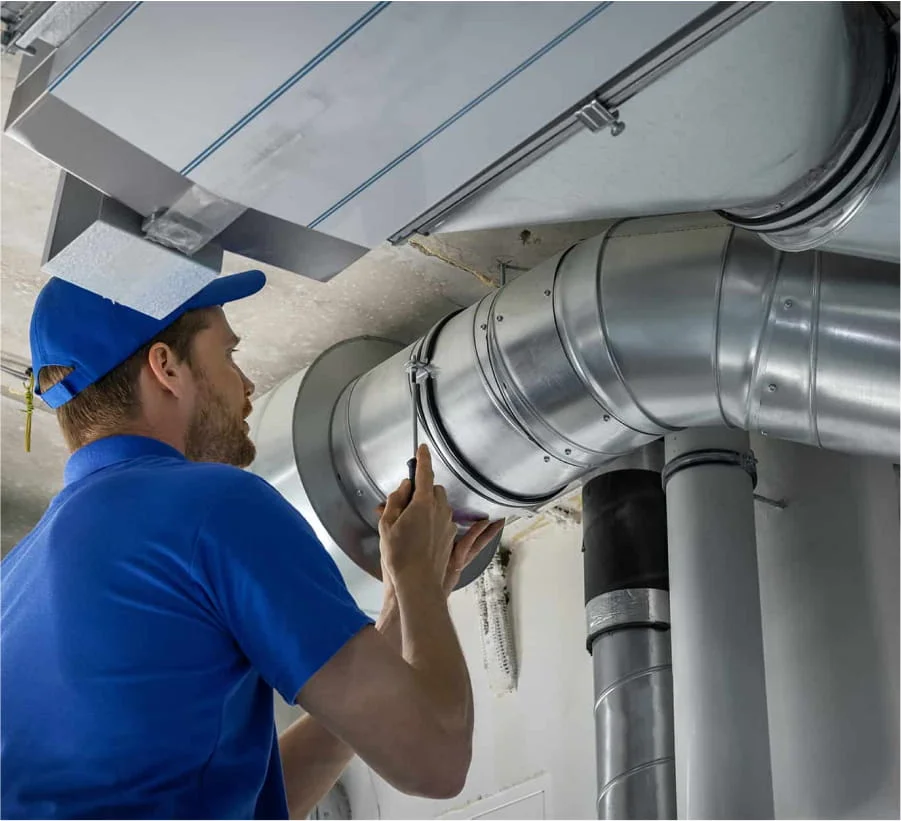
Metal Duct Repairs
Metal ductwork is commonly manufactured from galvanised steel or aluminium.
It is used in residential, commercial, and industrial air conditioning systems.
Common metal duct problems include loose joints, corrosion, damaged sections, and air leakage.
Repairs may involve reconnecting sections, replacing damaged components, sealing joints, or installing new duct sections.
Duct Joint and Connection Repairs
Connections between duct sections are potential leakage points.
If joints become loose or sealing materials deteriorate, cooled air can escape.
Technicians may reconnect the affected sections and use appropriate sealing products.
Correct sealing helps maintain airflow throughout the system.
Duct Insulation Repairs
Duct insulation helps reduce unwanted heat transfer.
When insulation becomes damaged or displaced, cooled air may gain heat while travelling through warmer roof spaces or other unconditioned areas.
Repairing or replacing damaged insulation can help maintain air temperature.
The appropriate insulation depends on duct location and system requirements.
Air Leakage Sealing
Air leakage can occur at joints, connections, damaged sections, and poorly sealed openings.
Professional sealing involves identifying leakage points and applying suitable materials.
For larger systems, technicians may also recommend duct leakage testing to evaluate system performance.
Benefits of Hiring Professional Air Conditioning Duct Repair Services
Although some ductwork problems may appear simple, professional assessment is important because much of the duct network is hidden.
Hiring an experienced HVAC technician offers several advantages.
Accurate Problem Identification
Weak airflow does not always mean the ducts are damaged.
The problem may involve dirty filters, blower issues, blocked vents, incorrect damper settings, or other equipment faults.
A professional inspection helps identify the actual cause before unnecessary repairs are performed.
Proper Repair Materials
Different duct materials require different repair products and installation methods.
Professional technicians understand which materials are suitable for flexible ducts, metal ductwork, insulation, and connections.
This helps create reliable repairs.
Better Airflow Performance
Correctly repaired ductwork can reduce leakage and restore airflow through affected sections.
Technicians can also check whether the system needs balancing or additional adjustments.
Reduced Future Maintenance Problems
Professional repairs address the source of the problem rather than simply covering visible damage.
For example, reconnecting a duct correctly and providing suitable support can help prevent the same section from becoming disconnected again.
Improved System Reliability
Maintaining ductwork helps support the overall performance of your air conditioning system.
Identifying and repairing problems early can reduce unnecessary operating strain and help prevent recurring cooling issues.
How Much Do Air Conditioning Duct Repairs Cost?
The cost of air conditioning duct repairs depends on several factors.
There is no single price because ductwork systems vary in size, material, accessibility, and condition.
Type and Extent of Damage
A small leak or loose connection may require relatively simple repairs.
Extensive damage involving several duct sections may require more materials and labour.
Duct Material
Flexible ductwork, metal ducts, and fibreglass duct board have different repair requirements.
The selected repair materials can influence the overall cost.
Accessibility
Ducts located in accessible roof spaces may be easier to repair than those installed behind walls or within restricted ceiling cavities.
Difficult access can increase labour time.
Property Size
Larger properties may have more extensive duct networks.
Inspecting and repairing multiple rooms can require additional time and materials.
Additional Repairs
Some projects may require additional work, including:
- Replacing damaged insulation.
- Installing new duct supports.
- Reconnecting duct sections.
- Replacing damaged vents.
- Sealing multiple joints.
- Balancing airflow.
Request a detailed written quotation that explains the required repairs, materials, labour, and any additional work.
Can You Repair Air Conditioning Ducts Yourself?
Some minor ductwork issues may appear suitable for DIY repairs.
However, professional assistance is generally recommended when the damage affects system performance or involves inaccessible areas.
When DIY Maintenance May Be Suitable
Homeowners may be able to address simple maintenance tasks, such as:
- Replacing dirty air filters.
- Removing visible obstructions around vents.
- Checking whether supply vents are open.
- Identifying obvious signs of damage in accessible areas.
These steps can help identify basic airflow problems.
When Professional Repairs Are Necessary
Contact an HVAC professional when you notice:
- Extensive duct tears.
- Disconnected duct sections.
- Persistent weak airflow.
- Damaged insulation.
- Condensation around ductwork.
- Significant air leakage.
- Repeated cooling problems.
Avoid entering unsafe roof spaces or disturbing electrical components.
Professional technicians have the equipment and experience needed to inspect and repair hidden ductwork safely.
The Professional Air Conditioning Duct Repair Process
Understanding the repair process can help you prepare for an HVAC service appointment.
Step 1: Initial Inspection
The technician examines the air conditioning system and identifies areas where duct problems may be occurring.
This may include inspecting accessible roof spaces, ceiling cavities, duct connections, and air vents.
Step 2: Identify the Cause
After locating the problem, the technician determines whether the issue involves leakage, physical damage, insulation deterioration, or restricted airflow.
Other AC components may also need inspection.
Step 3: Recommend Suitable Repairs
The technician explains the required work and recommends an appropriate repair method.
This may involve sealing joints, reconnecting ducts, replacing damaged sections, or repairing insulation.
Step 4: Complete the Repairs
The damaged components are repaired or replaced using suitable materials.
The technician should ensure duct sections are properly supported and connections are appropriately sealed.
Step 5: Test System Performance
After completing the work, the technician checks airflow and system operation.
Additional adjustments may be necessary to improve air distribution.
Step 6: Provide Maintenance Recommendations
The technician may recommend regular filter replacement, duct inspections, and other maintenance measures to reduce the risk of future problems.
How to Prevent Future Air Conditioning Duct Problems
Preventative maintenance can help extend ductwork service life and reduce the likelihood of unexpected repairs.
Replace Air Filters Regularly
Dirty air filters can restrict airflow and affect cooling performance.
Check your filter regularly and replace or clean it according to the manufacturer’s recommendations.
Arrange Routine HVAC Inspections
Professional inspections can identify loose connections, damaged insulation, and other problems before they become more extensive.
Keep Roof Spaces Accessible
Avoid placing unnecessary items around accessible ductwork.
If maintenance work is performed in roof spaces, ensure contractors take care not to crush or disconnect ducts.
Maintain Proper Duct Insulation
Inspect accessible duct insulation for damage, moisture, or displacement.
Address insulation problems promptly to help reduce unwanted heat transfer.
Check Air Vents
Keep supply and return vents free from furniture, curtains, and other obstructions.
Good airflow helps your air conditioning system distribute cooled air more effectively.
Address Pest Problems
Rodents can damage ductwork and insulation.
If you notice droppings, scratching noises, or other signs of pest activity, arrange appropriate pest management.
How to Choose the Right Air Conditioning Duct Repair Company
Choosing an experienced HVAC professional is important for reliable repairs.
Consider these factors before hiring a contractor.
Check Qualifications and Experience
Look for technicians with relevant HVAC qualifications and experience in duct inspection and repair.
Ask whether they have worked with your particular air conditioning system.
Request a Detailed Inspection
A reliable contractor should identify the source of the problem before recommending repairs.
Be cautious of quotes based only on a brief visual assessment when the damage is hidden.
Compare Written Quotes
Ask for quotations explaining the repair method, materials, labour, and any additional charges.
This makes it easier to compare different service providers.
Check Insurance and Licensing
Confirm that the company holds the licences and insurance required for the work in your location.
For Australian properties, check relevant HVAC and refrigerant handling requirements where applicable.
Ask About Workmanship Guarantees
Ask whether repairs include a workmanship guarantee and whether replacement materials have manufacturer warranties.
Understand the terms before approving the work.
Conclusion: Restore Cooling Performance with Professional Air Conditioning Duct Repairs
Damaged or leaking ductwork can affect your air conditioning system’s ability to distribute cooled air throughout your property.
Professional air conditioning duct repairs help address problems such as weak airflow, uneven temperatures, air leakage, damaged insulation, and loose connections.
While minor issues may require simple repairs, extensive deterioration may justify replacing affected duct sections.
Choosing suitable repair materials, properly sealing connections, maintaining insulation, and hiring an experienced HVAC professional are essential for reliable results.
If your AC system struggles to cool certain rooms or produces unusual airflow noises, arrange a professional inspection.
Addressing ductwork problems early can help restore indoor comfort, reduce unnecessary energy waste, and support better air conditioning performance.
Frequently Asked Questions About Air Conditioning Duct Repairs
How do I know if my air conditioning ducts need repairs?
Common warning signs include weak airflow, uneven room temperatures, unusual duct noises, visible damage, excessive dust, and higher electricity bills. A professional inspection can identify whether repairs are necessary.
How much do air conditioning duct repairs cost?
Repair costs depend on the extent of damage, duct material, accessibility, property size, and labour requirements. Minor leaks generally require less work than extensive duct replacement. Request a written quotation for accurate pricing.
Can leaking air conditioning ducts increase electricity bills?
Yes, leaking ducts allow cooled air to escape before reaching the intended rooms. This can make your AC system operate longer to maintain the desired temperature, potentially increasing energy consumption.
Can air conditioning ductwork be repaired without replacing the entire system?
Yes, localised damage can often be repaired without replacing the complete duct network. Loose connections, small leaks, and minor insulation problems may be addressed through targeted repairs.
How long do air conditioning duct repairs take?
Repair time depends on the damage, duct location, accessibility, and amount of work required. Simple connection repairs may take less time than replacing multiple damaged duct sections.
Why is my AC airflow weak in certain rooms?
Weak airflow may result from leaking ducts, crushed flexible ductwork, blocked sections, incorrect duct sizing, or closed dampers. Dirty filters and equipment problems can also contribute.
Can damaged air conditioning ducts affect indoor air quality?
Yes, poorly sealed ducts can allow dust and particles from surrounding spaces to enter the air distribution system. Repairing leaks and maintaining suitable filtration can help improve indoor air quality.
What causes air conditioning duct leaks?
Common causes include loose connections, deteriorating sealing materials, physical damage, poor installation, rodent activity, and ageing duct materials.
Are flexible air conditioning ducts easy to repair?
Minor tears and loose connections may be repairable using suitable materials. However, severely damaged, compressed, or deteriorated flexible ducts may require replacement.
Should I replace or repair damaged air conditioning ducts?
Repairs may be suitable when damage is limited to a small area and the remaining ductwork is in good condition. Extensive deterioration, repeated leaks, and widespread insulation damage may justify replacement.
How often should air conditioning ducts be inspected?
Inspection frequency depends on system condition, property environment, and maintenance recommendations. Arrange an inspection when you notice airflow problems, visible damage, unusual noises, or unexplained cooling issues.
Can dirty air filters cause ductwork problems?
Dirty filters primarily restrict airflow and place additional strain on the air conditioning system. They do not directly cause every duct problem, but poor airflow can contribute to wider system performance issues.
Is professional air conditioning duct repair better than DIY repair?
Professional repairs are generally recommended for damaged or inaccessible ductwork. Technicians can identify the source of the problem, select suitable materials, and check airflow after completing the work.
Can rodent damage cause air conditioning duct leaks?
Yes, rodents can chew flexible duct materials and insulation, creating openings that allow conditioned air to escape. Pest management and duct repairs may both be necessary.
Do air conditioning ducts need insulation?
Insulation is important when ducts pass through unconditioned spaces where heat transfer can occur. The appropriate insulation depends on duct location, climate, system requirements, and applicable building standards.
Will air conditioning duct repairs make my home cooler?
Properly repaired ductwork can help restore airflow and reduce cooled air leakage. This may improve cooling consistency, although the final results also depend on the AC unit, building insulation, and system design.