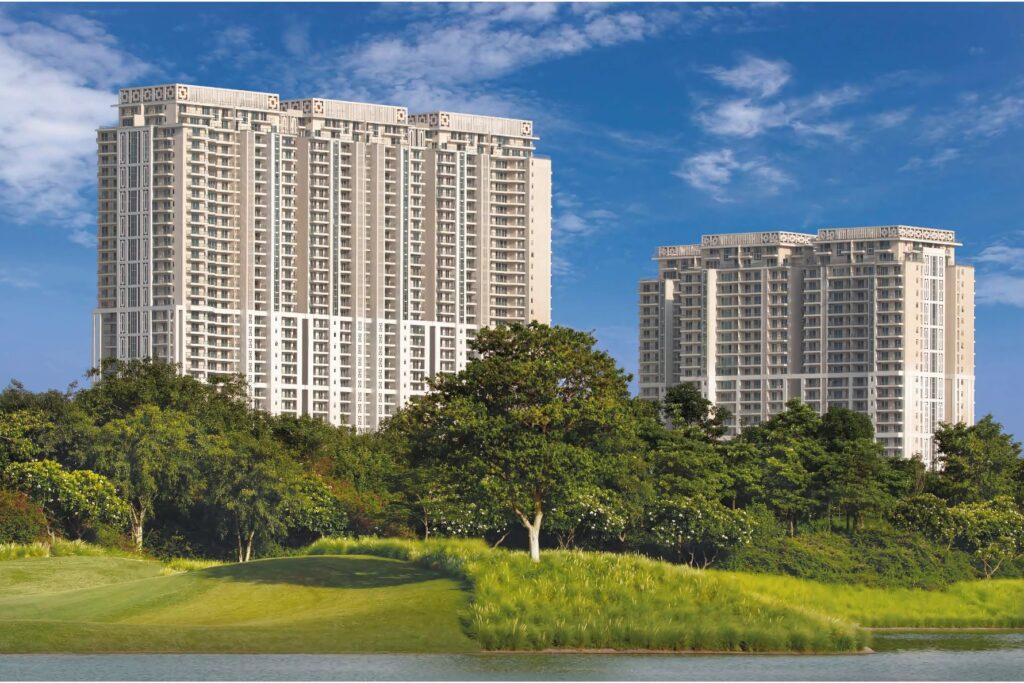
In high-end residential real estate, market value is heavily driven by location prestige, designer collaborations, and surface aesthetics. While these elements establish initial premium positioning, an asset’s long-term value preservation depends entirely on its structural proportions, structural safety, and mechanical engineering.
On Gurgaon’s Golf Course Road, where developments compete for capital allocation, DLF The Crest in Sector 54 serves as a benchmark for high-rise residential engineering. Designed by Hafeez Contractor with estate grounds by Ian Duncan Design, the six-tower complex avoids common design shortcuts found in speculative luxury builds. Below is an analytical breakdown of the core infrastructure and layout decisions that support its performance.
Core Densities and Vertical Circulation Engineering
A primary challenge in premium high-rise design is managing foot traffic and maintaining privacy around central elevator cores. Many residential developments place four to six apartments on a single floor plate to maximize sellable area, which can overcrowd shared lift lobbies and compromise acoustic privacy.
DLF Crest addresses this by implementing a strict low-density vertical core layout, limiting occupancy to three residences per core. This configuration minimizes pedestrian traffic in common areas and provides immediate acoustic isolation.
Vertical transit is supported by high-speed passenger elevators operating at a travel speed of 4 meters per second in the primary towers. By pairing a low apartment-to-core ratio with high-velocity mechanical circulation, the layout prevents peak-hour lobby congestion while ensuring a quiet, private arrival experience for residents.
Spatial Mechanics of the Floor Plates
The interior layouts skip the complex, winding hallway designs common in traditional high-rises, opting instead for a structural grid that separates formal, family, and service spaces.
Three-BHK Configurations
The 3 BHK layouts prioritize clean structural spans. By nesting load-bearing pillars within perimeter partitions and core walls, the design creates a wide, unencumbered living and formal dining saloon. Guest rooms and family bedrooms are positioned on opposing sides of the layout, establishing built-in privacy from the master suite.
Four-BHK Configurations
The larger 4 BHK plates introduce a dedicated family lounge that serves as a central structural buffer. This room separates the forward-facing formal entertainment zones from the rear sleeping quarters. Crucially, these configurations feature three open structural faces. This multi-exposure geometry utilizes regional wind patterns to allow continuous natural cross-ventilation across the living spaces.
Volumetric Architecture and Environmental Systems
True structural luxury requires optimal volumetric balance. Large rooms can feel restrictive if the vertical clearance is inadequate. The Crest features a 3.2-meter floor-to-floor height, which provides a significant advantage for interior customization and climate control.
This vertical space easily accommodates premium false ceilings and handles the ductwork for the energy-efficient Variable Refrigerant Flow (VRF) climate systems. After installing the heavy overhead ventilation components, the finished clear ceiling height remains comfortably above 9.5 feet, preventing claustrophobia and reducing low-frequency sound bounce.
The building envelope is reinforced with specialized uPVC double-glazed tinted window spans. Beyond reducing ambient noise from Raghvendra Marg, these double-glazed boundaries create a tight thermal envelope. This structure blocks external solar heat ingress during extreme summer months, lowering the cooling load on the internal VRF systems and optimizing energy consumption.
Civil Safety and Emergency Protocols
High-rise residential assets require fail-safe life-safety engineering. While municipal guidelines in Delhi NCR require compliance with Seismic Zone IV standards, the structural frame of The Crest is over-engineered to meet Seismic Zone V criteria—the highest risk classification in the country. The foundation extends into the bedrock, utilizing thick concrete shear walls designed to absorb and dissipate lateral kinetic forces.
The emergency exit infrastructure uses an automated, pressurized safety system. In the event of a fire, the building automation system immediately increases air pressure within the emergency stairwells and elevator shafts. This positive pressure mechanically blocks smoke from entering the escape paths, keeping evacuation routes completely clear of toxic fumes. Additionally, the vertical power infrastructure replaces standard cable bundles with solid metal bus ducts, maximizing fire resistance and ensuring steady electrical performance across all 36 floors.
Material Selection and Asset Durability
To minimize long-term maintenance overhead and prevent premature aging of the common areas and residences, the developer utilized high-density, globally sourced raw materials:
-
Imported Omani Marble: Laid across the principal living and entertainment zones, this stone was selected for its high density and low porosity, allowing it to withstand heavy traffic without staining or deep scratching.
-
Laminated Wooden Flooring: Installed in the private bedrooms to provide a clear acoustic and tactile shift, reducing echo and improving sound isolation between floors.
-
Dual-Stream Layouts: Service elevators and vendor entry points are completely separated from the main resident lobbies, ensuring that heavy deliveries and domestic service logistics never disrupt the main passenger zones.
By focusing on high core safety, structural cross-ventilation, and durable building chemistry, DLF The Crest remains an excellent model of luxury residential engineering on Golf Course Road.
Read our blog on DLF Privana West