DASH Diet for ESRD patients
When you are managing advanced chronic kidney disease, navigating food choices can feel like walking through a dietary minefield. For decades, the gold standard for late-stage kidney care has been a restrictive “renal diet” , a regime notoriously low in potassium, phosphorus, sodium, and fluids.
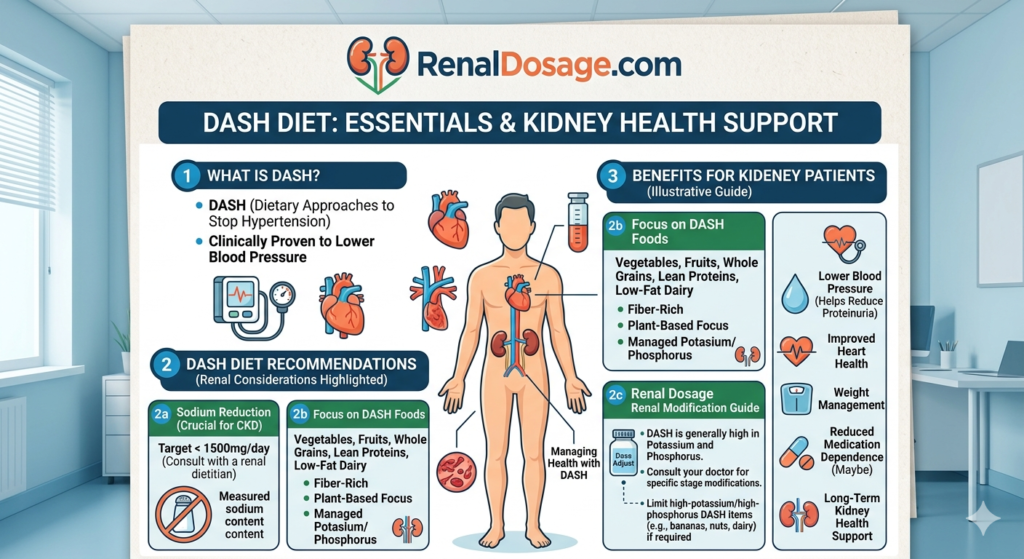
However, if you also struggle with high blood pressure, you have likely heard of the DASH Diet (Dietary Approaches to Stop Hypertension). Celebrated worldwide for its ability to lower blood pressure and protect cardiovascular health, the traditional DASH diet relies heavily on fresh fruits, vegetables, whole grains, nuts, and low-fat dairy.
This presents a clinical paradox. The very foods emphasized in a standard DASH diet are naturally loaded with potassium and phosphorus, two minerals that failing kidneys struggle to excrete. If you have been diagnosed with end-stage kidney disease (ESKD), also known as end-stage renal disease (ESRD), you might wonder: Is the DASH diet a lifesaver for my heart, or is it dangerous for my kidneys?
Let’s dive into the science, the risks, and how modern renal nutrition is shifting toward a customized approach.
What is the DASH Diet?
The DASH diet is an evidence-based eating pattern designed specifically to treat hypertension without medication. It is structurally rich in micro-nutrients like magnesium, calcium, and fiber, while remaining exceptionally low in saturated fats and refined sugars.
Core Components of the Traditional DASH Eating Plan
- High Intake: Fruits, vegetables, whole grains, and legumes.
- Moderate Intake: Lean poultry, fish, seeds, and low-fat dairy products.
- Strict Limitations: Red meat, sweets, sodium, and highly processed foods.
For individuals with early to moderate kidney damage, high adherence to a DASH-style diet is associated with a significantly lower risk of progressing to full kidney failure. However, once kidney function drops to the point of ESKD, the rules of the game shift dramatically.
DASH Diet Vs Renal Requirements
When a patient reaches end-stage kidney disease, their glomerular filtration rate (GFR) , the measure of how well the kidneys filter waste, has fallen below 15 mL/min. At this terminal stage, the kidneys can no longer maintain standard electrolyte balances.
Applying a rigid, traditional DASH diet to an ESRD patient creates three primary metabolic conflicts:
1. The Risk of Hyperkalemia (High Potassium)
The traditional DASH diet delivers up to 4.7 grams of potassium per day. For an ESKD patient, this can be highly dangerous. When potassium accumulates in the blood, it can cause hyperkalemia, a condition that disrupts the heart’s electrical rhythms and increases the risk of life-threatening cardiac arrhythmias.
2. Phosphorus Accumulation and Bone Health
DASH encourages the consumption of whole grains, nuts, seeds, and dairy products. These options are incredibly dense in phosphorus. When kidney clearance drops, excess serum phosphorus binds to calcium, pulling it out of the bones. This leads to vascular calcification (hardening of the arteries) and renal osteodystrophy (brittle, painful bones).
3. Protein Overload vs. Dialysis Needs
The traditional DASH diet contains an elevated amount of protein to replace simple carbohydrates. For advanced kidney patients not yet on dialysis, a high-protein diet accelerates uremic toxin build-up and strains remaining nephrons. Conversely, patients on maintenance hemodialysis require a higher, specific protein intake to counteract amino acid loss during filtration, meaning the “standard” DASH percentages will rarely align cleanly without medical adjustment.
The Paradigm Shift: Emergence of the “Modified DASH Diet”
Despite these physiological barriers, modern nephrology is moving away from purely restrictive “food tables” and toward a nuanced view of plant-based nutrition. Recent clinical trials and observational studies suggest that general, ultra-restrictive diets sometimes do more harm than good by causing malnutrition and reduced quality of life.
Emerging data indicates that a Modified DASH Diet can be adapted safely for ESRD patients under strict, professional supervision.
Why Plant-Based Minerals Behave Differently?
Interestingly, research demonstrates that the potassium and phosphorus found naturally in whole plant foods are not absorbed by the human body at the same rate as those found in animal products or chemical additives.
- Phytate Binding: Phosphorus in plants is bound to phytates, making its bioavailability much lower (usually less than 50%).
- Intracellular Shifts & Intestinal Motility: The high fiber content in a DASH-style diet promotes bowel regularity, which naturally increases the excretion of potassium through stool a vital secondary pathway when the kidneys fail (MacLaughlin et al., 2023). In fact, some multicenter studies of hemodialysis patients have shown that higher adherence to a DASH eating pattern actually predicted lower serum potassium levels, likely due to these dietary co-factors.
How to Adapt the DASH Diet Safely for ESRD?
If you and your nephrology team want to implement DASH concepts while protecting your kidneys, you must utilize precise substitutions.
Step-by-Step Dietary Adaptations
- Swap to Low-Potassium Produce: Instead of high-potassium DASH staples like bananas, oranges, potatoes, and spinach, select apples, berries, grapes, pineapples, cabbage, and cucumbers.
- Leach Your Vegetables: If using root vegetables, slice them thin and boil them in a large pot of water to draw out a significant portion of the water-soluble potassium before cooking.
- Eliminate Inorganic Phosphorus Additives: Avoid processed foods with ingredients containing the letters “PHOS” (like dicalcium phosphate or phosphoric acid). These chemical additives have a 100% absorption rate in the human gut.
- Manage Fluid and Sodium: The low-sodium aspect of the DASH diet is highly beneficial for ESRD patients to prevent fluid retention between dialysis sessions. Keep your sodium intake below 2,000 mg per day, and balance your liquids according to your specific fluid restriction guidelines.
Frequently Asked Questions
Can an ESKD patient eat a standard DASH diet?
No. A standard, unmodified DASH diet is dangerous for someone with end-stage kidney disease because it contains high levels of potassium and phosphorus. These minerals can build up rapidly in the blood, leading to severe cardiac complications or bone disease. Any adaptation must be heavily modified and monitored.
What is the difference between a renal diet and the DASH diet?
A traditional renal diet strictly limits potassium, phosphorus, sodium, fluids, and protein to protect failing kidneys. The DASH diet focuses on lowering blood pressure by maximizing plant-based foods, whole grains, and low-fat dairy, which are naturally high in potassium and phosphorus. A “Modified DASH” bridges these two philosophies.
How does potassium from plants affect dialysis patients?
Recent studies indicate that natural potassium from fiber-rich plant foods does not elevate blood potassium levels as severely as artificial additives or juices. The fiber speeds up digestion and helps your body excrete excess potassium through your stool, making certain low-to-moderate potassium plant foods safer than previously thought.
Can the DASH diet help lower blood pressure if I am on dialysis?
Yes, the sodium-reduction principles of the DASH diet are incredibly effective at helping dialysis patients manage fluid volume and lower blood pressure. However, you must implement the low-sodium changes while strictly controlling your intake of high-potassium fruits and vegetables.
Where can I find personalized guidance for my renal medication and diet?
Because ESKD requires precise calculations based on your lab work, your primary resource should be a Registered Renal Dietitian. For matching your specific dietary changes with accurate medication profiles and clinical tracking, resources like renaldosage.com offer tailored tools to help manage your kidney health safely.
Summary of Key Takeaways
While a textbook DASH Diet is fundamentally mismatched with the strict metabolic boundaries of end-stage kidney disease, its core philosophies do not have to be abandoned entirely. By pivoting to a customized, low-potassium, low-phosphorus version of the plan, you can reap the cardiovascular benefits of a plant-forward lifestyle without endangering your health.