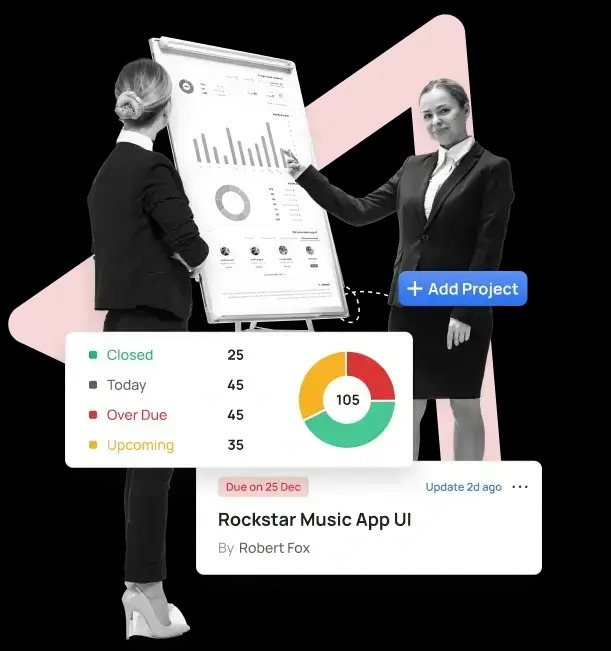
Team productivity is one of the most frequently discussed and most inconsistently achieved goals in modern business. The gap between a team’s theoretical capacity and its actual output is rarely explained by a lack of effort or ability — it is almost always explained by the quality of the coordination, communication, and prioritisation infrastructure within which that effort is applied. A well-implemented task management tool closes this gap by providing the structural framework that allows individual contributions to combine effectively into collective output. Understanding how a task management app supports sustained team productivity — rather than just individual task completion — helps organisations make better decisions about the tools and practices they invest in.
How Teams Lose Productivity Without Structure
Before exploring the solutions, it is worth understanding the specific ways in which unstructured work environments consistently undermine team productivity. In the absence of a shared task management tool, work coordination typically relies on a combination of email threads, messaging conversations, verbal agreements in meetings, and personal to-do lists that are not visible to the wider team.
This fragmented approach creates several predictable problems. Work is duplicated when team members are unaware that a colleague has already started or completed a task. Priorities shift without everyone being informed, leading to effort being directed at work that is no longer urgent while genuinely time-sensitive tasks are delayed. Dependencies between tasks are not managed explicitly, causing bottlenecks when one team member’s work is blocked waiting for input from another who is unaware of the urgency. The cumulative effect of these coordination failures is a team that works hard but achieves less than its capacity should allow.

What a Task Management Tool Provides for Teams
Centralised Visibility Across the Team
The most fundamental contribution of a task management tool to team productivity is the provision of a single, shared view of all work in progress. When every task — regardless of who owns it, which project it belongs to, or what its current status is — is captured and updated within a shared system, the invisible coordination overhead that consumes time in less structured environments is dramatically reduced.
Team members can see what colleagues are working on, what is blocked, and what is due for completion without initiating a conversation or waiting for a status update meeting. Managers can assess workload distribution across the team and identify individuals who are over-committed or under-utilised without relying on subjective impressions. This shared visibility is the structural change that makes genuine team coordination possible, as opposed to the parallel individual working that characterises most unstructured team environments.
Real-Time Updates and Progress Tracking
A task management app that provides real-time updates as task statuses change gives teams a dynamic picture of work progress that static planning tools such as spreadsheets or document-based task lists simply cannot provide. When a task is completed, blocked, or reassigned, the update is immediately visible to everyone with access to the shared workspace. This eliminates the information lag that causes coordination problems in teams relying on periodic status meetings or manual update requests to maintain awareness of project progress.
The Specific Productivity Benefits Teams Experience
Teams that adopt and consistently use a well-designed task management app report a range of specific productivity improvements that collectively produce a meaningful increase in the volume and quality of work completed within the same available time:
- Reduced time spent in status update meetings as real-time task visibility removes the primary reason for holding them, freeing that time for productive work instead
- Fewer missed deadlines as automatic reminders and deadline visibility within the shared system surfaces upcoming due dates before they become overdue issues requiring reactive management
- Clearer accountability as every task has a named owner and a visible status, removing the ambiguity about responsibility that frequently causes work to fall between the gaps in unstructured environments
- Better prioritisation as team members can see the full landscape of work in progress and make informed decisions about sequencing and focus rather than defaulting to the most recently requested task
- Faster onboarding for new team members, who can immediately see the current state of all projects and tasks rather than piecing together context through multiple conversations with existing team members

Choosing the Right Task Management App for Your Team
The productivity value a task management tool delivers is contingent on it being well-matched to the team’s specific working patterns, size, and complexity of work. Teams managing straightforward task lists with clear individual ownership have different requirements from those coordinating complex multi-workstream projects with dependencies, multiple stakeholders, and varying priority levels that shift frequently in response to external factors.
Ease of use is consistently the most important adoption factor for team-based task management tools. A system that team members find intuitive and efficient to use will achieve the consistent adoption that makes its productivity benefits realised in practice. One that requires significant training, generates excessive notifications, or adds administrative complexity to simple task management will be abandoned in favour of informal methods, regardless of how sophisticated its feature set may be.
Making Productivity Gains Last Over Time
Sustained team productivity improvement through a task management tool requires more than the initial implementation of the software. It requires the establishment of shared working practices around how tasks are created, assigned, updated, and reviewed — practices that become habitual across the team over time and remain consistent as team membership changes and project complexity evolves.
Regular review of how the tool is being used, whether it is capturing the full picture of team work, and whether its features are being used in ways that genuinely support productivity rather than simply adding digital administration is an important part of sustaining the gains achieved through initial implementation. TaskOPad Solutions Private Limited builds task management solutions designed to grow with teams as their working practices mature, providing the flexibility and depth needed to sustain productivity gains well beyond the initial implementation period.