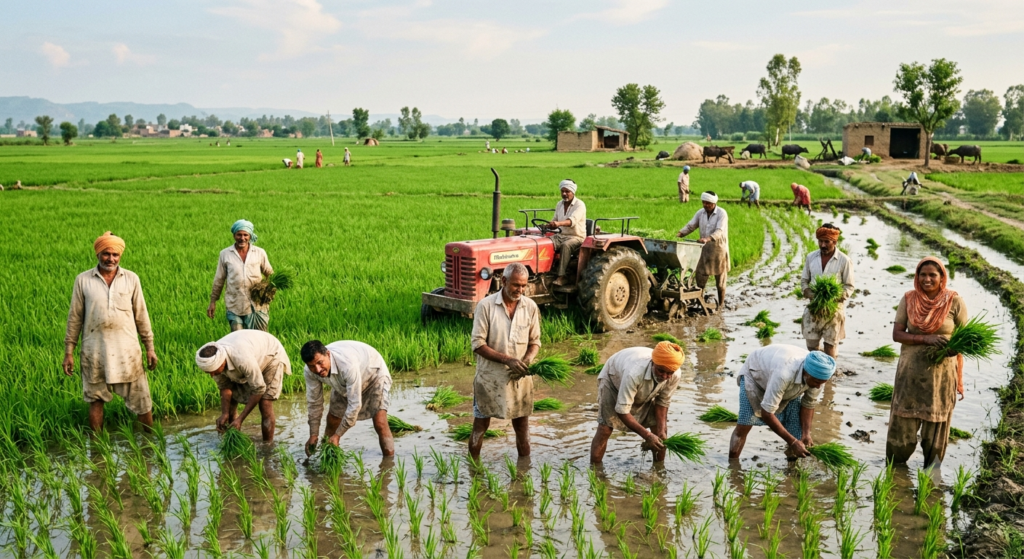
Agriculture requires significant financial investment, especially for medium and large farmers who manage extensive land, employ farm workers, operate machinery, and produce crops on a commercial scale. From purchasing quality seeds and fertilizers to investing in irrigation systems and modern equipment, farming involves expenses throughout the growing season. Having access to sufficient funds helps farmers manage these costs, improve productivity, and expand their agricultural businesses.
Understanding how do medium and large farmers obtain capital for farming is important for anyone interested in agricultural finance and farm management. Farmers can access capital through bank loans, agricultural credit programs, personal savings, private investors, equipment financing, and other financial resources. The most suitable option depends on the farm’s size, income, repayment capacity, and long-term goals.
How Do Medium and Large Farmers Obtain Capital for Farming Through Different Financing Options?
Farmers also face seasonal income patterns. They may need to spend money months before harvesting and selling their crops. Weather conditions, pest outbreaks, fluctuating market prices, and rising input costs can make financial planning more challenging.
Understanding How Do Medium and Large Farmers Obtain Capital for Farming helps explain how financial resources support agricultural growth. Access to reliable funding allows farmers to purchase necessary supplies on time, adopt modern farming methods, improve irrigation, and manage unexpected expenses. It can also help them diversify their crops and reduce dependence on a single source of income.
1. Agricultural Loans From Banks
Bank loans are one of the most common sources of financing for medium and large farming operations. Commercial banks and agricultural lending institutions provide credit for both short-term expenses and long-term investments.
Short-term loans can cover seeds, fertilizers, pesticides, fuel, and seasonal labor costs. Long-term loans may support land development, farm buildings, irrigation infrastructure, and expensive machinery.
To obtain financing, farmers generally need to submit identification, financial statements, land ownership or lease documents, farm income records, and a repayment plan. Lenders assess the applicant’s credit history, existing liabilities, cash flow, and ability to repay the loan.
Interest rates, collateral requirements, repayment periods, and eligibility criteria vary by lender and location. Farmers should compare these terms carefully before borrowing.
2. Government Agricultural Schemes and Subsidies
Government programs can provide financial support to eligible farmers through subsidized loans, interest assistance, equipment subsidies, crop insurance, and agricultural development initiatives.
These programs are particularly valuable when farmers want to invest in sustainable farming practices, improve water management, purchase approved equipment, or adopt modern agricultural technology.
In India, eligible farmers may explore institutional agricultural credit, Kisan Credit Card facilities, and applicable state or central government schemes. Medium and large farmers should verify the specific eligibility rules because benefits, limits, and documentation requirements can differ by program.
Subsidies and grants can reduce the initial cost of an investment, although they may not cover every expense. Farmers should consult participating banks, agriculture departments, or authorized government portals to confirm current terms before applying.
3. Personal Savings and Reinvested Farm Profits
Many established farmers use personal savings and profits from previous harvests to finance their operations. This approach reduces dependence on external lenders and avoids interest payments.
For example, a farmer who earns a profit after selling wheat, rice, cotton, or other crops may set aside part of that income for the next planting season. These funds can pay for fertilizers, seeds, equipment maintenance, and improvements to existing facilities.
Reinvesting profits can also help farmers gradually expand their operations without taking on excessive debt. However, using all available savings can leave a farm vulnerable to emergencies or a poor harvest.
A balanced approach involves maintaining an emergency reserve while allocating a reasonable portion of profits toward future agricultural investments.
4. Equipment Financing and Leasing
Modern agricultural machinery can improve efficiency, reduce manual labor, and help farmers complete time-sensitive activities. However, tractors, harvesters, planters, and irrigation equipment can require substantial upfront investment.
Equipment financing enables farmers to purchase machinery through structured repayments rather than paying the full amount immediately. Leasing provides another option, allowing farmers to use equipment for an agreed period in exchange for regular payments.
Leasing may be suitable when machinery is needed only during specific seasons or when farmers want to avoid the maintenance and ownership responsibilities associated with certain assets.
When considering how do medium and large farmers obtain capital for farming, they should compare interest charges, rental payments, maintenance responsibilities, insurance requirements, and the total cost of equipment financing or leasing over the agreement period.
5. Agricultural Cooperatives and Farmer Organizations
Agricultural cooperatives and farmer producer organizations can help farmers improve their access to financial resources. By working together, members may benefit from collective purchasing, shared machinery, bulk marketing, and stronger bargaining power.
Some organizations connect members with financial institutions, facilitate credit applications, or help farmers access government-supported programs. In India, Farmer Producer Organizations (FPOs) can also support collective business activities, depending on their structure and available services.
Pooling resources may reduce individual costs and make certain investments more affordable. For example, several farmers might share access to a harvesting machine, storage facility, or transportation service rather than purchasing everything independently.
Farmers should review membership requirements, management practices, service charges, and financial transparency before joining an organization.
6. Private Investors and Agricultural Partnerships
Some medium and large farms obtain capital through partnerships with individuals, agribusiness companies, or private investors. These arrangements can support farm expansion, greenhouse projects, food processing, livestock operations, and other commercial agricultural activities.
An investor may contribute money in exchange for an agreed share of profits, ownership, or another contractual benefit. In some cases, a business partner may also provide technical knowledge, market connections, or access to distribution networks.
Unlike a conventional loan, an investment agreement may not involve fixed monthly repayments. However, it can require farmers to share profits or decision-making authority.
Every partnership should clearly define the investment amount, responsibilities, ownership structure, profit-sharing terms, risk allocation, and exit conditions. Independent legal and financial advice can help protect both parties.
7. Trade Credit and Supplier Financing
Agricultural suppliers sometimes allow farmers to purchase seeds, fertilizers, pesticides, animal feed, or other essential inputs and pay later. This arrangement, known as trade credit, helps farmers manage expenses when income is expected after harvest.
Supplier financing can be useful when a farm needs immediate access to inputs but does not want to use all its cash reserves at the beginning of the season.
However, farmers should examine payment deadlines, late fees, interest charges, and product pricing. Deferred payments may become expensive if the crop fails or market prices fall.
Maintaining clear purchase records and agreeing on repayment terms in writing can reduce misunderstandings and support better financial management.
How Can Farmers Choose the Right Source of Capital?
The best financing option depends on the purpose of the investment, the farm’s financial position, and its expected income. Before applying for funding, farmers should prepare a realistic budget and estimate how much money they need.
They should also calculate expected production costs, forecast revenue, and consider possible losses caused by unfavorable weather or market fluctuations. Comparing several lenders or financing arrangements can reveal differences in interest rates, fees, collateral requirements, and repayment schedules.
Farmers seeking guidance on agricultural financing and related resources can also explore information from organizations such as F2DF, alongside established financial institutions and official agricultural agencies.
A practical financing plan should match the repayment schedule to the farm’s cash flow. Seasonal operations may require repayment after harvest, while long-term infrastructure investments may be better suited to longer repayment periods.
Most importantly, farmers should avoid borrowing more than their operations can reasonably repay. Understanding How Do Medium and Large Farmers Obtain Capital for Farming can help them make informed financing decisions. Keeping accurate financial records and reviewing loan conditions before signing an agreement can also help protect the farm’s financial stability.
Conclusion
Medium and large farmers obtain capital through several channels, including bank loans, government-supported programs, personal savings, equipment financing, cooperatives, private investment, and supplier credit. Each option offers different advantages, costs, and eligibility requirements.
Choosing the right source requires careful planning, an understanding of repayment obligations, and a realistic assessment of agricultural risks. By combining suitable financing options with effective financial management, farmers can maintain daily operations, invest in better technology, and build more resilient agricultural businesses.
Access to appropriate capital is not simply about securing money. It is about using financial resources wisely to improve productivity, manage uncertainty, and support sustainable farm growth.
FAQs
Q1. What are the main sources of capital for medium and large farmers?
The main sources include bank loans, agricultural credit programs, personal savings, reinvested profits, equipment financing, private investors, cooperatives, and supplier credit. The best option depends on the farm’s needs and repayment capacity.
Q2. Can medium and large farmers apply for agricultural loans?
Yes. Eligible farmers can apply for agricultural loans through banks and other authorized lending institutions. Approval generally depends on documentation, creditworthiness, income, the intended use of funds, and the lender’s requirements.
Q3. Are government schemes available to support agricultural financing in India?
Yes. India offers various agricultural credit facilities, subsidies, and support programs for eligible applicants. Farmers should check current eligibility criteria, financing limits, and application procedures through official government sources or participating banks.
Q4. Is equipment leasing better than purchasing farm machinery?
It depends on how frequently the equipment is used, its purchase price, maintenance costs, and the farm’s available cash. Leasing can reduce upfront expenses, while purchasing may be more economical for machinery that is used regularly over many years.
Q5. How can farmers improve their chances of obtaining capital?
Farmers can improve their chances by maintaining accurate financial records, preparing a clear business plan, demonstrating repayment capacity, managing existing debts, and submitting complete application documents. Comparing lenders and choosing financing that matches seasonal income can also help.