Some excavation jobs don’t need a full-size excavator sitting on the property all day. Sometimes the machine already on the job can handle the digging with the right attachment. That can be a big advantage when space is tight or the project has several different tasks.
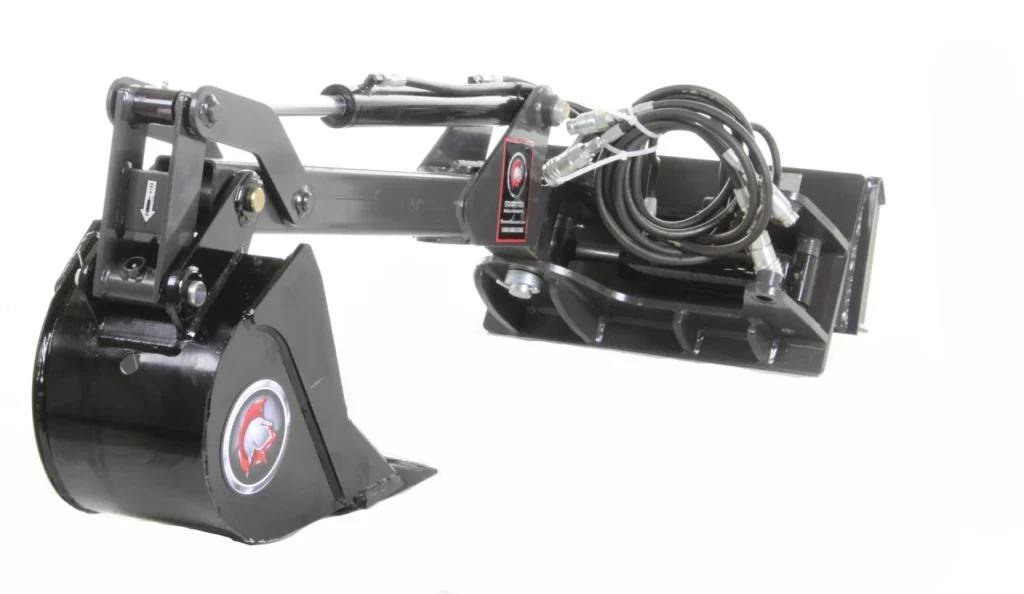
A skid steer backhoe attachment turns a skid steer into a digging machine that can handle trenches, utility work, small foundation jobs, drainage work, and general excavation. It isn’t going to replace every excavator out there, and it doesn’t need to. The point is getting another useful digging capability from a machine you already have.
Why Contractors Add a Backhoe Attachment
Skid steers are already useful machines. They can move material, grade, clear debris, carry pallets, and run a long list of hydraulic attachments.
But digging deeper or narrower trenches with a standard bucket isn’t always practical.
That’s where a backhoe attachment comes in.
Instead of bringing a second machine onto the property, a contractor can mount the backhoe and get to work. For smaller excavation jobs, that can save space on the site and cut down on equipment shuffling.
It also means the skid steer isn’t limited to loader work.
You can dig with it, pull the attachment off when the digging is finished, and go back to using the machine for other parts of the project. That flexibility is a big reason attachments make sense for contractors who don’t want a yard full of machines sitting around waiting for the next job.
Reach and Digging Depth Matter
One of the first things to look at on a backhoe attachment is how far it can actually reach.
A contractor might need to dig a trench along a property line, work around a foundation, or reach into an area where positioning the skid steer is difficult. The attachment needs enough reach and digging depth for the work.
Don’t just look at the maximum number in the specifications, either.
Think about the way the machine will sit while you’re digging. Ground conditions, access, and the width of the work area all affect how useful that reach is in the real world.
A few extra inches of digging depth may not sound important on paper. On a job where the trench needs to meet a certain depth, it can matter quite a bit.
The Boom and Dipper Do the Heavy Work
A backhoe attachment is built around the boom and dipper arm. These components give the operator the reach needed to dig away from the skid steer.
The design needs to handle repeated digging without becoming a weak point in the setup.
This is one area where construction quality matters. Excavation isn’t gentle work. The attachment is going into the ground, pulling material toward the machine, and lifting that material out.
If you’re using it regularly, you want a setup that feels like a working piece of equipment, not something that only looks good in a catalog.
The frame, pivot points, hydraulic components, and connection areas all deserve attention before buying.
Bucket Size Is Part of the Equation
A larger bucket isn’t automatically better.
It depends on what you’re digging.
A contractor digging narrow utility trenches may want a different bucket setup from someone doing general dirt work. Smaller buckets can make sense when precision matters, while larger buckets may help when the goal is moving more material.
The skid steer itself matters here too. You don’t want to choose a bucket size without considering the machine’s capabilities and the attachment’s requirements.
Think about the actual jobs you handle most often. That’s a better starting point than simply choosing the biggest option available.
Hydraulic Compatibility Cannot Be Ignored
This is the less exciting part of buying an attachment, but it can save you a lot of trouble. The backhoe attachment needs to work with the skid steer’s hydraulic system. Flow, pressure, connection requirements, and other specifications need to line up.
If those details aren’t right, the attachment isn’t going to perform the way you expect. This is especially important when equipment comes from different manufacturers or when you’re buying an attachment for a machine you have had for several years.
Check the specifications before ordering. If something isn’t clear, ask the attachment supplier. Spending five minutes checking compatibility is better than finding out after the attachment arrives.
Why a Backhoe Can Be Useful on Smaller Jobs
Large excavation projects are usually going to have larger equipment involved. That’s obvious. But not every contractor is working on a huge site. A landscaper might need to dig drainage trenches. A utility contractor may have smaller repair work. A property contractor might need to dig for a line, footing, or drainage system. A farmer may need to handle digging work around a property.
In these situations, bringing a large excavator may not make sense. A skid steer with a backhoe attachment can give the contractor another option while keeping the equipment footprint smaller. That’s especially helpful on residential properties and other locations where there isn’t much room to maneuver.
One Machine Can Handle More Than One Job
This is probably the biggest reason attachments have become such an important part of compact equipment work. The machine is already there. Instead of buying another dedicated machine for every task, contractors can change attachments based on what the job requires.
A skid steer might spend the morning moving material and the afternoon digging. Another attachment can be installed later for grading or cleanup. When contractors talk about the best skid steer attachments, they aren’t necessarily talking about one attachment that does everything. They’re usually looking at attachments that solve specific problems and make the machine more useful across different jobs.
That is a more practical way to look at an attachment purchase.
What Kind of Excavation Work Can It Handle?
A skid steer backhoe can be useful for a range of smaller excavation tasks.
That can include:
- Drainage trenches
- Utility trenches
- Landscaping excavation
- Small foundation work
- Irrigation projects
- Post and footing excavation
- General property digging
- Cleanup and material removal
The exact application depends on the attachment, machine, bucket, and site conditions.
And there are limits. A backhoe attachment should be used within its specifications rather than being pushed into work that requires a larger dedicated excavator.
Knowing where the attachment fits is part of using it correctly.
What Should Contractors Check Before Buying?
Start with compatibility.
Make sure the mounting system works with your skid steer and that the hydraulic requirements match the machine.
Then look at digging depth and reach. Compare those numbers with the type of excavation work you normally take on.
Bucket options are worth checking too. If you regularly do different types of digging, having an appropriate bucket setup can make the attachment more useful.
Construction quality is another big one. Look at the frame, pivot points, hydraulic lines, and overall build. If you’re going to use the attachment regularly, those details matter more than a flashy product description.
Finally, think about transport and storage. The attachment has to fit into the way your crew actually works.
FAQ About Skid Steer Backhoe Attachments
Can a skid steer use a backhoe attachment?
Yes. A compatible backhoe attachment can add digging capability to a skid steer. The attachment needs to match the machine’s mounting and hydraulic requirements.
What can a skid steer backhoe be used for?
It can be used for tasks such as trenching, drainage work, landscaping excavation, utility work, small foundation projects, and general digging.
Is a skid steer backhoe the same as a mini excavator?
No. They perform some similar types of work, but the machines are designed differently. A backhoe attachment gives a skid steer additional digging capability while allowing the skid steer to continue serving other functions with different attachments.
How deep can a skid steer backhoe dig?
Digging depth varies by attachment and setup. Contractors should check the manufacturer’s specifications and compare the available digging depth with the requirements of the project.
What should I check before buying one?
Check mounting compatibility, hydraulic flow and pressure requirements, digging depth, reach, bucket options, and the overall construction of the attachment.
Final Thoughts
A backhoe attachment isn’t meant to turn every skid steer into a full-size excavator. That’s not really the point.
The value is in giving the machine another job.
For contractors already using skid steers, a skid steer backhoe attachment can provide a practical way to handle smaller excavation and trenching work without bringing another dedicated machine to every site. The right setup can help with drainage, utilities, landscaping, property work, and plenty of other digging jobs.
And when you’re building a lineup of best skid steer attachments for your equipment, it makes sense to look at the jobs you actually perform. The attachment that earns its place is the one that gets used.
Spartan Equipment offers attachments built for contractors, landscapers, agricultural operators, municipal crews, and equipment owners who need more capability from the machines already in their fleet.
SEPTEMBER SALE — Free Shipping + Save 15% On Orders Over $2,500 With Code SPARTAN15