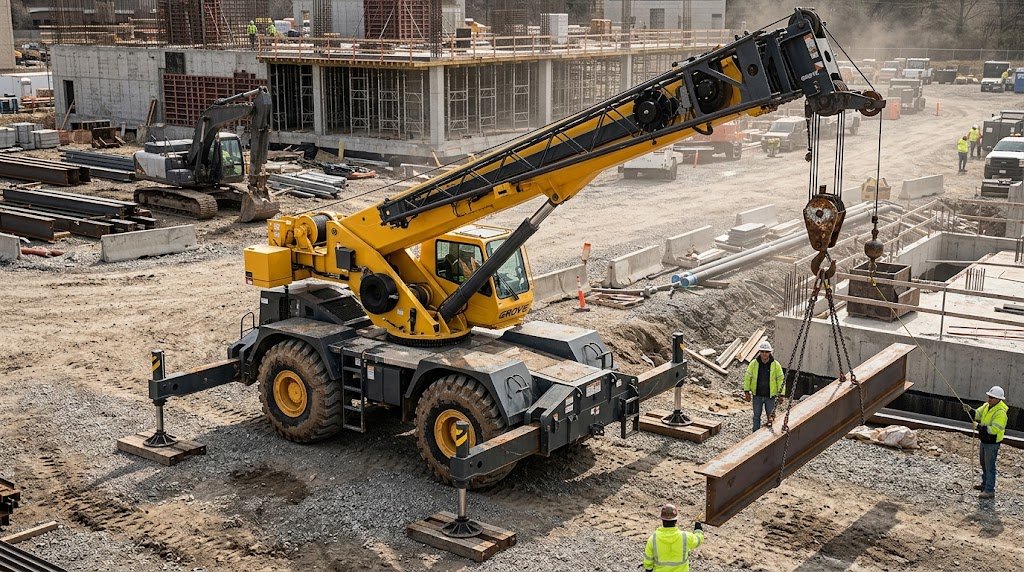
The Grove RT lineup appears everywhere—moving steel, handling precast panels, and crossing ground that would destroy most equipment. These are rugged machines built to handle mud, heat, and shifting terrain. But rugged does not mean indestructible.
Things break on the job site; that is the nature of heavy lifting. Staying ahead of the wear curve means knowing which components fail first and having quality replacements ready. Here is what your RT series needs you to watch.
Critical Components in the Hoist and Boom
The boom and hoist absorb the most punishment on any RT crane. Nothing else gets worked as hard or as constantly.
Wire Rope: This cable is a consumable part. It frays under tension, kinks under misalignment, and fails under neglect. Match the diameter and construction type to your specific RT model when it is time to replace.
Sheaves and Bearings: Grooves inside sheaves wear thin over time. Once the groove profile deforms, it cuts into new wire rope. Check flange wear and groove depth on every service interval. Replace worn sheaves before they damage the next cable.
Hoist Brakes and Clutches: A slipping brake creates an immediate safety hazard. Friction material degrades with every cycle. Keep brake assemblies on the shelf or establish a relationship with a source that can ship them overnight.
Hoist Motors: Hydraulic motors powering the hoist gradually lose output as they age. Leaks at the motor body signal declining performance. When you notice slower drum speeds, investigate promptly—replacing worn Grove parts before failure prevents secondary damage. A complete hoist motor failure strands the operation.
Hydraulic and Pneumatic Circuits
Hydraulic pressure drives nearly every movement a Grove RT crane makes. Telescoping booms, outrigger deployment, steering—all of it runs through fluid lines. A single ruptured hose can halt an entire operation.
Hoses and Fittings: Ruptured hoses are the leading cause of unplanned downtime. Rubber breaks down from heat, vibration, and UV exposure. Carry spares for the main pump and outrigger circuits, and know a crane parts supplier who stocks pressure-rated hose assemblies. Fittings must match their application’s pressure rating.
Cylinders and Seals: Telescoping cylinders develop leaks as seals harden and crack. Seal kits often resolve the issue without replacing the entire cylinder. The critical detail is knowing the exact part number—Grove revised seal designs across production years. A mismatch means another teardown.
Pumps and Motors: Hydraulic pumps operate for thousands of hours before wearing out. Whining or pressure drops indicate internal wear. Case drain flow measurements reveal how much clearance has been lost. Addressing degradation early prevents hydraulic failure during a lift.
Axles, Drivetrain, and Mobility
Rough terrain drives the drivetrain just as hard as the lifting system. Every axle endures constant punishment from uneven surfaces and shifting loads. Ignoring drivetrain wear creates cascading problems beyond the axle itself.
Tires: RT cranes wear out tires faster than most people expect. Rocks and debris chew through tread rapidly. A dependable crane parts supplier can confirm the correct size and load rating. Monitor tread depth and sidewall integrity weekly.
Axle Components: Planetary gear sets, hub seals, and brake calipers share the same service cycle. When hub seals leak, planetary components overheat and fail. Sourcing the correct Grove parts for hub seal replacement is straightforward with the serial number handy. Check the oil sight glass regularly.
Transmission: Hard shifting often points to valve body or clutch pack wear. These components still require periodic inspection. Check the transmission fluid for metal shavings. A quick fluid check can save you from a costly rebuild.
Electronics and Operator Controls
Modern RT cranes depend heavily on electronic control systems. The mechanical linkages operators once relied on have been replaced by sensors and wiring.
Load Moment Indicator: The LMI functions as the crane’s primary safety brain. Sensor failures and display errors develop over time without obvious signs. Test it every shift and investigate fault codes immediately. A degraded boom length sensor throws off every calculation.
Joystick and Valve Controllers: Joysticks send electrical signals to proportional valves that drive crane movements. A sticky joystick produces jerky motions that compromise safety. Replacing the controller is typically straightforward once corrosion is identified. Inspect wiring at the boom tip regularly.
Foundation Support and Structural Integrity
The outriggers form the foundation on which every lift depends. If the base is compromised, the entire machine becomes unstable. Structural components endure enormous loads and wear builds quietly.
Outrigger Beams and Pads: Beams extend under hydraulic power and retract after each operation. Slide pads wear down with friction over time. A good crane parts supplier stocks pad kits matching your RT configuration. Grinding sounds during deployment mean the pads are past their useful life.
Pins and Bushings: Every pivot point relies on pins and bushings for smooth articulation. Thousands of load cycles wear them down. A worn pin introduces play into the boom assembly. Replace pins and bushings as matched sets.
Turntable Bearing: The turntable bearing carries the crane’s rotational load across the chassis. It experiences some of the most intense stress on the machine. Verify bolt torque and inspect gear mesh patterns at every service. Grease according to the manufacturer’s specification.
Sourcing the Right Components
Component sourcing for RT cranes follows a predictable pattern. OEM parts are exact matches but costly and slow to arrive. Aftermarket alternatives ship faster, but quality varies across suppliers.
OEM Components: Factory parts guarantee exact fitment and material quality. They are the safest choice for critical hydraulic and drivetrain assemblies. The trade-off is cost and lead time—some components take weeks. For safety-critical lifts, OEM remains the dependable path.
Aftermarket Alternatives: The aftermarket ecosystem for Grove cranes is mature and wide-reaching. Many manufacturers produce hoses, seals, and brake bands to OEM specifications. A. Replace it before it becomes the reason the engine struggles.
Engine Belts and Coolant Hoses: Cracked belts and softened hoses reputable crane parts supplier can shorten delivery times and provide technical guidance. The key is evaluating which components carry critical safety loads.
Serial Number Verification: Grove made design changes at various points during production. A part that fits a 2010 model may not bolt up on a 2012 unit. Always have your serial number ready when ordering. Cross-referencing Grove parts catalogs before purchase avoids wasted time.
Budget-conscious operators sometimes gravitate toward the cheapest option. That works for filters and belts but proves costly for pumps, seals, and structural components. Think of parts sourcing as an investment in uptime.
Essential Routine Maintenance
The most reliable way to prevent component failure is disciplined routine maintenance. Filters, fluids, and lubrication protect expensive assemblies from the inside out.
Hydraulic Filter Maintenance: Change filters on the manufacturer’s recommended schedule. A clogged filter bypasses contaminants into the pump. Order through a crane parts supplier that carries OEM-compatible options. Regular filter changes are among the cheapest insurance policies a crane can have.
Air Intake Filtration: Dusty job sites clog air filters quickly. Check the air restriction gauge weekly in heavy environments. A plugged filter starves the engine of clean air are easy to spot during walk-around inspections. A blown belt or ruptured coolant hose can overheat the engine. Inspect these items on every maintenance interval. Replace anything showing cracking or soft spots immediately.
Putting It All Together
Proactive maintenance separates efficient operations from crisis-driven ones. Building a parts strategy before you need one saves hours of searching during downtime. Start by identifying the components your RT model wears out most frequently.
Wear patterns vary by model and environment—a gravel pit RT530 wears different parts than an urban RT915. Keeping quality Grove parts in stock before a component reaches the end of its life prevents the scramble that follows a breakdown. Operators who know their machines make the best stocking decisions.
Preparation prevents most of these outcomes. Knowing what your crane needs before it needs it keeps operations moving. The right components, available at the right time, make all the difference.