L Shaped Paper Angle Board is an essential packaging solution for businesses that need to protect products during storage, transportation, and shipping. Designed to reinforce corners and edges, this practical packaging material helps prevent damage caused by pressure, impact, stacking, and rough handling. It is widely used in industries such as manufacturing, logistics, construction, furniture, electronics, and e-commerce.
As businesses look for reliable and environmentally responsible packaging materials, paper angle boards have become a popular alternative to many traditional protective materials. They offer structural support, help stabilize palletized goods, and improve the overall safety of packaged products.
Whether a company ships heavy machinery, stacks cartons in a warehouse, or transports fragile furniture, an L-shaped paper angle board can provide an additional layer of protection. Choosing the right board depends on factors such as product weight, packaging dimensions, transportation conditions, and stacking requirements.
This guide explains what L-shaped paper angle boards are, how they work, their benefits, common applications, available types, and the factors businesses should consider when selecting them.
What Is an L Shaped Paper Angle Board?
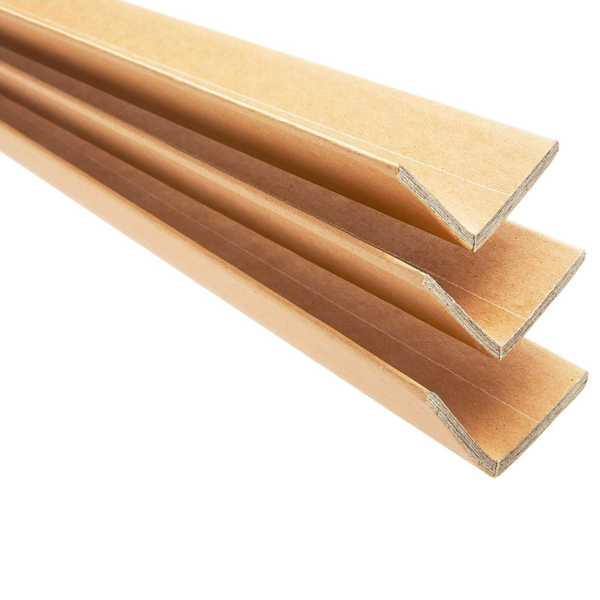
An L Shaped Paper Angle Board is a rigid protective packaging component made from multiple layers of compressed paper or paperboard bonded together to form an L-shaped profile. The two sides meet at approximately a right angle, allowing the board to fit securely around the corners of cartons, pallets, and other packaged products.
The primary purpose of this packaging material is to strengthen vulnerable edges and distribute external pressure more evenly. During transportation, products may experience compression from stacked cartons, movement inside delivery vehicles, or accidental impacts during loading and unloading. Angle boards help reduce the risk of damage by reinforcing these exposed areas.
Paper angle boards are available in different lengths, thicknesses, widths, and strength specifications. Some are designed for lightweight cartons, while others are manufactured to support heavy industrial loads.
Their straightforward design makes them easy to integrate into existing packaging operations. Businesses can use them with stretch film, strapping, cartons, pallets, and other protective materials to create a more secure packaging system.
How Does an L Shaped Paper Angle Board Work?
The effectiveness of an L-shaped paper angle board comes from its shape and layered construction. When positioned along the corner of a packaged product, it creates a stronger edge that can withstand pressure better than an unsupported carton corner.
For example, when several cartons are stacked on a pallet, the weight of the upper cartons places pressure on the packages below. Without suitable reinforcement, this pressure can crush corners, deform cardboard boxes, or damage the products inside.
An angle board helps distribute some of this pressure along the reinforced edge. When correctly specified and positioned, it can also improve the stability of a pallet load by providing a firmer surface for stretch wrapping or strapping.
The boards can be placed vertically along pallet corners or horizontally along the top and bottom edges of products. Their exact placement depends on the packaging design and the type of protection required.
However, angle boards should not be treated as a substitute for proper pallet design, suitable cartons, or correct load securing. The board’s dimensions, material strength, and placement must match the weight and handling conditions of the shipment.
Key Benefits of L Shaped Paper Angle Boards
Improved Corner Protection
Product corners are particularly vulnerable during transportation and handling. Even a minor impact can cause dents, crushed packaging, or damage to the goods inside.
An L-shaped paper angle board reinforces these weak points by creating a rigid protective barrier. This is especially useful for furniture, appliances, glass panels, metal components, and products packed in rectangular cartons.
By protecting exposed edges, businesses can reduce avoidable product damage and maintain better packaging quality throughout the supply chain.
Better Pallet Stability
Palletized shipments often need to remain stable during warehouse storage and long-distance transportation. Movement, vibration, and stacking pressure can weaken a poorly secured load.
Paper angle boards help support pallet corners and provide a more stable surface for stretch film and strapping. When used with appropriate wrapping techniques, they can help maintain the shape of the load and reduce the risk of cartons shifting.
This benefit is particularly valuable for manufacturers, wholesalers, distribution centers, and exporters that regularly transport large quantities of goods.
Reduced Packaging Damage
Damaged packaging can lead to product returns, replacement expenses, delivery delays, and dissatisfied customers. For businesses shipping fragile or high-value goods, these problems can significantly affect operating costs.
An appropriately selected angle board helps protect the edges of packaging from compression and strapping pressure. This can reduce the likelihood of crushed cartons and damaged product surfaces.
The actual reduction in damage depends on the quality of the packaging system, product characteristics, handling practices, and transportation conditions.
Lightweight and Practical Design
Paper angle boards provide useful structural reinforcement without necessarily adding substantial weight to a shipment. Their lightweight construction can make them easier for warehouse employees to handle, cut, position, and install.
They can also be supplied in different lengths and profiles to suit various products. Businesses that package multiple product sizes may benefit from selecting boards that fit their existing cartons and pallet configurations.
Support for Sustainable Packaging
Many paper angle boards are manufactured using recycled paper fibers, although recycled content varies by supplier and product specification.
Paper-based protective packaging can support sustainability objectives when it is sourced responsibly and managed through suitable recycling systems. In appropriate applications, it may reduce dependence on plastic-based protective components.
However, recyclability depends on the board’s composition, adhesives, coatings, contamination, and local recycling facilities. Businesses should confirm these details with their suppliers rather than assuming every paper angle board is recyclable in every location.
Common Applications of L Shaped Paper Angle Boards
Manufacturing and Industrial Packaging
Manufacturers frequently ship heavy components, machinery parts, metal sheets, and other industrial products. These items may be exposed to compression, vibration, and handling impacts throughout the distribution process.
An L-shaped paper angle board can reinforce package edges and help protect the corners of stacked products. For heavier loads, the board must be selected according to the required compression resistance and load conditions.
Industrial packaging teams often combine angle boards with pallets, strapping, stretch film, and suitable cushioning materials to create a more complete protective system.
Furniture and Home Appliances
Furniture, cabinets, tables, refrigerators, washing machines, and other large household products can suffer expensive damage if their corners are not protected properly.
Paper angle boards can be positioned along exposed edges to help prevent dents, scratches, and crushing during storage and delivery. They are particularly useful when products are stacked or secured with tensioned packaging straps.
For finished surfaces that are easily scratched, additional foam, paper wrapping, or other surface-protection materials may be necessary.
E-Commerce and Distribution
E-commerce businesses depend on packaging that can withstand repeated handling and transportation. Products may pass through fulfillment centers, sorting facilities, delivery vehicles, and customer receiving areas before reaching their destinations.
Angle boards can provide extra reinforcement for larger cartons and palletized shipments. They are most beneficial where the packaging dimensions, stacking arrangements, or product weight create a higher risk of edge damage.
Small parcels may not always require full-length angle boards, so businesses should assess the protection needs of each product category.
Construction Materials
Construction materials such as tiles, panels, profiles, boards, and selected building components often require edge protection during storage and transportation.
L-shaped paper angle boards can help protect these materials from chipping, deformation, and compression damage when the board is suitable for the product’s weight and shape.
For materials exposed to moisture or outdoor storage, businesses should consider the board’s moisture resistance and whether additional wrapping or covered storage is required.
Export and International Shipping
Export shipments may travel long distances and pass through several handling stages. They can also experience changes in temperature, humidity, and storage conditions.
Angle boards can help reinforce export cartons and pallet loads, especially when combined with appropriate wrapping, strapping, and load-securing methods.
Companies shipping internationally should evaluate the complete packaging system against the shipment’s weight, dimensions, transport mode, and destination requirements.
Types of L Shaped Paper Angle Boards
Different packaging requirements call for different angle board specifications. Understanding the available options helps businesses select products that provide adequate protection without unnecessary material use.
Standard Paper Angle Boards
Standard paper angle boards are commonly used to reinforce cartons and protect pallet corners. They are suitable for many general packaging applications where moderate edge protection and load stability are required.
Their performance depends on factors such as thickness, leg width, paper quality, and manufacturing consistency.
Heavy-Duty Paper Angle Boards
Heavy-duty angle boards are designed for demanding applications that require greater rigidity and compression resistance.
They may be suitable for heavy cartons, industrial components, and large pallet loads. However, the board’s actual load-bearing capability should be confirmed through supplier specifications or appropriate testing.
A thicker board is not automatically the best option for every shipment. Its dimensions and strength characteristics must match the application.
Moisture-Resistant Paper Angle Boards
Moisture-resistant variants are intended for applications where higher humidity or occasional exposure to moisture may be a concern.
They may incorporate specialized materials or treatments that improve their performance under certain environmental conditions. The level of protection varies, and moisture-resistant does not necessarily mean waterproof.
Businesses should check the manufacturer’s recommendations before using these boards in damp warehouses, refrigerated environments, or outdoor storage areas.
Custom-Sized Angle Boards
Custom-sized paper angle boards are manufactured to meet specific packaging dimensions and product requirements.
Businesses may request different lengths, leg widths, thicknesses, colors, or other specifications. Custom sizing can improve fit, reduce unnecessary material, and simplify packaging operations.
This option is particularly useful for manufacturers with specialized products or businesses that ship consistent pallet configurations in high volumes.
How to Choose the Right L Shaped Paper Angle Board
Selecting the correct L Shaped Paper Angle Board requires more than choosing a convenient size. Businesses should evaluate several technical and operational factors before placing a bulk order.
Consider Product Weight
The weight of the packaged product influences the level of reinforcement required. Lightweight cartons may need only basic corner protection, while heavier palletized loads may require stronger boards with suitable compression resistance.
Consider both the weight of individual products and the total load when products are stacked together.
Measure the Required Dimensions
The board’s leg width, thickness, and length determine how it fits around the package and how much of the edge it protects.
A board that is too short may leave vulnerable areas exposed. One that is too large may interfere with wrapping or increase material costs unnecessarily.
Measure the product or carton carefully and discuss the intended application with the supplier.
Evaluate Compression Resistance
Compression resistance is particularly important when packages are stacked in warehouses, shipping containers, or distribution centers.
Ask suppliers for relevant technical specifications and test information. For critical shipments, consider evaluating the packaging system under realistic stacking and handling conditions.
Do not rely solely on appearance or thickness when assessing strength.
Check Moisture Conditions
Paper-based packaging can lose strength when exposed to excessive moisture. If products are transported through humid environments or stored in conditions where condensation may occur, moisture resistance becomes an important consideration.
Discuss environmental conditions with the supplier and select a suitable protective system.
Compare Cost and Performance
The lowest-priced angle board may not provide the best overall value if it fails to protect the shipment adequately.
Compare product specifications, consistency, delivery costs, material usage, and expected performance. A well-matched board may help reduce damage-related expenses and unnecessary packaging waste.
Choose a Reliable Supplier
A dependable supplier should provide clear specifications, consistent quality, appropriate customization options, and realistic delivery schedules.
For large orders, businesses may request samples before committing to a full purchase. Testing samples on actual cartons or pallet loads can help confirm whether the product meets operational requirements.
L Shaped Paper Angle Board vs. Plastic Edge Protectors
Paper and plastic edge protectors serve similar purposes, but their characteristics differ.
Paper angle boards are often preferred when businesses want rigid edge protection using paper-based materials. They can be manufactured with recycled fibers and may fit into established paper recycling systems when local facilities accept the material.
Plastic edge protectors may offer different moisture-resistance, durability, and reuse characteristics depending on their construction. They can be useful in applications where exposure to water or repeated use is a significant consideration.
The most suitable choice depends on the product, operating environment, required strength, total cost, and end-of-life disposal arrangements.
Businesses should avoid selecting packaging materials based on a single factor. Protection performance, material efficiency, transportation requirements, and waste-management options should all be considered together.
Installation Tips for Better Packaging Protection
Correct installation is essential to achieving the intended benefits of paper angle boards.
First, position the boards against the exposed corners or edges that need reinforcement. For palletized loads, vertical boards are commonly placed at the corners, while horizontal boards may be used along the top or bottom edges where appropriate.
Next, secure the boards with suitable stretch film, strapping, or other compatible packaging materials. Strapping tension should be sufficient to secure the load without crushing cartons or damaging the product.
Make sure the boards are aligned correctly and cover the vulnerable areas. Poor positioning can reduce their effectiveness and leave corners exposed to pressure or impact.
Before shipping, inspect the entire pallet for uneven stacking, loose packaging, damaged cartons, and other potential problems. Confirm that the load is stable and suitable for the planned transportation conditions.
For heavy or high-value shipments, packaging trials can help identify the most effective combination of angle boards, wrapping, strapping, and pallets.
Why Businesses Should Consider Bulk Purchasing
Companies that regularly use protective packaging may benefit from purchasing L-shaped paper angle boards in bulk.
Bulk orders can help maintain consistent stock levels and reduce the frequency of repeat purchasing. They may also offer better unit pricing, depending on order quantities, manufacturing arrangements, and delivery requirements.
For businesses with predictable packaging demand, planned purchasing can make warehouse operations more efficient. Standardized board sizes may also simplify staff training, inventory management, and packing procedures.
However, purchasing too much stock can create storage challenges and tie up working capital. Paper angle boards should be stored in a clean, dry location and protected from moisture or physical damage.
Before placing a large order, businesses should estimate consumption rates, confirm storage capacity, and review supplier lead times. Ordering the right quantity is often more useful than simply purchasing the largest available volume.
Environmental Considerations
Sustainable packaging has become an important consideration for many businesses. Paper angle boards can contribute to packaging strategies that prioritize recyclable and recycled-content materials.
Their environmental performance depends on how they are manufactured, transported, used, and disposed of. Recycled content, adhesive composition, coatings, and local recycling infrastructure can influence their suitability for specific sustainability goals.
Businesses can improve material efficiency by choosing appropriate dimensions, avoiding unnecessary reinforcement, and reducing packaging damage that leads to discarded products.
It is also important to evaluate the entire packaging system rather than assuming that one material is always more sustainable than another. A suitable angle board should protect the product effectively while using an appropriate amount of material.
Companies with formal sustainability targets should request relevant environmental information from suppliers and confirm whether the products meet their procurement standards.
Common Mistakes to Avoid
One common mistake is selecting angle boards based only on price. Inadequate reinforcement can increase product damage and create additional costs.
Another mistake is using boards that are too short or too narrow for the packaged product. Incomplete coverage can leave exposed edges vulnerable to compression and impact.
Ignoring moisture conditions can also affect packaging performance. Paper-based materials should be selected and stored according to the expected environmental conditions.
Incorrect strapping tension is another potential problem. Excessive tension can crush packaging, while insufficient tension may allow the load to shift during transit.
Finally, businesses should not assume that all angle boards have the same strength. Product specifications, manufacturing quality, and testing information should be reviewed before selecting a product for demanding applications.
Conclusion
L Shaped Paper Angle Board is a practical packaging solution for businesses that need stronger corners, improved edge protection, and better stability for cartons and palletized goods. Its versatile design makes it suitable for manufacturing, logistics, furniture, construction materials, warehousing, and export packaging.
The right product can help reduce packaging damage, support more secure stacking, and contribute to efficient packaging operations. Paper-based construction may also support sustainability objectives when recycled content and end-of-life recycling arrangements are appropriate.
To achieve the best results, businesses should evaluate product weight, board dimensions, compression resistance, moisture conditions, and supplier quality. Correct installation and suitable wrapping or strapping are equally important.
By choosing an angle board that matches the specific packaging requirements, companies can protect their products more effectively and improve the reliability of their supply chains.
Frequently Asked Questions
1. What is an L Shaped Paper Angle Board used for?
An L-shaped paper angle board reinforces the corners and edges of packaged goods. It helps protect cartons from crushing, supports pallet stability, and reduces damage caused by stacking pressure and handling.
2. Is an L Shaped Paper Angle Board recyclable?
Many paper angle boards can be recycled, depending on their materials, adhesives, coatings, and local recycling facilities. Businesses should confirm the product’s composition and recycling requirements with the supplier.
3. Can paper angle boards support heavy products?
Yes, appropriately specified heavy-duty angle boards can help protect and stabilize heavy packaged goods. The required dimensions and strength should be determined according to the product weight, stacking arrangement, and transportation conditions.
4. How do I choose the correct angle board size?
Consider the product’s dimensions, weight, exposed edges, and packaging arrangement. The board’s length, leg width, and thickness should provide suitable coverage and reinforcement without interfering with other packaging materials.
5. Are L-shaped paper angle boards suitable for export packaging?
Yes, they are commonly used to reinforce export cartons and palletized shipments. Their suitability depends on the shipment’s weight, humidity exposure, handling conditions, and overall packaging design.
6. Can I order L-shaped paper angle boards in bulk?
Yes, many packaging suppliers offer bulk quantities and custom specifications. Before ordering, confirm the required dimensions, strength, quantity, lead time, and delivery arrangements to ensure the boards meet your business needs.