Picture an older kitchen in a classic New England triple-decker. The vinyl is peeling at the corners, the subfloor creaks near the sink, and the homeowner wants something durable and easy to clean without looking out of place in a century-old home.
That’s often when linoleum comes up. For many homeowners, Linoleum Flooring Installation in Pawtucket, RI has become a practical choice that balances durability, cost, and character. Here is what the material is, how installation works, and where it fits best in local homes.
What Linoleum Really Is (and What It Isn’t)
Many people use “linoleum” and “vinyl” as if they mean the same thing. They don’t. Vinyl is a synthetic plastic product. True linoleum is made mostly from natural ingredients.
Those ingredients include linseed oil, pine resin, wood or cork flour, and ground limestone, usually pressed onto a jute backing. The result is a resilient, slightly soft floor that has been around since the 1800s and is now popular again.
Because the color runs through the full thickness of the material, everyday scuffs don’t reveal a different layer underneath. That’s one reason linoleum floors in schools and hospitals have often lasted for decades.
How Linoleum Installation Usually Works
Linoleum comes in two main formats: large sheets and click-together panels or tiles. Each one changes how the job is done.
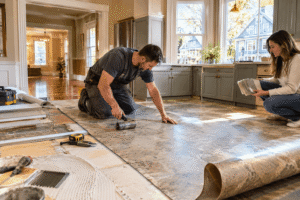
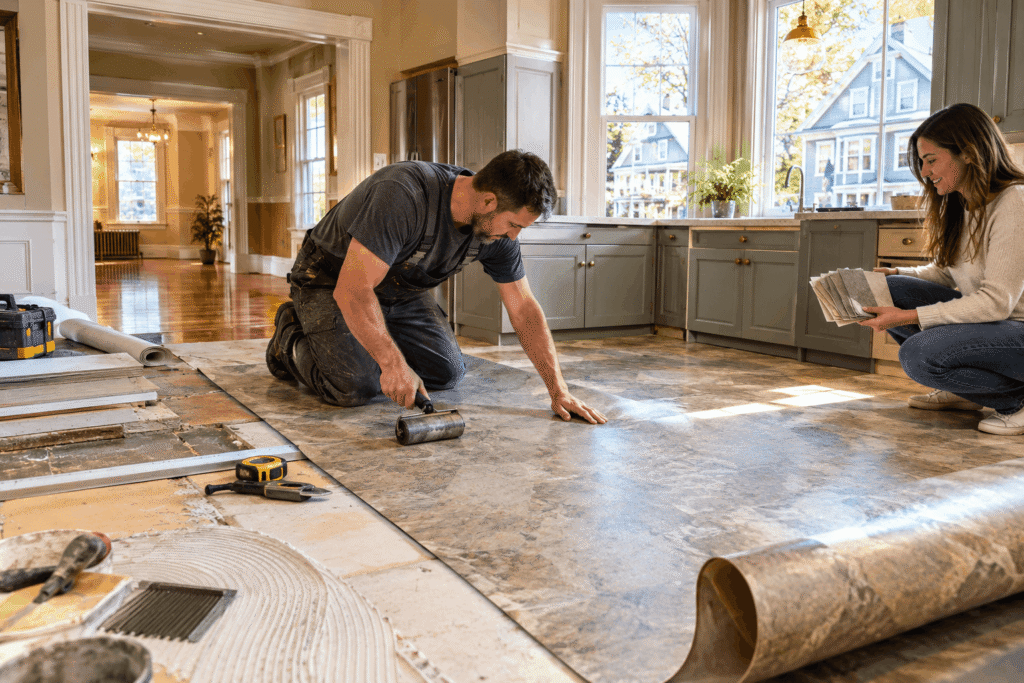
Sheet linoleum is glued directly to a prepared subfloor. Seams are often heat-welded or sealed, which creates a nearly watertight surface. This makes it a strong option for kitchens, laundry rooms, and mudrooms.
Click panels usually have a fiberboard core with a linoleum top layer. They float over the subfloor without full glue-down. They’re easier for some homeowners to handle, but they don’t resist standing water as well as properly sealed sheet goods.
Why Subfloor Prep Matters So Much
Linoleum is thin and flexible, so it shows almost everything beneath it. A small ridge, a nail head, or a dip in the plywood can show through within months.
Older homes add another layer of challenge. Many local houses have original plank subfloors, layers of old flooring, or slight settling from decades of New England freeze-and-thaw cycles. Installers often spend as much time leveling and patching as they do laying the actual floor.
Acclimation is another detail that’s easy to overlook. Linoleum should rest in the room for a day or two before installation so it can adjust to the indoor temperature and humidity. Skipping that step can lead to gaps or bubbling later.
The “Yellow Film” Surprise
New linoleum sometimes has a yellowish tint right out of the box. It’s called “drying room film,” and it forms naturally during the manufacturing process.
It fades with exposure to light, usually over a few weeks to a few months. Homeowners who aren’t warned about it sometimes assume the floor is defective. It isn’t. The true color simply needs time to come through.
Why Homeowners Are Choosing Linoleum Again
Durability is the biggest draw. A well-installed and properly maintained linoleum floor can last 25 years or more, which is longer than many budget flooring options.
It’s also a natural fit for people who care about indoor air quality and sustainability. The raw materials are renewable, and many products are biodegradable at the end of their life.
Linoleum has natural antibacterial qualities as well, thanks to the oxidizing linseed oil. That makes it appealing for kitchens, bathrooms, and homes with young kids or pets.
Comfort plays a role too. Linoleum has a slight give underfoot, which feels easier on the legs during long cooking sessions than tile or stone.
The design range has also changed. Today’s options include bright solids, soft neutrals, marbled patterns, and custom inlays. A floor that once looked “institutional” can now fit a modern farmhouse kitchen or a retro-inspired bungalow.
Linoleum Next to Hardwood: A Common Local Pairing
Many homes in Pawtucket mix flooring types from room to room. A common setup is linoleum in the kitchen and bathrooms, with hardwood running through the living and dining areas.
This is where sand finishing comes into the conversation. Sand-finished hardwood is installed raw, then sanded and finished on-site. That lets the boards sit perfectly flush and lets the stain match existing trim or older floors.
Homeowners renovating a whole floor often coordinate the work. A Sand Finish Hardwood Floor Installer in Pawtucket, RI may handle the living spaces, while the linoleum goes into wet areas. Timing matters here, because sanding dust and fresh finishes don’t mix well with newly glued linoleum nearby.
The transitions between rooms also need planning. Linoleum is much thinner than hardwood, so thresholds or reducers are usually needed to keep the change in height smooth and safe.
Real-World Situations Where Linoleum Makes Sense
Consider a family with two dogs and a busy kitchen. Muddy paws, spilled water bowls, and dropped food are daily events. A sheet linoleum floor with sealed seams can handle that traffic and wipes clean in seconds.
Or think about a landlord updating a multi-family rental near the Blackstone River. They want something tough enough to survive tenant turnover, but they don’t want the plastic look of cheap vinyl. Linoleum offers a middle ground that holds up and still looks good in listing photos.
Another common case is the restoration-minded buyer. Someone who purchases a 1920s home may want to bring back period-appropriate materials. Linoleum was a standard kitchen floor in that era, so it can restore historical character without sacrificing modern performance.
There are also cases where linoleum isn’t the right fit. Full bathrooms with frequent standing water, or basements prone to moisture, may call for different materials or extra moisture protection. Good installers will point that out rather than force a product where it doesn’t belong.
What to Ask Before Any Installation
Homeowners comparing contractors tend to get better results when they ask practical questions. Does the installer have experience with true linoleum, not just vinyl? How will the subfloor be checked and prepared? Will seams be welded or sealed?
It also helps to ask about maintenance. Linoleum does best with pH-neutral cleaners and an occasional protective polish. Harsh, high-alkaline cleaners can dry out the surface over time.
Local flooring professionals, including teams like The Flooring Specialist, often note that most early linoleum problems trace back to rushed prep work rather than the material itself. That’s a useful reminder that the installation process matters as much as the product.
For larger remodels, it’s worth asking whether the same crew handles both resilient flooring and hardwood. Some projects work best when a Sand Finish Hardwood Floor Installer in Pawtucket, RI and the linoleum installer work from a shared schedule.
The Bottom Line
Linoleum is a durable, natural, and surprisingly stylish flooring option, but its success depends heavily on careful prep and correct installation. For older homes especially, a smooth subfloor and proper acclimation make all the difference.
Anyone weighing Linoleum Flooring Installation in Pawtucket, RI should start by looking at the room’s moisture level, the condition of the subfloor, and how the new floor will meet neighboring surfaces. Those three details shape nearly every decision that follows.
FAQs
Is linoleum the same as vinyl flooring?
No. Linoleum is made from natural materials like linseed oil, wood flour, and limestone. Vinyl is a synthetic plastic product with a printed design layer on top.
How long does linoleum flooring last?
With proper installation and regular care, linoleum often lasts 25 to 40 years. Durability depends on foot traffic, cleaning habits, and the quality of the subfloor underneath.
Is linoleum waterproof?
Sheet linoleum with sealed or welded seams resists spills very well. However, it isn’t fully waterproof, so standing water should be wiped up quickly, and click-style panels are more sensitive to moisture.
How long does linoleum installation take?
A typical kitchen or bathroom can often be installed in one to two days. Extra time may be needed for subfloor repairs and for letting the material acclimate before installation.
Can linoleum be installed over old flooring?
Sometimes, if the existing floor is flat, firmly attached, and in good condition. In many older homes, though, removing old layers and leveling the subfloor gives a smoother, longer-lasting result.