The modern kitchen is undergoing a quiet revolution. For years, the term “smart kitchen” conjured up images of screen-heavy refrigerators that could tweet, or Wi-Fi-enabled coffee makers that saved you a 10-second walk across the room. These gimmicks often missed the mark because they focused entirely on the digital interface while ignoring the physical reality of cooking.
True innovation doesn’t happen on a screen; it happens where human movement meets physical architecture.
The real evolution of the smart kitchen lies in the intersection of advanced mechanical hardware and digital convenience. High-end kitchen design is moving away from standalone appliances and toward seamlessly integrated, motion-intelligent systems. By pairing precision-engineered fittings—like soft-close concealed hinges, electronic lift-ups, and heavy-duty drawer systems—with sensors and automation, the kitchen is transforming from a collection of storage units into an active, responsive culinary workshop.
1. Ergonomics in Motion: The Magic of Touchless Cabinets
The core of a smart kitchen is accessibility and effortless movement. Traditional overhead cabinet doors require physical reaching, lifting, and pulling—actions that become frustrating when your hands are covered in dough or grease.
The digital-mechanical solution integrates electronic drive systems directly into premium lift-up hardware. With a gentle tap on the front facade or a simple voice command via a smart home hub, a heavy, seamless cabinet door glides upward effortlessly.
[Voice/Touch Input] —> [Electronic Control Module] —> [Mechanical Lift-Up Hardware] —> Smooth, Parallel Opening
These systems aren’t just luxurious; they are highly programmable. Designers can configure the exact opening angles and speed settings to ensure the door stops precisely within the user’s reach, preventing collisions with low ceilings or light fixtures. When cooking is finished, a discreet switch located lower on the cabinetry carcass or a hands-free motion sensor near the baseboard brings the door back down to a silent, soft close. This integration preserves the clean, handle-less lines of modern minimalist kitchens while radically improving daily ergonomics.
2. Concealed Engineering: The Backbone of the “Invisible Kitchen”
A major architectural trend is the rise of the Invisible Kitchen—spaces where heavy appliances, prep zones, and storage areas completely vanish behind massive pocket doors when not in use. This aesthetic is impossible to achieve without sophisticated mechanical engineering.
When a single wooden or pocket door panel weighs upwards of 40 kg, standard hinges will sag, ruin the alignment of your cabinetry, and eventually fail. The modern smart kitchen relies on heavy-duty, synchronized pocket door systems and concealed hinges with incredible load capacities.
| Hardware Component | Mechanical Role | Digital/Smart Benefit |
|---|---|---|
| Electronic Push-to-Open Units | Eliminates the need for physical handles or profiles. | Enables complete aesthetic minimalism and hands-free opening via touch or voice. |
| Heavy-Duty Double-Wall Drawers | Supports dynamic loads up to 70 kg without sagging. | Allows massive, deep storage zones to open smoothly under motorized power. |
| Synchronized Pocket Door Runners | Guides large doors smoothly into hidden side pockets. | Conceals or reveals entire functional kitchen zones based on smart home scenes. |
When these premium mechanical runners are paired with electronic push-to-open units, a light touch of the knee or elbow triggers a motorized plunger that smoothly presents the drawer or panel to the user. The hardware does the heavy lifting, allowing the digital interface to remain entirely invisible.
3. Intelligent Storage: Motorized Wardrobes and Larder Units
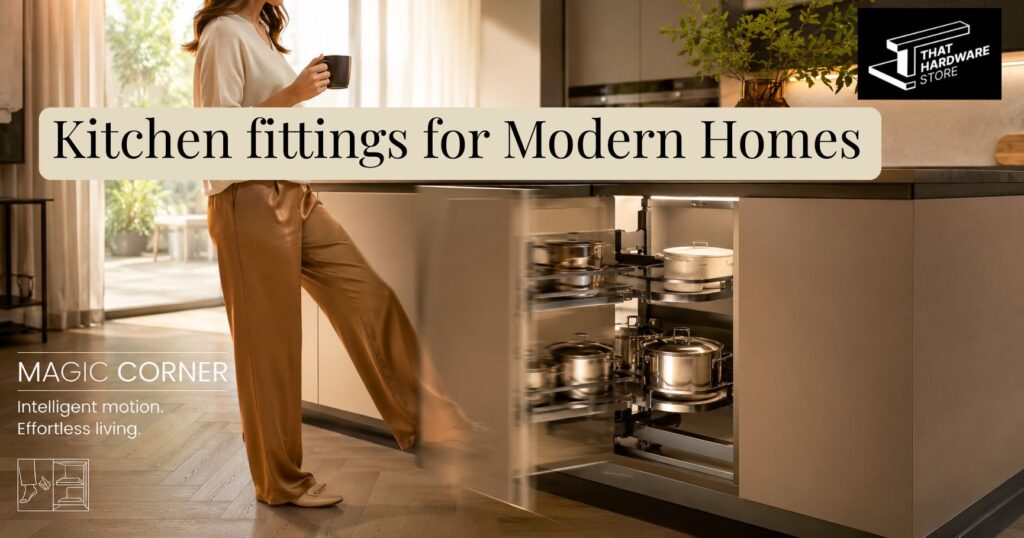
The modern pantry is no longer a dark closet with static wooden shelves. It has evolved into a highly organized, high-density storage machine. Pull-out larder units and corner carousels (often called “Magic Corners”) maximize deep, otherwise unreachable corner spaces.
The smart evolution takes these complex mechanical linkages and adds intelligent automation:
- Weight-Sensing Runners: Advanced drawer systems can be integrated with weight sensors that communicate with inventory-tracking smart software, alerting you when core staples are running low.
- Motorized Pantry Pull-Outs: Instead of manually pulling a larder loaded with 100 kg of canned goods and dry items, integrated electric motors gently glide the entire rack forward upon activation, ensuring smooth, vibration-free movement that keeps glass jars from rattling.
- Internal LED Profile Lighting: Micro-switches and sensors embedded directly into the drawer runners or hinges instantly trigger ambient, low-profile LED lighting the exact millisecond a drawer or cabinet begins to open, perfectly illuminating the interior contents.
4. The Chemistry of Durability: Built to Last
An overlooked aspect of smart kitchen evolution is material science. A kitchen is a harsh environment characterized by high humidity, ambient steam from cooking, shifting temperatures, and airborne grease. Electronic components are notoriously sensitive to moisture, meaning the mechanical housing surrounding them must be flawless.
This is why top-tier architects place immense emphasis on specifying premium material grades. Hardware constructed from high-grade stainless steel (such as SS 304) or treated with specialized multi-layer anti-corrosion coatings ensures that the mechanical joints, ball bearings, and springs running the smart kitchen do not rust or seize over time.
Investing in smart technology is useless if the underlying mechanical hinge or runner sags after a few thousand cycles. High-end fittings are certified for up to 80,000 to 100,000 open-and-close cycles, ensuring that your automated cabinets perform as smoothly on year ten as they did on day one.
5. Bridging the Gap: Designing Your Future-Proof Kitchen
If you are planning a premium kitchen renovation, it is vital to balance your budget between digital appliances and the mechanical components that support them. When choosing your fittings, remember these three golden rules:
- Prioritize Load Capacity Over Aesthetics Alone: Ensure your drawer systems are rated for dynamic weight capacity to handle heavy cast-iron cookware seamlessly under motorized power.
- Plan for Wiring and Power Access: Motorized cabinetry requires structured wiring plans. Work closely with your architect to ensure power sources are discreetly routed behind cabinet carcasses to feed your electronic lift systems and internal drawer lighting safely.
- Choose Trusted Hardware Brands: The smooth glide, perfect alignment, and silent soft-close features that define a luxury kitchen rely entirely on the engineering precision of global hardware leaders.
The evolution of the smart kitchen has proven that digital screens are secondary. The real luxury is a kitchen that senses your needs and responds with silent, effortless, and flawless mechanical movement.
Author Bio: I am a home renovation enthusiast and content strategist representing ThatHardwareStore. He is passionate about deconstructing complex architectural hardware into simple, practical buying guides for modern homeowners. From upgrading old cabinet pulls to specifying heavy-duty modular kitchen fittings, his goal is to make smart, functional spaces accessible to everyone.