Excess skin around the upper eyelids can gradually change the appearance of the eyes, making them look tired, heavy or less open. For some people, this change develops naturally with age, while others notice it earlier because of inherited facial characteristics or differences in skin elasticity. Although upper eyelid skin is often considered a cosmetic concern, it can sometimes affect everyday activities, particularly when loose skin rests close to the eyelashes or interferes with the upper field of vision.
Before considering surgery, it is important to understand how the upper eyelids are assessed and which factors influence the recommended approach. A detailed consultation allows a qualified surgeon to examine the skin, eyelid position, brow shape and overall facial proportions before determining whether an operation may be suitable.
At Bodyvie Clinic, understanding the individual’s concerns and expectations is an important part of planning treatment. Upper Blepharoplasty in London involves more than identifying loose skin; the assessment considers how the eyelids function, how much skin can be removed appropriately and how the result may complement the patient’s natural features.
Why Is Excess Upper Eyelid Skin Evaluated Before Surgery?
The upper eyelids contain delicate skin that can become thinner and less elastic over time. As the surrounding tissues change, folds may become more prominent, and excess skin can gather above the natural eyelid crease.
However, not every heavy-looking upper eyelid is caused by excess skin alone. The appearance may also be influenced by the position of the eyebrows, the underlying fat compartments, the eyelid muscles or a condition in which the upper eyelid margin sits lower than expected.
Distinguishing between these factors helps the surgeon identify the underlying cause of the concern. For example, removing skin may be appropriate when loose tissue is the primary issue, whereas a lower brow position or drooping eyelid may require a different assessment and treatment plan.
The purpose of the consultation is therefore to establish whether upper eyelid surgery addresses the patient’s specific concern and to develop a plan that respects the natural structure of the eyes.
How Is Upper Eyelid Skin Examined During a Consultation?
A clinical assessment generally begins with a discussion about the changes the patient has noticed. The surgeon may ask when the eyelids began to look heavier, whether the appearance has changed gradually and whether the patient experiences any functional difficulties.
The examination then focuses on the amount and distribution of excess skin.
Assessing the Amount of Loose Skin
The surgeon examines the upper eyelids while the patient is sitting upright and looking straight ahead. This position provides a more natural view of how the skin rests over the eyelid crease.
The assessment may consider:
- How much skin extends over the natural eyelid fold.
- Whether the excess skin is concentrated near the inner corner, central eyelid or outer corner.
- Whether the skin approaches or covers the eyelashes.
- Whether the left and right eyelids have different amounts of loose tissue.
- How the skin behaves when the eyes are opened and closed naturally.
These observations help determine whether the concern involves a small amount of localised skin or a more extensive fold across the upper eyelid.
The surgeon also considers how much skin can be removed while allowing comfortable eyelid closure and preserving a natural-looking contour. The aim is not to remove as much skin as possible but to address the concern appropriately.
Examining the Natural Eyelid Crease
The eyelid crease is another important part of the examination. Its position, definition and relationship to the surrounding skin can influence the appearance of the eyes.
Some people have a clearly defined crease, while others have a naturally low or less visible fold. Excess skin can make an existing crease difficult to see, creating the impression that the upper eyelid has become heavier.
During Upper Eyelid Surgery In London, the surgeon evaluates the crease alongside the skin distribution and underlying anatomy. This helps guide decisions about incision placement and the amount of tissue that may need to be removed.
Maintaining an appropriate crease is important for achieving a result that suits the patient’s facial features rather than creating an unnecessarily deep or altered appearance.
How Do Eyebrow Position and Facial Proportions Affect Assessment?
The eyebrows play a significant role in the appearance of the upper eyelids. When the brow sits lower than its usual position, the skin beneath it may gather over the eyelid and create additional heaviness.
This means that a patient who appears to have excess upper eyelid skin may also have a degree of brow descent. If the surgeon does not account for this, the assessment may underestimate the contribution of the brow to the overall appearance.
During the consultation, the surgeon examines the eyebrows in their natural resting position and considers how they move when the patient raises or relaxes them. The relationship between the brow, eyelid crease and eyelashes helps establish where the excess tissue originates.
Facial proportions are also considered. The surgeon evaluates the eyes in relation to the forehead, nose, cheeks and other surrounding features. This broader perspective helps prevent treatment planning from focusing on the eyelids in isolation.
For some patients, upper eyelid surgery may be an appropriate option. Others may benefit from further assessment of brow position or eyelid function before a recommendation is made.
What Is the Difference Between Excess Skin and Drooping Eyelids?
One of the most important parts of the assessment is distinguishing excess skin from other causes of a heavy upper eyelid.
Dermatochalasis is the term commonly used for redundant or loose eyelid skin. It can create folds that rest over the natural crease and, in some cases, approach the eyelashes.
Ptosis, by comparison, describes a drooping upper eyelid margin. It may occur when the muscles or supporting structures responsible for lifting the eyelid do not function as expected.
Although both conditions can make the eyes appear smaller or tired, they are not the same. Removing excess skin does not necessarily correct a drooping eyelid margin.
The surgeon may assess eyelid height, movement and muscle function to identify whether another condition contributes to the appearance. If the findings suggest ptosis or another underlying issue, further evaluation may be recommended before deciding on treatment.
Understanding this distinction is essential to choosing an appropriate surgical approach and setting realistic expectations.
How Is Eyelid Symmetry Assessed?
Most people have some natural differences between their eyes. One eyelid may have a slightly higher crease, a different brow position or more visible skin than the other.
The consultation examines these differences before any surgical plan is developed. The surgeon compares both eyelids, paying attention to skin folds, crease height, brow position and the way each eye opens.
Photographs may also be taken to document the existing appearance and support treatment planning. These images can help the surgeon review the natural asymmetry and explain which changes may be achievable.
The aim is not necessarily to create perfectly identical eyelids. Instead, the plan should account for the patient’s existing anatomy and seek a balanced appearance while respecting normal facial differences.
This individualised approach is particularly important when the patient has noticed that one eyelid looks heavier than the other.
What Other Factors Are Considered Before Upper Eyelid Surgery?
The quantity of excess skin is only one part of the evaluation. A thorough consultation considers the patient’s general health, eye comfort, medical history and reasons for seeking treatment.
The surgeon may ask about previous eye procedures, contact lens use, dry-eye symptoms, allergies and any conditions that affect eyelid movement or closure. Current medications and relevant medical history may also be reviewed.
Where appropriate, the examination may include an assessment of tear-film symptoms, eyelid closure and other features of eye health. Additional information from an eye specialist may be useful if the history or examination indicates a need for it.
The surgeon also discusses the patient’s expectations. Some people want a more visible eyelid crease, while others are concerned about skin resting on their eyelashes or affecting their upper field of vision.
Understanding these priorities helps establish whether surgery is suitable and what the treatment is intended to achieve.
How Is the Amount of Skin to Be Removed Determined?
The amount of skin considered for removal depends on several factors, including skin laxity, eyelid anatomy, crease position and the patient’s ability to close the eyes comfortably.
The surgeon evaluates the upper eyelid carefully and may assess how the skin sits when the brow is relaxed and when the surrounding tissues are gently repositioned. These observations help distinguish skin excess from heaviness caused by the brow or other structures.
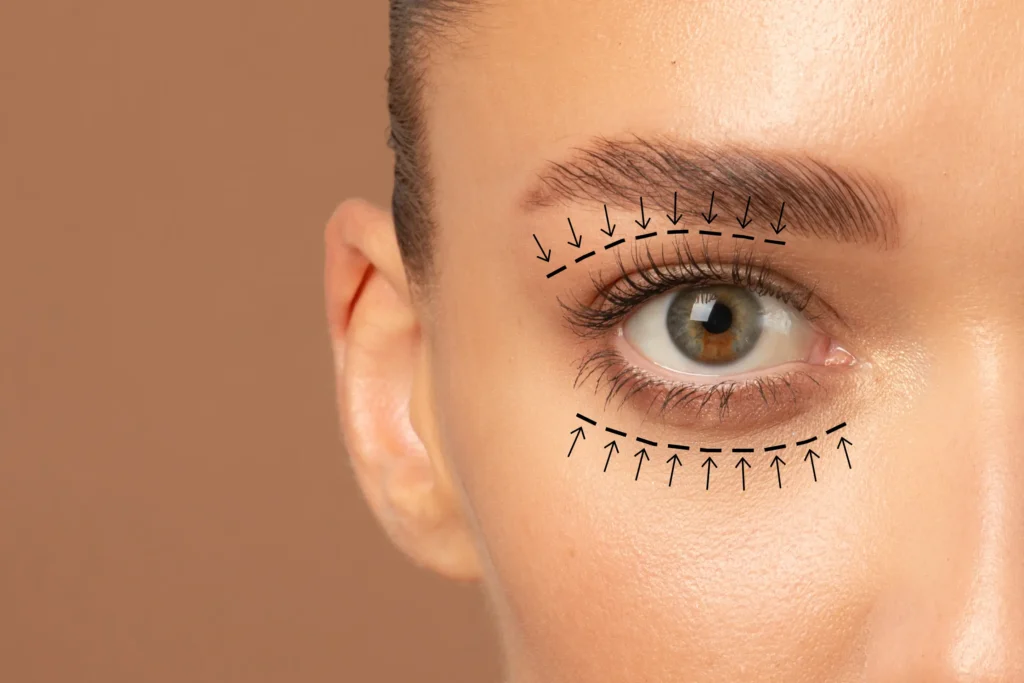
The planned incision is generally positioned within or near the natural upper eyelid crease, depending on the individual’s anatomy and surgical requirements. The objective is to place the incision where it can follow the natural contours of the eyelid.
It is also important to preserve sufficient skin for normal eyelid movement and closure. An appropriate plan balances the removal of redundant tissue with the need to maintain the eye’s natural function and appearance.
Patients should understand that the precise amount of tissue removed is individual. It cannot be determined accurately from a photograph or general description alone.
What Should Patients Expect From the Surgical Planning Process?
Once the examination is complete, the surgeon explains the findings and discusses whether upper blepharoplasty is a suitable option.
This conversation may cover the areas of excess skin, the role of brow position, the natural differences between the eyelids and the expected changes in the eyelid contour. The surgeon can also explain the proposed incision location and the main stages of the procedure.
Patients should have an opportunity to ask questions about recovery, aftercare and the likely development of the result over time. Clear communication helps ensure that expectations are realistic and that the patient understands the purpose of treatment.
A Blepharoplasty Clinic in London should provide an assessment that considers individual anatomy rather than recommending the same approach to every patient. At Bodyvie Clinic, patients can discuss their concerns and learn whether upper eyelid surgery may be appropriate for their needs.
The final treatment plan should follow a clinical assessment and take account of the patient’s goals, eyelid function and overall suitability for surgery.
Conclusion
Evaluating excess upper eyelid skin before surgery requires careful attention to more than the visible fold above the eyes. The surgeon must consider the quantity and distribution of loose skin, the natural eyelid crease, eyebrow position, facial proportions, symmetry and the function of the eyelid muscles.
Distinguishing excess skin from brow descent or true eyelid drooping is particularly important because each concern may require a different approach. A detailed consultation also provides an opportunity to review relevant medical history, understand the patient’s expectations and explain the treatment options.
For those considering Upper Blepharoplasty in London, an individual assessment is the starting point for informed decision-making. By evaluating the eyelids in the context of the whole face and preserving their natural function, the surgeon can develop a treatment plan that aims to address the patient’s concerns while respecting their existing features.
Frequently Asked Questions
1. How do surgeons assess excess upper eyelid skin?
Surgeons examine the eyelids while the patient is sitting upright and looking straight ahead. They assess the amount of loose skin, the position of the eyelid crease, brow height, symmetry and whether the skin approaches the eyelashes.
2. Can upper blepharoplasty correct drooping eyebrows?
Upper blepharoplasty primarily addresses excess upper eyelid skin. If a low eyebrow position contributes to the heavy appearance, the surgeon may recommend a separate assessment to determine whether brow treatment is appropriate.
3. Is excess eyelid skin the same as ptosis?
No. Excess eyelid skin refers to redundant tissue that gathers over the upper eyelid, whereas ptosis involves a lower-than-expected position of the upper eyelid margin. A clinical examination helps distinguish between these conditions.
4. Does the surgeon examine both eyelids before surgery?
Yes. Both eyelids are assessed to identify differences in skin distribution, crease position, brow height and eyelid movement. Natural asymmetry is considered when developing an individual treatment plan.
5. How much upper eyelid skin can be removed?
The amount depends on the patient’s anatomy, skin laxity and eyelid function. The surgeon plans removal carefully to address excess tissue while preserving comfortable eyelid closure and natural movement.
6. Can upper eyelid skin affect vision?
In some cases, excess skin can extend over the eyelashes or interfere with the upper field of vision. The consultation helps determine whether the concern is primarily cosmetic or may also have a functional component.
7. What happens during an upper eyelid surgery consultation in London?
The consultation generally includes a discussion of the patient’s concerns, a review of relevant medical history, an examination of the eyelids and eyebrows, and an explanation of suitable treatment options. The surgeon also discusses expectations and the proposed approach.
8. How can I prepare for an upper blepharoplasty consultation?
Prepare by noting the changes you have noticed, how long they have been present and whether you experience any visual or eye-comfort concerns. Bring details of relevant medical conditions, medications and previous eye procedures, and prepare questions about treatment and recovery.
9. Is upper blepharoplasty suitable for everyone with loose eyelid skin?
No. Suitability depends on the individual’s anatomy, eye health, medical history and expectations. A qualified surgeon must assess these factors before recommending surgery.
10. How do I find out whether upper eyelid surgery is right for me?
Arrange a consultation with a qualified surgeon who can examine your eyelids, assess the underlying cause of the concern and explain the available options. This assessment provides the information needed to make an informed decision about treatment.