What Color Temperature Is Best For Outdoor Lighting At Home?
Selecting exterior fixtures involves far more than picking attractive housings and positioning spotlights near entryways. Light color drastically alters house appearance, safety feel, and yard comfort after dark. Property owners considering residential and commercial outdoor lighting services in Bradenton often discover that choosing between warm, natural, or cool illumination shapes overall atmosphere dramatically. Finding the ideal color temperature ensures architectural features stand out while maintaining a cozy, secure outdoor space.
Understanding Outdoor Lighting Color Temperature
Color temperature measures light appearance from a bulb, expressed in degrees Kelvin (K). The scale ranges from warm amber tones at lower numbers to cool bluish hues at higher numbers. Understanding this metric prevents mixed visual tones that disrupt home curb appeal.
What Is the Kelvin Scale?
The Kelvin scale categorizes visual warmth or coolness emitted by light sources:
-
2000K to 3000K: Warm light with yellow-to-amber tones, creating a cozy and relaxing atmosphere.
-
3500K to 4500K: Cool white light providing crisp, neutral illumination ideal for functional areas.
-
5000K to 6500K: Daylight hues with noticeable blue undertones, commonly used for intense security lighting.
How Color Temperature Affects Outdoor Aesthetics
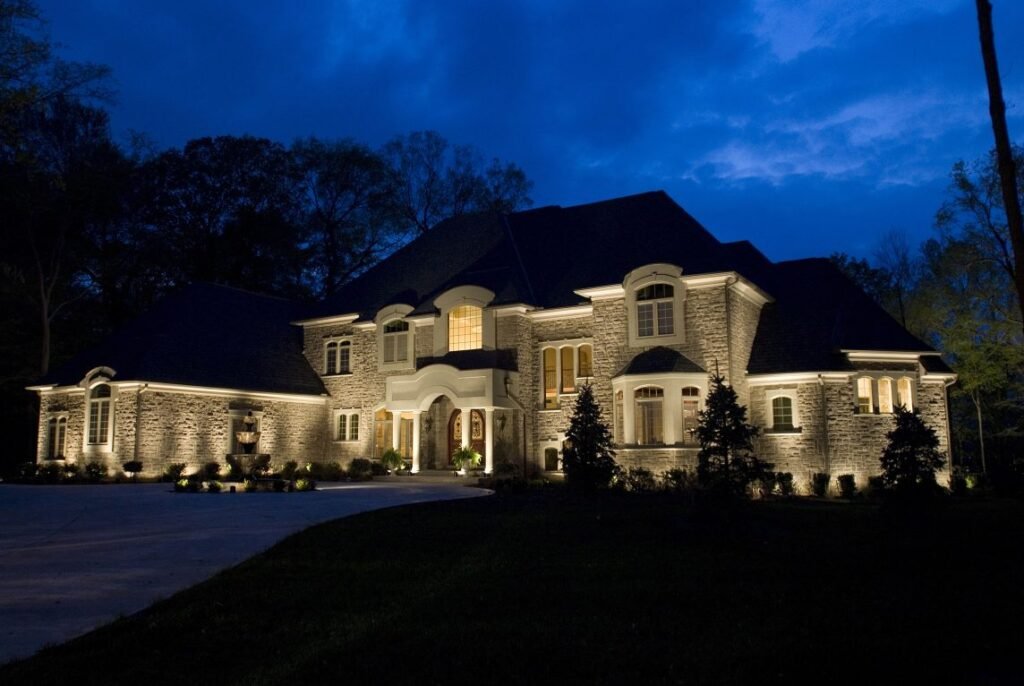
Light color alters surface hues directly. Warm lighting softens stonework, accentuates wooden beams, and flatters earth-tone paint. Cool lighting makes greenery look vibrant but can make brick, wood, and warm stucco appear washed out or harsh.
The Best Color Temperatures for Specific Outdoor Zones
Different outdoor zones serve distinct purposes. Matching Kelvin ranges to specific zones creates a balanced landscape design.
       OUTDOOR LIGHTING KELVIN GUIDE

  [2200K - 2700K] Ultra Warm / Warm White
  ├── Patios & Decks
  ├── Fire Pit Areas
  └── Seating Spaces

  [3000K] Warm Neutral White
  ├── Architectural Facades
  ├── Trees & Foliage
  └── Garden Pathways

  [4000K - 5000K] Cool White / Daylight
  ├── Driveways & Garages
  ├── Commercial Entryways
  └── Perimeter Security
Architectural Accents and Walls (2700K to 3000K)
Walls, pillars, and structural details benefit from 2700K to 3000K lighting. 2700K highlights natural textures like stacked stone or wood siding. 3000K yields clean, neutral illumination on light-colored stucco or modern architectural panels.
Landscape and Garden Features (2700K to 3000K)
Gardens and plant beds look best under 2700K to 3000K fixtures. Warm white emphasizes flower hues without distorting stem greenery. 3000K provides a balanced contrast against dark soil, mulch, and evergreen foliage.
Patios, Decks, and Outdoor Living Areas (2200K to 2700K)
Social zones require subtle illumination. Ultra-warm temperatures (2200K–2700K) mimic firelight and sunset hues, encouraging relaxation during evening gatherings without causing glare.
Pathways and Walkways (2700K to 3000K)
Path lights need to balance safety with atmosphere. 2700K or 3000K fixtures illuminate elevation changes and ground hazards clearly while keeping walkways inviting.
Driveways, Garages, and Security Zones (4000K to 5000K)
Security areas demand high visual clarity. Cool white light between 4000K and 5000K improves camera recording resolution and deters unwanted activity around garages and alleys.
Outdoor Color Temperature Comparison
This comparison outlines recommended Kelvin ranges for key outdoor areas alongside their visual traits and primary applications.
Recommended Kelvin Ranges by Application
| Zone / Feature | Preferred Kelvin | Visual Tone | Primary Benefits |
| Patio & Dining | 2200K – 2700K | Candlelight / Warm Amber | Creates intimate, low-glare seating environments. |
| Garden & Plants | 2700K – 3000K | Soft Warm White | Enhances foliage color while revealing floral detail. |
| House Facade | 2700K – 3000K | Warm Neutral | Highlights stonework, brickwork, and timber accents. |
| Walkways | 2700K – 3000K | Clear Warm White | Illuminates obstacles without blinding pedestrians. |
| Security & Parking | 4000K – 5000K | Cool White / Daylight | Maximizes visibility, coverage, and security footage clarity. |
Key Factors When Choosing Outdoor Bulbs
Achieving great landscape lighting extends beyond selecting Kelvin values. Color rendering, beam angles, and environmental factors also influence visual outcomes.
Color Rendering Index (CRI)
CRI measures how accurately a light source reveals natural object colors on a scale from 0 to 100. Outdoor fixtures should carry a CRI rating of 80 or higher (ideally 90+) so plants, bricks, and decor look vibrant at night.
Consistent Temperature Across Fixtures
Mixing 2700K fixtures with 5000K floodlights on the same facade creates visual clash. Standardize color temperatures across connected viewing angles, reserving high-Kelvin bulbs strictly for concealed security spots.
Durability and Weather Resistance
Outdoor fixtures endure humidity, rain, and temperature swings. Select LED units rated IP65 or higher with corrosion-resistant brass, aluminum, or composite housings for long-term reliability.
Environmental and Wildlife Considerations
In coastal regions, unshielded high-Kelvin lighting disrupts nocturnal wildlife and sea turtle nesting patterns. Warm, low-Kelvin bulbs (under 3000K) inside fully shielded fixtures reduce skyglow and local ecosystem disruption.
Professional vs. DIY Outdoor Lighting Setup
Homeowners often choose between self-installation and professional design. While DIY kits handle simple path accents, custom properties benefit from expert installation.
When DIY Installation Works
Low-voltage solar or plug-in LED kits suit small gardens, deck railings, or temporary patio setups. They require minimal wiring knowledge and allow easy repositioning.
Benefits of Professional Installation
Broader properties, mixed-material facades, and commercial outdoor lighting services require precise voltage calculations, hidden trenching, and layered fixture placements. Professional installers position fixtures to reduce glare while balancing light distribution across structural features.
Practical Troubleshooting Guide
-
Issue: Exterior stonework appears dull or gray.
-
Fix: Replace 4000K+ cool bulbs with 2700K fixtures to pull out natural warm earth tones.
-
-
Issue: Outdoor lighting feels clinical or harsh.
-
Fix: Shift patio fixtures down to 2200K–2700K and add frosted lenses to diffuse light output.
-
-
Issue: Security cameras capture grainy night footage.
-
Fix: Upgrade perimeter fixtures to high-CRI 4000K LEDs to improve digital sensor clarity.
-
Conclusion
Choosing the right color temperature transforms home exteriors, balancing visual warmness with functional visibility. Warm tones between 2700K and 3000K complement architectural features, gardens, and walkways, while ultra-warm 2200K–2700K lights suit seating areas. Cooler 4000K–5000K bulbs belong in high-visibility security zones. Matching color temperature to space function creates a cohesive, welcoming exterior year-round.
Frequently Asked Questions
What is the best color temperature for front yard landscape lighting?
A color temperature of 2700K to 3000K works best for front yard landscape lighting. It provides warm white illumination that flatters architectural details, accentuates foliage, and offers clear path visibility without harsh glare.
Is 3000K or 4000K better for outdoor home lighting?
3000K is generally better for residential outdoor living spaces, gardens, and house facades because it yields an inviting warm light. 4000K is suited for driveways, utility areas, and commercial spaces where clear visibility is the primary goal.
Can you mix different light color temperatures outdoors?
You can mix color temperatures if you separate them by zone. Keep warm lighting (2700K–3000K) around entertainment patios, pathways, and facades, while reserving cool light (4000K–5000K) for separate security driveways or service areas.
Does color temperature affect outdoor bug activity?
Yes. Cooler light temperatures with high blue-light output (4000K and above) attract more insects. Warmer temperatures (2200K to 2700K) emit longer wavelengths that are less visible to insects, reducing pest clusters around fixtures.
How do LED solar lights compare in color temperature accuracy?
Modern outdoor LED solar lights come in various Kelvin ratings, though budget solar models tend toward cool, bluish tones (5000K+). Higher-quality solar fixtures offer warm 2700K–3000K output with reliable CRI ratings.